

A brief overview of regulation in nutraceuticals/food supplement use for patients with benign prostatic hyperplasia and lower urinary tract symptoms.
A brief overview of regulation in nutraceuticals/food supplement use for patients with benign prostatic hyperplasia and lower urinary tract symptoms.

Interesting questions raised by a paper that compared the use of 18F-fluciclovine with 68Ga-PSMA-11 imaging modalities to detect biochemical relapse in prostate cancer and implications for integrating newer techniques into clinical practice.

“I think there is an urgency for us as urologists who are seeing many of these patients with kidney stones to be advocates, not just for the patients whom we're treating today, but for the populations in the future,” says Gregory Tasian, MD, MSc, MSCE.

Robert Dreicer, MD, describes the future of metastatic castration-resistant prostate cancer.
A prostate cancer expert explains the potential advantages of sabizabulin, a new treatment for metastatic castration-resistant prostate cancer currently in a phase III clinical trial.

“The message is to please consider kidney preservation for these patients with TA low-grade disease,” says Seth P. Lerner, MD.

J. Curtis Nickel, MD, FRCSC, discusses the origins of saw palmetto as an herbal therapy and how it was developed to treat lower urinary tract symptoms.

“This is an attempt to provide the clinicians with the most recent available data and evidence, and therefore, tell them how this particular imaging…may affect their decision making for the treatment and management of their patients,” says Hossein Jadvar, MD, PhD.

Ulka Nitin Vaishampayan, MBBS, discusses the FGFR inhibitor erdafitinib and the importance of genetic/genomic testing in bladder cancer.

"These are fairly new technologies, but they've already made a dent into patient care," says Anthony Atala, MD.

“I think this really now suggests that Rezum is a financially viable procedure across these different treatment settings…the reimbursement now is really quite favorable,” says David M. Albala, MD.

“Andrea and I lead this from [a] President/Vice President standpoint, but we also have a group of leaders from around the world, really representing all ethnicities, genders and others, because we wanted to make sure [that] we're inclusive, andmeet the needs and expectations of everybody,” says Philippe E. Spiess, MD, MS, FRCSC, FACS.

“The main question we were interested in answering was what the impact of future climate under different scenarios of climate change would have on the incidence of kidney stone disease, using South Carolina as a model state,” says Jason Kaufman.
“I think that these data firmly establish UGN-101, or Jelmyto, as a bona fide treatment option for kidney preservation for patients with low-grade, non-invasive urothelial cancer in the upper urinary tract,” says Seth P. Lerner, MD.
“PSMA is a very exciting development in the field of nuclear medicine,” says Hossein Jadvar, MD, PhD.
Reactions to key findings from an article by Birgit Pernthaler, et al, that compared the use of 18F-fluciclovine with 68Ga-PSMA-11 imaging modalities to detect biochemical relapse in prostate cancer.

From a rambunctious kitten to a whole family of animals, we have some great guests on the latest episode of Uranimals, a video series featuring urologists and their pets.
Robert Dreicer, MD, discusses the available second-line therapy options and unmet needs in metastatic castration-resistant prostate cancer.
Bilal Chughtai, MD, shares insight on the use of saw palmetto extracts in benign prostatic hyperplasia and lower urinary tract symptoms.
Expert perspective on the treatment landscape of benign prostatic hyperplasia and lower urinary tract symptoms.

Elements that are critical to ensuring that patients with bladder cancer are managed appropriately by various healthcare professionals who will likely interact with patients and their family throughout the cancer journey.

Administration of systemic therapy and management of side effects in patients with bladder cancer.
Robert Dreicer, MD, provides an overview of the first-line therapy options available in metastatic castration-resistant prostate cancer and the recent advances in detection, diagnosis, and treatment.
“There is a rather extensive process of how to develop appropriate use criteria. It is primarily based on literature and evidence, systematic reviews, and analysis of those data,” says Hossein Jadvar, MD, PhD.
“Of the 42 patients who achieved a complete response, 41 of those were evaluable for duration of response, which was the focus of the manuscript that was just published last month,” says Seth P. Lerner, MD.
Drs Steven Finkelstein and Louis J. Mazzarelli highlight data revealed in the article “A Prospective Head-to-Head Comparison of 18F-Fluciclovine With 68Ga-PSMA-11 in Biochemical Recurrence of Prostate Cancer in PET/CT,” by Birgit Pernthaler, et al.

"The newest frontier of therapy for stress incontinence is regenerative medicine and stem cell–based therapies," says Melissa R. Kaufman, MD, PhD, FACS.

Eric Jonasch, MD, offers his advice for physicians treating patients with renal cell carcinoma.

Ali Raza Khaki, MD, discusses managing toxicities to ensure patients can continue to receive treatment with the antibody-drug conjugate enfortumab vedotin.
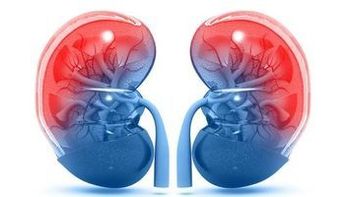
Sarah Elizabeth Yentz, MD, discusses what sequencing research and novel treatment development is needed to advance the metastatic renal cell carcinoma paradigm.