

“[The prediction model] worked way better than we expected that it would work,” says Sevag Demirjian, MD.
“[The prediction model] worked way better than we expected that it would work,” says Sevag Demirjian, MD.

“Botox has been a wonderful drug for many, many years,” says Min Dong, MD.
“There are many trials that clinicians should be aware of,” says Daniel P. Petrylak, MD.

“The take-home message is that it's not a question of if you're going to start doing a hereditary cancer risk assessment, it's when,” says Neal D. Shore, MD, FACS.

“One of the reasons I so enjoy this conference is the multidisciplinary nature,” says Peter A. Humphrey, MD, PhD.

“It’s not only about prescribing medications or advising how to use it. It’s about support. It’s about checking how things are going. It’s about motivation when things are primarily not working. It’s about knowledge that things tend to improve with time, and certain functions can just recover independently,” says Marta Skrodzka, MD, PhD.
"It is clearly the standard and it's the treatment of choice. When you have that, and it's very good, it's evidenced by the fact that none of the agents are compared against BCG because it sets such a high standard of effectiveness," says Sam S. Chang, MD, MBA.

OAB experts share their experience with reimplantation of a tibial nerve stimulation device (eCoin).

Drs Rogers and MacDiarmid discuss data from feasibility and pivotal studies with eCoin, a tibial nerve stimulation device, and how it compares to other third-line treatments.

“There are, indeed, numerous paths that we are trying to tackle from different angles,” says Gennady Bratslavsky, MD.

“We actually found that treatment with percutaneous tibial nerve stimulation was…a safe and very effective way of improving sexual function,” says Varun R. Talanki, MD.

“I think one of the problems is that we do run out of treatments in many of these patients at some point,” says William K. Oh, MD.

“I think this really gave us an advantage to offer better care,” says Shiva J. Maralani, MD.

“I think that it's very clear that this test is independently prognostic,” says Daniel E. Spratt, MD.
“As [nurse specialists], we are uniquely placed in terms of supporting these men through their prostate cancer treatments, and then, obviously, through to their recovery afterwards,” says Netty Kinsella, RN, MSc, PhD.
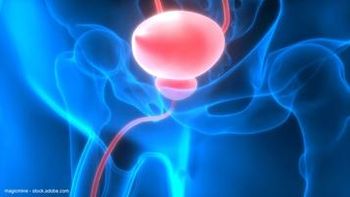
“The fascinating thing is that we have so many new treatments that are now available to us,” says Leonard G. Gomella, MD, FACS.

“I think the take home message is that [IsoPSA is] an easy test to use,” says Eric A. Klein, MD.

“We have new therapies, both AR-targeted therapies, as well as the use of SBRT, or targeted radiotherapy, that have changed the landscape,” says William K. Oh, MD.

Bobby Liaw, MD; Vivek K. Narayan, MD, MS; Ashley E. Ross, MD, PhD; and Neal Shore, MD, FACS, provide closing thoughts and advice for the optimal management of advanced prostate cancer.
Experts in prostate cancer review the role of PSMA PET imaging in advanced prostate cancer and its impact on disease management.

Bobby Liaw, MD, and Vivek K. Narayan, MD, MS, share clinical pearls for the management of adverse events from ARI-directed therapy in advanced prostate cancer.

Urology Times® Co–Editor in Chief Michael S. Cookson, MD, MMHC, recaps 5 presentations from the 2022 Genitourinary Cancers Symposium.

“The traction on this, I think, is really rather remarkable,” says Neal D. Shore, MD, FACS.

“I view OAB as a problem for many women that hasn't gotten the attention that it's needed over the decades,” says Alexandra Rogers, MD.

“I think one important message here is that MTAP is an important novel pathway in carcinogenesis, particularly bladder and urothelial carcinomas,” says Philippe E. Spiess, MD, MS, FRCSC, FACS.
“We should be really trying to raise the profile of bladder symptoms [and] functional urology issues, and educating colleagues on how to inquire about and capture that information as effectively as possible,” says Jai Seth, MD, BSc, MSc, FRCS.

Abstracts highlight topics such as sacral neuromodulation and percutaneous tibial nerve stimulation.

“I think results from this study introduce a new standard of care for patients with metastatic hormone-sensitive prostate cancer, where we clearly need to do better than what we're doing today, since the sequence of therapy seems to be less effective than hitting them hard upfront,” says Fred Saad, MD, FRCS.

"Active surveillance is an innovation because it's truly a departure from the idea that all prostate cancers or cancer, in general, needs to be treated," says Kara L. Watts, MD.

Experts discuss tibial nerve stimulation, an emerging treatment for OAB.