

“These findings are an internal validation that the disparities we're seeing are real,” says Padraic O’Malley, MD, MSc, FRCSC.
“These findings are an internal validation that the disparities we're seeing are real,” says Padraic O’Malley, MD, MSc, FRCSC.

“Goal setting for the patient is important,” says Omar El Shahawy, MD, MPH, PhD.
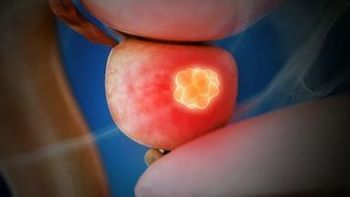
“We call this a ‘disruptive innovation,’” says Leonard S. Marks, MD.

“The most notable finding is that more than half of all adult US women experience urinary incontinence,” says Heidi Wendell Brown, MD, MAS, FACOG.

“There are a few different approaches in perioperative medical chemotherapy or immunotherapy treatment, and it's unclear as to how we should consider all these different approaches,” says Shawn Dason, MD, FRCSC.

"A major innovation impacting urology and oncology is the therapeutic advances based on genetic information," says Veda N. Giri, MD.

An overview of treatment guidelines available to support urologists and medical oncologists who manage patients with bladder cancer.

Types of educational resources available to support patients with bladder cancer as recommended by urologists and medical oncologists.

“What really needs to be done to show that this works is to look prospectively,” says Amar U. Kishan, MD.
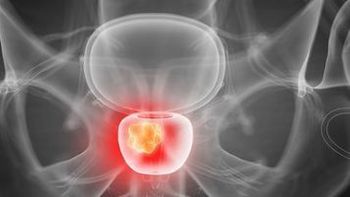
We've never had an imaging agent like this before,” says Leonard S. Marks, MD.
Karim Chamie, MD, describes what treatments might be on the horizon for muscle invasive bladder cancer and provides some clinical pearls to manage patients with MIBC.
A bladder cancer expert several ongoing clinical trials in the neoadjuvant and adjuvant setting.
An oncologist reviews the use of nivolumab in the adjuvant setting for treating high-risk muscle invasive bladder cancer and experience from his practice.
Dr. Karim Chamie details the available primary and adjuvant treatments for muscle invasive bladder cancer.
Karim Chamie, MD, presents the case of a 75-year-old woman with high-risk muscle invasive bladder cancer.

“If you're looking at our results, in terms of the percent of authors who are female, the percent of first authors are female, or last authors who are female, we've seen growth in all 3 categories over the last 18 years,” said Megan Prunty, MD.

Closing out his discussion on saw palmetto extracts in benign prostatic hyperplasia and lower urinary tract symptoms, Bilal Chughtai, MD, shares practical advice for physicians.
A brief review of the safety profile associated with use of saw palmetto extracts in benign prostatic hyperplasia and lower urinary tract symptoms.

“I think that the most important thing to take home is that we all have implicit biases towards people who are underrepresented, whether it's women or minorities,” says Rena D. Malik, MD.

“The more you smoke, then the more prone you are to experience erectile dysfunction,” says Omar El Shahawy, MD, PhD.

“The important thing to know is that…we…aim to focus on the regions…that were not under the light of research education, in particular in the [genitourinary] space,” says Andrea Necchi, MD.

“The overall evidence in the global world literature is that saw palmetto can be effective,” says J. Curtis Nickel, MD, FRCSC.
“What we found was a signature that you can apply to patients to find out whether they're at high risk of these moderate or greater urinary side effects in the long term, and it did appear to depend on the type of radiation they were receiving,” says Amar U. Kishan, MD.

“I think there's a disconnect between the patients saying they're interested in these therapies, and the patients that actually go on to [receive] them,” says Jason Kim, MD.

“What's interesting in Dr Strum's analysis of these trials is that he not only looked at the English literature, which many of us are familiar with, but he looked at the many studies done in countries that were published in the non-English literature and never found [their] way into any of our analyses,” says J. Curtis Nickel, MD, FRCSC.
"Introducing something that with a prefashioned sling, [something] we're able to utilize with the patient in an ideal situation just under some deep sedation and local, really opened this up the ability for many more women to be treated and allowed many more physicians to be trained and to utilize this technology," says Howard B. Goldman, MD, FACS.
“We wanted to see whether certain variations and these micro-RNA binding sites could be associated with the risk of developing side effects,” says Amar U. Kishan, MD.

“Our goal was to educate these patients thoroughly on the risks and benefits of each of these therapies, and try to understand what guides their choice of third line therapy based on their lifestyle and what suits them,” says Anjali Kapur, MD.

“I think now the government has realized…the work that’s involved in this procedure…[and] we’re now being reimbursed at an appropriate level,” says David M. Albala, MD.
Expert insight on clinical trial data informing the use of saw palmetto extracts in benign prostatic hyperplasia and lower urinary tract symptoms.