

“The biggest improvement in my patients has been the urgency frequency and urgency incontinence,” says David W. Law, DO.
“The biggest improvement in my patients has been the urgency frequency and urgency incontinence,” says David W. Law, DO.
“I think urology is inherently gendered,” says Polina X. Reyblat, MD.

“What I'm quite hopeful for are PSMA-targeted alpha emitters,” says Scott T. Tagawa, MD, MS, FACP.
An explanation of the importance of clinical providers following a multidisciplinary approach for prostate cancer management.
Experts review ongoing clinical trials in PSMA PET technology.
“It's just very exciting to be a part of a company that's made such an improvement in patients' lives,” says David W. Law, DO.
“We are the only specialty that has an in-depth understanding of the pelvic floor anatomy and physiology of both genders,” says Polina X. Reyblat, MD.
“I think we need really bold and decisive acts to make the type of progress that's needed,” says Randy Vince Jr, MD.
“I think the main thing is placement of the neural probe on the first go around,” says David W. Law, DO.

"We as urologists are board certified to take care of all genders. We are really good sexual medicine doctors, and we need to apply what we know about sexual medicine, not just for our male patients, but for all of our patients," says Rachel S. Rubin, MD

“People's concepts of immunotherapy are unfortunately quite distorted. It is not just about checkpoint inhibitors,” says Susan F. Slovin, MD, PhD.

“There are not enough male reproductive health specialists across the country at the present moment,” says Akanksha Mehta, MD, MS.
“Knowing these disparities exist, I think it's time to demand transformative changes, and not these small transactional initiatives that sometimes seem designed to shut people up,” says Randy Vince Jr, MD.

“One of the most exciting areas of research in sexual health are new improvements on penile implants,” says Marta Skrodzka, MD.

Welcome to another installment of Uranimals, a video series featuring urologists and their pets. From an acrobatic cat to an enemy of landscaping, let’s see who some of the top medical professionals are spending time with when they’re not in the clinic!
“I would suggest a discussion with your medical oncology colleagues, just so that you and your staff know what to expect in the short term and the long term,” says Susan F. Slovin, MD, PhD.

“We really felt that this was an important question to ask because we know that OAB therapy adherence is associated with improvements in urinary symptoms, quality of life, and decreased OAB-related health care costs,” says Ekene Enemchukwu, MD, MPH.

The panel explains the science behind PSMA PET scans and reviews the different positron-emitters used in the scans.

A background on the available options and recent advances in prostate cancer imaging.
“We look forward to the optimization of these drugs,” says Scott T. Tagawa, MD, MS, FACP.
"The seminal innovation was the idea that you could create a focused shock wave that could be delivered into the body in a non-invasive way that had sufficient energy to break up a stone but not damage other structures," says James E. Lingeman, MD.
Drs MacDiarmid and Rogers discuss barriers to OAB treatments and therapies on the horizon.

“Whether it is E-cigarettes or other products, the goal should be complete cessation,” says Omar El Shahawy, MD, MPH, PhD.

“I think [this study] really addresses an unmet need for practicing urologists across the world,” says Fred Saad, MD, FRCS.
“We certainly need to move away from a model of care that is follow up driven by tumor markers or imaging alone,” says Netty Kinsella, RN, MSc, PhD.

“There are many studies now that have shown that these doublets and triplets seem to be better than just ADT alone,” says William K. Oh, MD.
“One thing from our study that you can take home [is] no matter what the surgery is, small changes right after surgery can actually tell you more than we usually give them credit for,” says Sevag Demirjian, MD.
“I think we need to change the mindset that chemotherapy is a bad thing. It is a very good thing when given appropriately and when patients are more likely to get long-term benefit,” says Fred Saad, MD, FRCS.
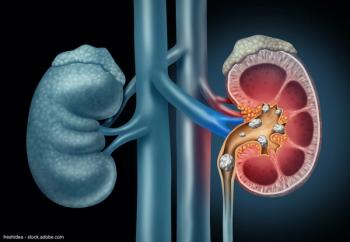
“The take home message would be that in patients with prior history of kidney stone episodes…receiving 24-hour urine testing prior to starting pharmacologic preventive therapy is associated with a lower probability of a subsequent stone-related event,” says Ryan Hsi, MD, FACS.
“I think this is an extremely exciting space,” says Jai Seth, MD, BSc, MSc, FRCS.