
Opinion|Videos|June 4, 2026
What Makes the Synthetic Control Design of ARASEC Innovative
Author(s)Neal Shore, MD, FACS, Rana R. McKay, MD
Fact checked by: Tracy Ann Politowicz
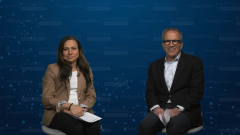
Rana R. McKay, MD, FASCO, and Neal D. Shore, MD, FACS, explain ARASEC's use of a synthetic historical control arm derived from the CHAARTED trial, a design approach they describe as both ethically necessary and methodologically efficient.
Advertisement
A defining feature of the phase 2 ARASEC trial (NCT02799602)1 is its use of a synthetic historical control arm—an approach that Rana R. McKay, MD, FASCO, and Neal D. Shore, MD, FACS, describe as both ethically necessary and emblematic of the kind of innovation needed to advance oncology trial design. Because randomization to androgen deprivation therapy (ADT) monotherapy in the metastatic hormone-sensitive prostate cancer (mHSPC) setting was deemed unethical in the early 2020s given the established survival benefit of treatment intensification, the investigators sought an alternative comparator strategy.
The solution was to derive the control arm from individual patient-level data in the ADT monotherapy arm of the CHAARTED trial (NCT02799602)—the first study to demonstrate the superiority of ADT plus docetaxel over ADT alone in mHSPC—data made publicly available by the National Cancer Institute and cooperative groups. Propensity score matching was then applied using 6 key prognostic variables: age, Gleason score, disease volume (high vs low), presence of visceral metastases, de novo vs metachronous disease, and Eastern Cooperative Oncology Group performance status. Matching was performed on a 1:1 basis using stringent calipers to minimize baseline imbalances between the prospectively enrolled treatment arm and the historical control.
Shore noted that this design allowed enrollment of more than 200 patients in a single-arm US cohort without requiring a large phase 3 infrastructure or exposing patients to an inferior treatment. The FDA responded favorably to the innovative design, and the trial accrued ahead of schedule. A post hoc sensitivity analysis was subsequently conducted using the contemporaneous ADT monotherapy arm from the ARANOTE trial to address concerns about the temporal distance of the CHAARTED control.
REFERENCE
1. McKay RR, Ross AE, Preston MA, et al. ARASEC: a novel pragmatic trial design comparing darolutamide plus ADT versus ADT in US patients with metastatic hormone-sensitive prostate cancer using propensity score matching with an external phase 3 trial control arm. J Urol. 2025;213(5S). doi:10.1097/01.JU.0001109788.ARASEC
Advertisement
Related to this article

Long-term QUILT-3.032 findings show durable responses with Anktiva plus BCG in BCG-unresponsive NMIBC, with an estimated 84.2% cystectomy-free survival at 3 years.

Vignesh Packiam, MD, discusses strategies to manage intravesical therapy toxicity in NMIBC, improve treatment tolerability, and preserve bladder function.

Sandip M. Prasad, MD, MPhil, discusses the safety profile of mitomycin intravesical solution, including common adverse events and patient counseling during chemoablation for NMIBC.

These FAQs outline key recommendations and practical takeaways from the AUA/SUFU/AUGS Genitourinary Syndrome of Menopause guideline.
Sandip M. Prasad, MD, MPhil, discusses 3-year ENVISION trial data showing durable responses with mitomycin intravesical solution for recurrent LG-IR-NMIBC.

Armine K. Smith, MD, discusses sexual health counseling, sex-specific considerations, and organ-preserving approaches for patients undergoing radical cystectomy.

This approval expands the label for nogapendekin alfa inbakicept to include patients with high-grade papillary-only tumors.

Melissa Hadley Barrett discusses real-world outcomes and tolerability of intranasal vardenafil for men with persistent erectile dysfunction despite prior standard therapy.
Advertisement
Advertisement
Trending on Urology Times
1
Anktiva plus BCG shows durable responses in BCG-unresponsive NMIBC
2
Sandip Prasad, MD, on the safety profile of mitomycin intravesical solution
3
Three-year data show durable responses with mitomycin intravesical solution
4
FDA approves nogapendekin alfa inbakicept plus BCG for papillary-only BCG-unresponsive NMIBC
5