

Darolutamide plus ADT has also been approved in the US as well as in the European Union.
Darolutamide plus ADT has also been approved in the US as well as in the European Union.

“We hope our findings reassure health professionals caring for postmenopausal women with a history of stroke,” says Kimia Ghias Haddadan, MD.

The presentations featured data on the drug candidate BOTRESO for BPH and LUTS, as well as on the prostate cancer prevention drug MCS-8.

The company is engaged in discussions with the FDA surrounding the initiation of a pivotal phase 3 trial of Alpha1H.

Concurrent use of an ARPI with [177Lu]Lu-PSMA-617 did not improve response rates nor overall survival in patients with ARPI-refractory mCRPC.

The approval of oral sulopenem was supported by data from the phase 3 SURE 1 (NCT03366207) and REASSURE (NCT05584657) trials.
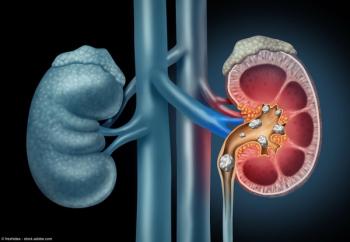
The findings suggest that urolithiasis continues to pose a significant healthcare burden worldwide.

Patients who were Signatera positive and received treatment with atezolizumab had a statistically significant and clinically meaningful improvement in DFS and OS.

According to the authors, these data support the value of PSMA PET/CT in the pre-salvage radiotherapy selection process.
The ARCHER trial is seeking to determine whether ultra-hypofractionated radiotherapy is non-inferior to hypofractionated radiotherapy in terms of bladder-intact event-free survival.

The agent is currently being evaluated in a phase 1/2 trial.

Urologists from the University of North Carolina share insights into key advancements across the field of urologic oncology.
The ArteraAI test is now the first and only AI-powered tool to be authorized to prognosticate long-term outcomes in patients with localized prostate cancer.
The target action date for the application is December 11, 2025.

An interim analysis of the data showed that the trial met its primary end point of EFS, as well as the key secondary end points of OS and pCR rate.

This marks the first and only approval of a perioperative immunotherapy in this disease setting in Canada.
HIFU was shown to be an effective and tolerable treatment option for patients with intermediate-risk localized prostate cancer.
The target action date for the application is March 6, 2026.
In the phase 3 RC48-C016 study, disitamab vedotin plus toripalimab significantly improved PFS and OS vs chemotherapy.
A phase 3 registrational trial of NDV-01 is expected in the first half of 2026.

New findings from the PKIDS trial raise questions about the preference for ureteroscopy in clinical practice.

Take a look through key stories from last month, including regulatory news, trial updates, and other practice-changing advancements.
The phase 1 STRIKE-001 trial will evaluate KTX-2001 as both a monotherapy and in combination with darolutamide.
Data from the phase 2 EXTEND trial showed that the addition of metastasis-directed therapy to ADT improved measures of systemic disease control.

Take a look through key stories from last month, including regulatory news, trial updates, and other practice-changing advancements.

FX-909 is an investigational small molecule PPARG inhibitor for patients with locally advanced or metastatic urothelial carcinoma.
Treatment with mitomycin for intravesical solution led to a 24-month DOR of 72.2% among patients who achieved an initial complete response.

Five-year data from the phase 3 KEYNOTE-426 trial confirm the clinical benefits of front-line pembrolizumab plus axitinib in advanced ccRCC.
INKmune was well-tolerated across all 3 dose levels assessed.
Data showed that 1 in 6 men with GG1 prostate cancer ultimately had higher-risk disease when other clinical features were taken into account.