

“This designation is a powerful validation of our software's potential to transform how we treat cancer,” said Andre Esteva, CEO of Artera.
“This designation is a powerful validation of our software's potential to transform how we treat cancer,” said Andre Esteva, CEO of Artera.

“This study adds to the growing body of evidence supporting combination intravesical chemotherapy as a feasible option even after prior treatment failure," says Ian M. McElree, MD.

The investigational treatment is being evaluated in phase 1 clinical trials for solid tumors.

Among the content is additional information on types of urinary incontinence, ways to control urgency, and frequently asked questions about a healthy bladder.

Colin M. Goudelocke, MD, discusses the PEER trials, which are assessing the safety and efficacy of SNM lead sensing for optimizing SNM programming.

According to the company, the MHRA approval represents the first marketing approval outside the US for NAI.

Eligible patients will receive UGN-103 75 mg intravesically once per week for 6 weeks.
The data, collected as part of the phase 1/2 Duravelo-1 trial, showed an objective response rate of 65%.

The application is supported by data from the phase 3 AMPLITUDE trial.

Take a look through all the regulatory milestones in urology from the first half of the 2025.
Here’s a look back at notable news between April and June 2025.
The da Vinci 5 platform is approved for use across urologic, gynecologic, and general laparoscopic procedures in adult and pediatric patients.

The study will utilize the companion lipid biomarker test, PCPro, to identify patients who may benefit from the addition of opaganib to darolutamide.

The trial is evaluating the efficacy of leflutrozole in improving testicular function and promoting spermatogenesis.
The combination demonstrated a 6-month radiographic progression-free survival of 66%.
A recap of the FDA submissions and regulatory decisions in urology from June 2025.

Justin Dubin, MD, touches on the current landscape of men’s health, with a specific focus on the advent of AI.
The TOBY test works by analyzing the molecular signatures of volatile organic compounds in urine.

The primary end point for the trial is the complete response rate at 3 months.
A comprehensive guide to the key regulatory decisions and conferences slated for Q3 of 2025.

The study also found racial differences in the time to proceeding with surgical therapy.
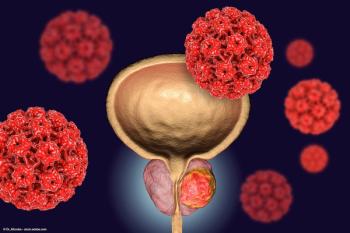
The unfortunate news of President Biden’s diagnosis has put a spotlight on prostate cancer, offering an opportunity to educate on the risks of the disease and the benefits of screening.

The test utilizes chromosomal instability signatures to predict resistance to taxane-based chemotherapy in metastatic prostate cancer.

The results demonstrated a favorable ratio between radiation doses absorbed in the tumor vs the doses delivered to key healthy organs.

Oral sulopenem was approved by the FDA in October 2024 for the management of uUTIs.
Detalimogene is currently under evaluation in the pivotal phase 1/2 LEGEND trial.

Arm D of the trial is assessing the performance of [68Ga]Ga-DPI-4452 in detecting ccRCC in patients with an indeterminate renal mass.
The label expansion follows the FDA approval of an expanded label for 177Lu-PSMA-617 for use in patients with mCRPC after ARPI therapy and before chemotherapy.
The phase 1 study is set to begin later this year.
The approval is supported by data from the pivotal phase 3 ARANOTE trial.