

"We have communicated with Solventum, who makes this software, and they have made changes based on our feedback," says Timothy D. Lyon, MD.
"We have communicated with Solventum, who makes this software, and they have made changes based on our feedback," says Timothy D. Lyon, MD.

"The combination demonstrated clinical activity and an acceptable safety profile in the perioperative setting for locally advanced, non-metastatic clear cell RCC," says Mehmet Asim Bilen, MD.
"We see the overall survival, whether it is [in] all-comers, in HRR gene mutation-positive patients, or in HRR gene [mutation]-negative patients or [those] who did not have mutations, the overall survival is about 45 to 47 months," says Neeraj Agarwal, MD, FACS.
The company plans to initiate the phase 2 monotherapy trial by mid-year.

"I think AI is going to have a significant role. We're just at the tip of the iceberg," says Jason M. Hafron, MD, CMO.

"They are risking their own lives for their job, so it's the part of the whole community to do our best to try to keep them safe," says Sima P. Porten, MD, MPH.

"Glean will enable patients to void naturally, without catheters in place. I believe this advance will yield a better test that mimics actual symptoms," says Bilal I. Chughtai, MD.
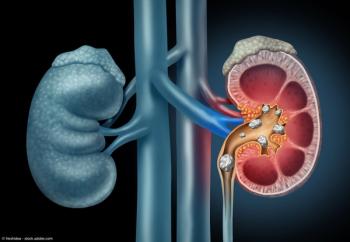
“The data presented at EAU25 add to the growing body of evidence supporting the CVAC System as the emerging standard of care in kidney stone removal,” says Brett Johnson, MD.
“If it is as efficacious as it looks, we will have more patients who are getting effective standard of care treatment, not needing to go on to further treatment, not having recurrences, [having decreased] morbidity from repeated resections, and saving bladders in the process," says Eugene B. Cone, MD.
A recap of the FDA submissions and regulatory decisions in urology from March 2025.
“I always encourage urologists and physicians in general to keep up with the organizations that they're a part of, like the AUA, that often advocate on your behalf," says Ruchika Talwar, MD.
"I say with a lot of confidence, just continue using telehealth as you are," says Chad Ellimoottil, MD, MS.

The European Commission must issue a decision on the application on or by June 2, 2025.
"Viral vectors are basically a blueprint of the virus that's used to carry the DNA payload into the target tissue, but the problem is they have some issues," says Katherine Chan, MD, MPH.
The approval is supported by results from the phase 3 NIAGARA trial.
The approval is supported by positive data from the phase 3 PSMAfore trial.
The test can deliver diagnostic results for chlamydia, gonorrhea, and trichomoniasis.
John A. Taylor, III, MD, MS, discussed the new wealth of options in non–muscle invasive bladder cancer, specifically highlighting detalimogene voraplasmid.
“Our results show that by using NeuroSAFE, nearly twice as many men don’t have to face potentially life-changing loss of erectile function after prostate surgery,” says Professor Greg L. Shaw.

"The objective of this project [was] to clinically adjudicate the complications identified by that outpatient software," says Timothy D. Lyon, MD.

The use of pre-diagnostic MRI was 3.8% in 2012, which increased to 32.6% in 2019.
“One important aspect to get across…is that access to this EAP is pretty easy," says Suzanne B. Merrill, MD, FACS.
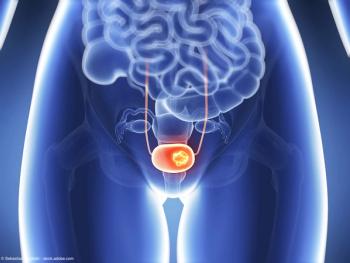
"The striking CR rates observed in these early cohorts are highly encouraging, particularly for BCG-unresponsive NMIBC patients who currently have limited treatment options," says Paul D. Anderson, MBBS, FRACS.
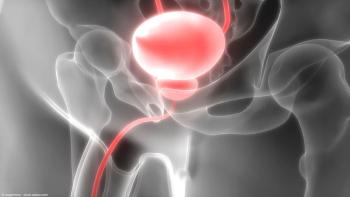
"Provided that we will confirm the efficacy data long-term, there is an opportunity to spare, de-escalate a bit, the treatment in select patients, and to expose the patient with inferior risk of developing severe [adverse] effects," says Andrea Necchi, MD.

In patients with intermediate-risk disease, 4 of 5 patients demonstrated a complete response.
The approval is supported by data from the phase 3 EAGLE-2 and EAGLE-3 trials.

"Now with the new translational data indicating that post-treatment close contact precautions are unnecessary, I am confident that cretostimogene will represent a breakthrough in bladder cancer treatment, if approved by the FDA," says Trinity J. Bivalacqua, MD, PhD.
"There is evidence for a direct link between the exposures you get by doing your job as a firefighter and then developing cancer down the road," says Sima P. Porten, MD, MPH.
The mean change in IPSS from baseline to 3 months was 12.9 in the Aquablation arm vs 13.1 in the LEP arm.
“The addition of the durvalumab did not make treatment more morbid than chemotherapy alone, and it didn't change or increase the surgical complications you saw in the ward," says James W.F. Catto, MBChB, PhD, FRCS.