
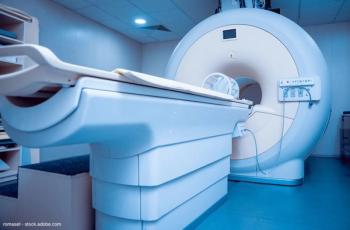
William P. Parker, MD, discusses the initial use of MRI and emergence of multiparametric MRI in the prostate cancer paradigm.
William P. Parker, MD, discusses the initial use of MRI and emergence of multiparametric MRI in the prostate cancer paradigm.

Joshua A. Broghammer, MD, discusses the development and use of intracavernosal injections for the treatment of patients with erectile dysfunction.
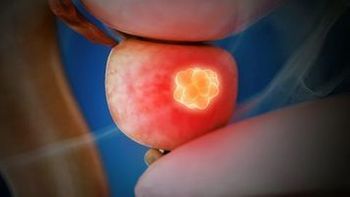
Stephanie Berg, MD, highlights the key findings of the PEACE-1 and ARASENS trials in patients with metastatic castration-sensitive prostate cancer.

“From a screening perspective, mpMRI really has changed how we evaluate men at risk for prostate cancer. It has improved the selection of men for biopsy and certainly improved our diagnostic rates,” says William P. Parker, MD.

Helen Heng-Shan Moon, MD, reflects on major advances in prostate cancer over the past 10 years and unmet needs that remain.

Christopher Wee, MD, discusses available androgen receptor inhibitors and unmet needs regarding the optimal use of these agents for patients with nonmetastatic castration-resistant prostate cancer.

“We did not happen to find that vitamin D compared to placebo lowered the odds of having incontinence at year 2 or year 5. Nor did it lower the odds of having overactive bladder symptoms at year 5,” says Alayne Markland, DO.
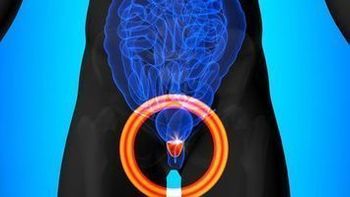
“I think my definition of who is the ideal patient has changed over the last 4 years,” says Jennifer A. Linehan, MD.

“We really need to be thoughtful about how our treatment recommendations may induce financial toxicity in patients with advanced prostate cancer,” says Daniel D. Joyce, MD.

“I feel like [HIFU] provided patients this intermediary treatment option…It was less invasive than radiation and surgery, but still provided cancer control, or at least for some patients delayed the time until they needed a more radical treatment,” says Jennifer A. Linehan, MD.
Moshe Ornstein, MD, discusses the mechanism of action, approved indications, and safety profile of the antibody-drug conjugate sacituzumab govitecan for patients with urothelial cancer.
Joshua A. Broghammer, MD, discusses the use of penile implants in the field of urology, detailing both the semi-rigid and inflatable penile prostheses.
William P. Parker, MD, highlights 3 areas in which he thinks PSMA-PET imaging is going to be explored further in prostate cancer.
Shilpa Gupta, MD, explains that the toxicities of sacituzumab govitecan and enfortumab vedotin “are not overlapping.”

“We found that treatment-related out-of-pocket costs were 18 times higher for those patients treated with novel hormonal therapies compared to those who were just on standard ADT,” says Daniel D. Joyce, MD.

“I think what becomes important with this is how we need to do our part in terms of not only engaging our non-urology colleagues to help in educating them about these most common problems in urologic conditions, but also really become [advocates] at the medical school level,” says Jessica Kreshover, MD.
The phase 3 PRESTO trial had 3 arms: ADT alone; ADT plus apalutamide; and ADT plus apalutamide plus abiraterone/prednisone.
There are 2 FDA-approved PSMA-PET imaging agents: Gallium 68 PSMA-11 (Ga 68 PSMA-11) and piflufolastat F 18.

In this interview, Howard Goldman, MD, discusses the development of sacral neuromodulation as a treatment for overactive bladder (OAB).
“The management of patients with advanced urothelial carcinoma whose cancer has progressed on immunotherapy presents a unique challenge,” says Moshe Ornstein, MD.

"[Sacral neuromodulation has] changed the treatment of OAB remarkably," says Howard B. Goldman, MD, FACS.

“When we looked at the topics within urology that are covered, either in the preclinical or clinical years, what became very surprising to us is that these highly relevant topics like urologic emergencies, bladder drainage, and erectile dysfunction—less than 1 in 5 students had exposure to during medical school,” says Jessica Kreshover, MD.
“There’s a tremendous amount of work going on right now with PARP inhibitors in the resistant stage, but now also we’re looking at them in the sensitive stage,” says Neal D. Shore, MD.

Catherine Ann Matthews, MD, FACS, FACOG, and John B. Gebhart, MD, MS, preview the upcoming AUGS Clinical Meeting.

“We wanted to compare outcomes between nursing home residents and community-dwelling older adults undergoing surgery for bladder and bowel dysfunction,” explains Anne M. Suskind, MD.

“These data do suggest that [enfortumab vedotin-ejfv (Padcev) and pembrolizumab (Keytruda)] is a viable treatment option for cisplatin-ineligible patients,” says Jonathan E. Rosenberg, MD.

“I think the take home message of this study is that there's work to do, and that our efforts in diversity, equity, and inclusion extends broadly beyond simply ensuring that we have the workforce to treat our diverse population, or that urologists are thinking critically and responsibly about the needs of our patients,” says Kevin Koo, MD, MPH.

“PSMA-PET imaging is something that from a clinical practice perspective is rapidly changing and evolving the field of prostate cancer,” says William P. Parker, MD.

“The leadership has really driven this program to be one of the best in the country,” says Casey Kowalik, MD.

“One thing that from the very beginning we talked about is how can we push this forward? How can we think outside the box and take this to the next level to make an impact for our patients?” says Katie Murray, DO, MS.