
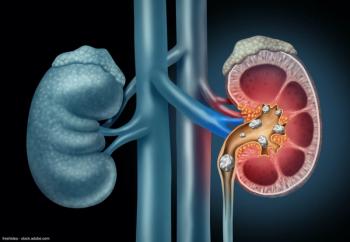
“We were able to develop a machine learning model that had decent accuracy…in predicting which patients would have an additional stone event and which patients wouldn't,” says Kevin Shee, MD, PhD.
“We were able to develop a machine learning model that had decent accuracy…in predicting which patients would have an additional stone event and which patients wouldn't,” says Kevin Shee, MD, PhD.

Bipolar androgen therapy is being explored in trials with enzalutamide (Xtandi), olaparib (Lynparza), and nivolumab (Opdivo), explains Laura Sena MD, PhD.

“Stereotactic radiation can delay the initiation of systemic therapy; it can locally control oligometastatic RCC patients for as much as 2 years,” says Raquibul Hannan, MD, PhD.

“Prostate cancer is…a BRCA-linked cancer, so we can increase the messaging surrounding prostate cancer on social media platforms, we can increase the amount of awareness on the genetic link that exists with prostate cancer, so that patients are also more empowered to bring this up with their providers,” says Sameer Thakker, MD.

Matthew Galsky, MD, discusses the discordant results of the pivotal phase 3 CheckMate-274 and IMvigor010 trials of adjuvant immunotherapy in urothelial cancer.

Raquibul Hannan, MD, PhD, describes patients with renal cell carcinoma who may be appropriate for treatment with stereotactic radiotherapy.
“This is different from other standard-of-care therapies for prostate cancer because usually we are inhibiting androgen receptor (AR) activity and here we’re actually stimulating AR,” explained Laura Anne Sena, MD, PhD.
“In the adjuvant setting, we have a ‘double biomarker problem.’ Not only don’t we know which drugs work best in which patients, we actually don’t even know which patients need additional systemic treatment because many patients are already cured with surgery,” says Matthew Galsky, MD.

“This is the perfect situation for the development of biomarkers to inform [patient selection for] adjuvant treatment with immune checkpoint blockade,” says Matthew Galsky, MD.

“What we found is that the use of these drugs and novel hormonal therapies and chemotherapy in the metastatic castration-sensitive setting was relatively low,” said Stephen J. Freedland, MD.

"In Arkansas, for example, we now have half the urologists that there were 25 years ago, and that's with an increasing population. That's a representation of what's going on across the country," says R. Jonathan Henderson, MD.

“It was overall received very positively by applicants and programs,” says Moben Mirza MD.

“The rates of testing declined slightly, about 2 absolute percentage points, over the study interval, despite the introduction of guidelines recommending it during the study period,” says Ryan Hsi, MD, FACS.
“It certainly seems that we're moving into medical management of advanced diseases,” says J. Christopher Webster, MD, FACS.

“The other aspect of this study that really fascinated us was how patients are getting information about cancer genetic testing,” says Sameer Thakker, MD.

“Almost 1/3 [of telehealth visits] were planned as audio-only, and the healthcare system is no longer going to pay for that. We can use the data from our census to go to Congress and say, 'Hey, you're making a mistake,’” says Amanda North, MD.

Dr. Goldberg discusses his findings on the rates of shared decision-making and PSA testing, which were presented at the NSAUA meeting in Charlotte, North Carolina.
“The biggest question that arose from this is, ‘Why is there such a lack of large familial genetic disorder epidemiological studies?’ says Laura Bukavina, MD, MPH.

“We need to continue to push the field forward, and the way we do that is to evaluate the risk factors and to stratify patients based on their risk factors and their genetic components,” says Laura Bukavina, MD, MPH.

“Not only, as we've shown, does sepsis cost a lot of money, is very morbid, and can lead to mortality, but it's increasing,” says Naeem Bhojani, MD.

"What was surprising to me is that the incidence [of kidney cancer] has leveled off over the past 2 years," says Laura Bukavina, MD, MPH.

“We're trying to see if combining shockwave therapy along with PRP will make an additive impact on the improvement in erectile function in men with erectile dysfunction,” says Ranjith Ramasamy, MD.

“There have been a lot of efforts to increase the diversity of the urologic workforce, and I think the fruits of our labor are starting to show themselves when we look at the residents,” says Amanda North, MD.
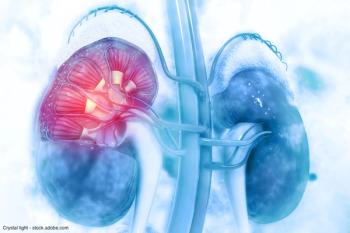
“Due to the rarity and poor molecular characterization of nccRCC, there is an underrepresentation in clinical trials evaluating patients with this type of RCC; because of this, patients are often treated with non-tailored therapies,” the researchers wrote.
“From a patient care standpoint, anything that opens the door and makes the patient feel more secure and open is going to lead to better outcomes for them and allow us to serve their needs best,” says Benjamin Lowentritt, MD, FACS.
"The idea that we may have reliable and consistently interpretable tests for these patients is exciting for the future," says Benjamin Lowentritt, MD, FACS.

“There’s always going to be some criticism…but I think we can see what needs to improve and move toward a system that works well for everyone,” says Moben Mirza MD.

In this interview, Ziho Lee, MD, discusses the buccal mucosa graft for urethral and ureteral stricture disease.
“New imaging has rapidly changed the advanced prostate cancer landscape, and all of the existing studies that we have are based on older imaging,” says Dr. Henderson.

“Number 1 to me is going to be an applicant who comes in ready to avail all the opportunity that will be afforded to them during their residency,” says Moben Mirza MD.