

“Perspectives on testosterone therapy and its use as it pertains to prostate cancer have certainly progressed over [the] years,” Diana Magee, MD, MPH, MSc.
“Perspectives on testosterone therapy and its use as it pertains to prostate cancer have certainly progressed over [the] years,” Diana Magee, MD, MPH, MSc.

Laura Bukavina, MD, MPH, summarizes a presentation from the 2022 Society of Urologic Oncology Annual Meeting from Sarah P. Psutka, MD, MS.

“It’s important for us to get the tools necessary to deal with patients who come with a unique set of difficulties,” says Laura Bukavina, MD, MPH.

“I just hope that people are as enthusiastic about this new company, as [I] and my coauthors are,” says Ruchika Talwar, MD.

"We're trying to figure out how to improve people's relationships with their genitals and like their sexual practices," says Christi Butler, MD.

"I think there's a lot of fear that can go into talking about these topics," says Katherine Rotker, MD.

“The combination of NAI plus BCG was safe, it was effective, and it serves as a feasible and viable alternative to other agents in this disease space,” says Karim Chamie, MD.

“I think my biggest piece of advice would be to get a social worker into your clinic because there's so many things that we can do,” says Mara Markzon, LCSW, ACM-SW.

“What we found is that the majority of these companies…offered our ‘secret shopper’ testosterone therapy,” says Joshua A. Halpern, MD, MS.

“First and foremost, it’s great that we have multiple lines of therapy for our bladder cancer patients,” says Tanya Dorff, MD.

Tanya Dorff, MD, explains how the next frontier in mCSPC will be the ability to select patients for treatment based more on molecular stratification and not only on disease volume or metachronous vs synchronous presentation.

“This study highlights how treatment remains influenced by where you live,” Diana Magee, MD, MPH, MSc.
“It's important to continue to speak up about what we have previously deemed controversial or taboo topics, such as family planning, pay disparities, and discrimination,” says Bridget Lang Findlay, MD.

Nadofaragene firadenovec is a non-replicating adenoviral vector based gene therapy.

"Hopefully, this will be a resource for people who are preparing for birth, or who have recently experienced birth," says Linda Brubaker, MD, MS.
"It is safe to give 24 hours or less of antibiotics for radical cystectomy. It does not decrease your infectious complications to have extended duration antibiotics," says Megan Prunty, MD.

“I would say that we did not anticipate the degree of potential cost savings,” says Ruchika Talwar, MD.
Richard Harris, MD, FACS, provides pointers for young physicians just starting out in the field.
“One of the things that drives me to be a part of advanced prostate cancer care is that literally every 6 months, we are having major trials read out guideline-based changes in care,” says Jason Hafron, MD.

“This is a huge topic within all academic medicine right now, whether it’s urology or otherwise,” says Moben Mirza, MD, FACS.

“Ultimately it really does come down to the discussion with the patient,” says Bradley McGregor, MD.

“In terms of both numbers of centers [administering radionuclides] as well as the amount of drug that’s available, [both] are going to increase over the next several months and certainly, year,” says Scott T. Tagawa, MD, MS, FACP.

“At this time, there are at least 2 classes of therapeutic agents which are used for patients with certain germline or somatic genetic mutations,” says Emmanuel S. Antonarakis, MD.
“iQuest combines existing patient-specific diagnostic information and deep-learning algorithms to create a tailored [3D] map of where cancer is within the prostate,” according to Avenda Health.
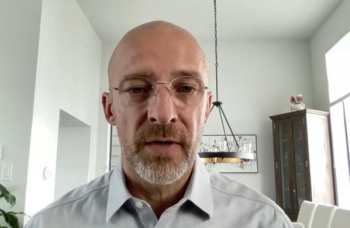
HIF-2α inhibitors, such as belzutifan (Welireg), are a promising new class of agents emerging in the renal cell carcinoma treatment paradigm, explains Eric Jonasch, MD.

“It's a really simple tool to predict your out-of-pocket costs,” says Benjamin Pockros, MD, MBA, of Medicare Plan Finder.

“Many urologists in large group practices are doing genetic testing, especially for their high-risk patients,” says Emmanuel S. Antonarakis, MD.
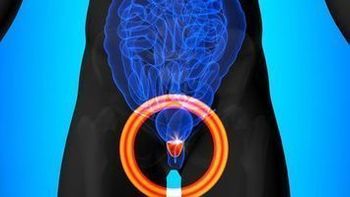
177Lu-PSMA-617 is approved for the treatment of patients with PSMA-positive metastatic castration-resistant prostate cancer in the post androgen receptor pathway inhibition, post taxane-based chemotherapy setting.

Emerging research includes combining radionuclides with other agents and exploring novel approaches to targeting PSMA, such as antibodies.

Moben Mirza, MD, FACS, discusses the need to move toward an optimal number of urology residency applications for both the individual applicants and the residency programs.