

"You have to manage and maintain the other parts of yourself that are not answering all those needs from work," says Jennifer M. Taylor, MD, MPH.
"You have to manage and maintain the other parts of yourself that are not answering all those needs from work," says Jennifer M. Taylor, MD, MPH.

"What really surprised us was that 25% of our Botox cohort had previously undergone nerve stimulation, and those patients were less likely to stop Botox," says Katherine L. Woodburn, MD.

“There's a huge potential role for urologists out there for female sexual health,” says Rachel Pope, MD, MPH.

"We used data from this study to see whether having a greater number of flares independently impacted patients’ quality of life as well as their healthcare seeking activity," said Siobhan Sutcliffe, PhD, ScM, MHS.

The patient was treated as part of a clinical study of the novel MONARCH platform at UCI Health in California.
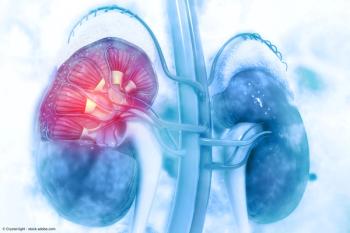
“We thought anesthesia type would be relevant. But both urologists and patients determined that it actually was not relevant to their decision making,” says John Michael DiBianco, MD.

“It seems like podcasts really are a good way for people to learn about even a complex topic like this,” says Stacy Loeb, MD, MSc.
"The interesting thing that's come out of the research that Dr. Lebares has done is that burnout can be countered by mindfulness," said Jennifer M. Taylor, MD, MPH.

“In medicine, we're not taught the business of medicine, but the day that you become faculty at an institution or private practice, you learn that it is a business, but yet nowhere in our training are we taught that,” says Michelle Pearlman, MD.

"In many cases, we're now bringing the capabilities of the hospital into a patient's home," says Timothy D. Lyon, MD, FACS.

“There are just a lot of barriers, unfortunately, to speaking freely about women's sexual health,” says Rachel Pope, MD, MPH.
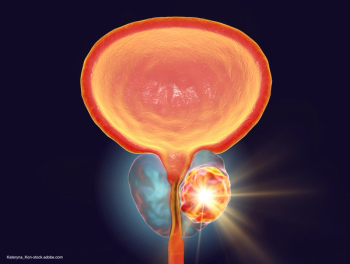
Study participants were randomly assigned to receive 6 months of HT plus local therapy or 6 months of HT alone.

“We aimed to develop a surgical decision aid to help facilitate this decision-making process for patients who are candidates for either shock wave lithotripsy or ureteroscopy with kidney stones,” says John Michael DiBianco, MD.

“I think this is a nice cluster of podcasts that really go at this from different angles,” says Stacy Loeb, MD, MSc.

"I think that it's important to have a clear understanding and articulation of what the shared goals are," says Mark S. Litwin, MD, MPH.

“Although people will look back and say, how in the world do urology and gastroenterology fit in with each other? They have everything to do with each other because we focus on the foundation,” says Michelle Pearlman, MD.
The phase 2 SALV-ENZA trial explored whether the addition of enzalutamide to salvage radiation therapy could improve outcomes in patients with high-risk, PSA-recurrent prostate cancer after radical prostatectomy.

“Effective January 1, 2023, anyone who performs a laparoscopic simple prostatectomy should be using CPT code 55867 to report that procedure,” says Jonathan Rubenstein, MD.

Combining the approved antibody-drug conjugates with other agents in this space may provide some synergy and allow even more efficacy and disease control, explains Alicia Morgans, MD.
Benjamin Lowentritt, MD, discusses how the phase 3 SPOTLIGHT trial showed the efficacy of the PSMA-PET imaging agent 18F-rhPSMA-7.3 PET across a variety of subgroups in prostate cancer.
“What's more concerning is we're seeing an increase in advanced or late-stage diagnosis, which I've seen in my practice as well,” says Derek J. Lomas, MD, PharmD.
"What came out of that meeting was looking at wellness and burnout as a preventative thing," says Diana Londoño, MD.

In this interview, Ira Sharlip, MD, explains the potential dangers these products pose and what urologists can do to help protect their patients.

“We need to do better, and men in America deserve a better chance at long-term, good outcomes from their prostate cancer discovery,” says Michael S. Cookson, MD, MMHC.

"I think that to be a successful mentee, you have to view the relationship with your mentor as a 2-way street," says Mark S. Litwin, MD, MPH.

“So many patients with prostate cancer qualify for genetic testing, but it's currently underutilized,” says Stacy Loeb, MD, MSc.
"The other things that are important are to use the privilege that you have as a senior mentor, even as a mid-level or junior mentor, to help open doors for people and make connections," says Mark S. Litwin, MD, MPH.
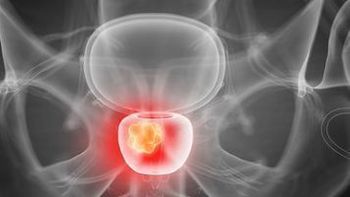
“This study is one of the most highly anticipated of all of the metastatic hormone-sensitive setting trials that we have going on at this time,” says Alicia Morgans, MD, MPH.

"Patients with intermediate-risk NMIBC remain an incredibly heterogeneous group," says Wei Shen Tan, MD, PhD.
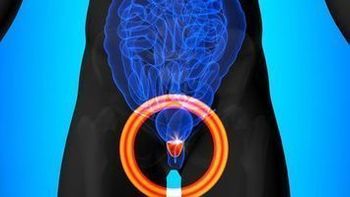
“The benefits can be reaped by the vast majority of patients and because we're really undertreating these patients, we need to make a conscious effort to overcome whatever barriers are facing us,” says Alicia Morgans, MD, MPH.