

"The future's bright, and I think we have a lot more people engaged," says Denise Asafu- Adjei, MD, MPH.
"The future's bright, and I think we have a lot more people engaged," says Denise Asafu- Adjei, MD, MPH.

"There's a potential for a more nuanced approach to screening where you assess baseline at 40 for all races, so that you can then determine who needs to be screened regularly or not," says Adam Murphy, MD, MBA, MSCI.

“Whenever you're talking about the risk of incontinence, you should know your own data and not cite a specialist who has done a [large amount] of cases,” says Ricardo M. de Oliveira Soares, MD.

"Helping urologists establish practices in rural areas and incentivizing those practices is so important," says Kevin Koo, MD, MPH.
“One of the key challenges in the refractory renal cell population is identifying mechanisms of resistance to immune checkpoint inhibitors, and really delving in and figuring out how to target those mechanisms of resistance,” says Zhang.
“There's a lot of talk about Roe v. Wade affecting the reproductive health of women. This implies that it's also affecting reproductive health decisions for men,” says Sarah Vij, MD.
There currently 2 PARP inhibitors—olaparib and rucaparib—approved as monotherapies for the treatment of patients with metastatic castration-resistant prostate cancer.

Part of Shore’s recommendations include 15 to 30 minutes of exercise daily, consisting of both a cardio component and some level of cross resistance for muscle development.
"Working on interstate licensing agreements and compacts is another long-term sustainable solution to ensure that telehealth remains robust and viable for both our patients and our practices," says Kevin Koo, MD, MPH.

“When I'm discussing surgery, or any kind of treatment for prostate cancer, with patients, I always talk about the ‘trifecta,’ “ says Ricardo M. de Oliveira Soares, MD.

“What we really want to do is have more enhanced engagement of broader populations,” says Veda Giri, MD.

"We also saw in the high-risk group that patients who identified as Black were much more likely to not receive treatment than their White counterparts," says Madison Novosel, BA.
“[The study] should provide better insight for clinicians when they're making decisions about treatments and whether surgery is reasonable or not,” says Bernard H. Bochner, MD, FACS.
“What we saw in phase 3 studies and what we've seen in earlier studies—early phase 1/2 studies—is really a paucity of cognitive impairment and a paucity of depression with darolutamide that we've seen across the class of androgen receptor signaling inhibitors,” says Neal Shore, MD.

"Given the fact that this field has really expanded, we see that patients are engaging with genetic testing in various different ways," says Veda Giri, MD.

Laura Bukavina, MD, and Kyle Rose, MD, discuss some of the notable abstracts from the 2023 ASCO GU conference.

“What we'd like to try to do in our research is see if we can begin to develop a tool that is more personalized for patients, that can provide a more useful approach to quality of life,” says Bernard H. Bochner, MD, FACS.
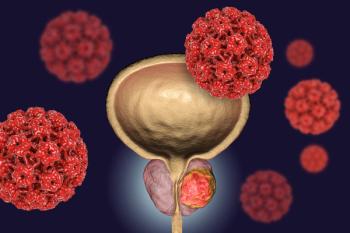
“Metastatic castration-resistant prostate cancer remains a lethal disease, with high unmet needs in terms of treatment options, particularly for patients with BRCA1/2 gene mutations,” said Elena, MD, PhD
Neal Shore, MD, discusses results from the open-label rollover study from the phase 3 ARAMIS trial, which he presented at the 2023 Genitourinary Cancers Symposium.

“The field of germline testing for prostate cancer has expanded significantly; it's really become central in terms of thinking about treatment for men with metastatic prostate cancer,” says Veda Giri, MD.

The secondary analysis Hussain presented at the GU Symposium showed that the risk of death was reduced by 32% across all volume and subgroups in men with mHSPC treated with the darolutamide-based triplet regimen.

“I truly believe that if we don't take care of ourselves, we just can't take care of other people,” says Michelle Pearlman, MD.

"In our lab, we found that when you gave it to the mice model of bladder cancer, the tumors go away, and they're infiltrated with immune cells," says Joshua J. Meeks, MD, PhD.

"The model that we developed was able to behave as accurately as clinical models that were previously validated," says Nour Abdallah, MD.

"Darolutamide achieved the primary endpoint. Easily 100% of the patients had a PSA decrease above 90%," says Bertrand F. Tombal, MD, PhD.
“When we looked at all the various domains in these 14 different standardized measures…essentially, patients returned to baseline reported levels, usually, by about 1 year or so,” says Bernard H. Bochner, MD, FACS.
“We need to pursue further education in the field and reach out to every community practice and make them understand that we do now have the guidelines in place, the reimbursement in place, and cost is going down for actually adding system-wide germline and somatic testing for these patients,” says Eleni Efstathiou, MD, PhD.

“There are some situations where I do place stents, but I am really trying to limit [my] amount of stent usage,” says Christopher Allam, MD.

"If I had to boil down the advice, I would say that the most important thing that I did not know, that I've learned over time, is that you have to be prepared," says Stephanie Dukhovny, MD.
"The majority of my talk focused on describing differences in cancer-specific [survival] as well as overall survival," says Christine Ibilibor, MD.