
“There were no serious skin events that occurred on this study, which I think is a credit to the study team that worked with the investigators to manage the manage the toxicity and prevent serious skin reactions,” says Jonathan E. Rosenberg, MD.
“There were no serious skin events that occurred on this study, which I think is a credit to the study team that worked with the investigators to manage the manage the toxicity and prevent serious skin reactions,” says Jonathan E. Rosenberg, MD.

“The main finding of the study was that, like…other clinical trial studies in the past, we also found that there was an over representation of non-Hispanic White patients in these trials, and a dramatic under representation of people traditionally and historically underrepresented in clinical trials and in medicine,” says Kevin Koo, MD, MPH.

“There is so much support and so much advocacy to work and create an equitable culture for women in this historically male-dominated field,” says Casey Kowalik, MD.

“A majority of the patients who were referred who had a catheter pre embolization are now catheter free,” says Kimberly Kocour, MD.
Daniel P. Petrylak, MD, discusses results of a post-hoc analysis of the phase 3 ARCHES trial examining outcomes with enzalutamide/ADT treatment intensification in patients with mHSPC and prior ADT based on patients’ baseline PSA level.

Stephen J. Freedland, MD, shares his thoughts on potential new uses for cabazitaxel in the prostate cancer paradigm.

“This concept of adding additional therapy early on is ready for primetime,” says Michael S. Cookson, MD, MMHC.

“We started in 2020 and so far, we’ve had 193 mentors and 126 mentees,” says Micha Cheng, MD, MPH, MS.

“[With] some folks, if you don't accurately risk stratify them, you miss your chance to really build that trust as a provider,” says Neil Mistry, MD, MPH.

The initial results from JAVELIN Bladder 100 supported the FDA approval of avelumab for the maintenance treatment of patients with locally advanced or metastatic urothelial carcinoma.

“There was about a 32.5% survival advantage for patients with that triple therapy,” says Michael S. Cookson, MD, MMHC.
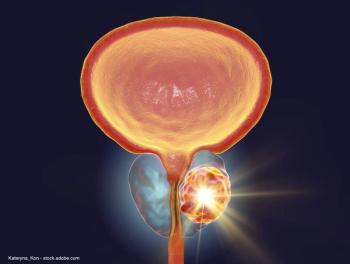
Stephen J. Freedland, MD, discusses current practice patterns with cabazitaxel in prostate cancer and the potential to use the therapy earlier in treatment sequencing.
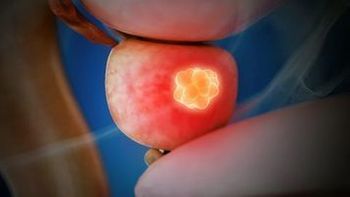
The pivotal CARD study compared cabazitaxel to androgen receptor pathway inhibitors in patients with previously treated metastatic castration-resistant prostate cancer.
“It’s hard to see yourself in a field when there are not that many residents or faculty that look like you,” says Micha Cheng, MD, MPH, MS.

In this interview, Andrew C. Peterson, MD, MPH, discusses the development of the artificial urinary sphincter.

Micha Yin-Zheng Cheng, MD, MPH, MS, discusses the background of the UCSF UReTER (UnderRepresented Trainees Entering Residency) Mentorship Program.

Danica May, MD, discusses positive feedback she has received from participants in the KU Department of Urology rotation.

"This device has been really well studied, and we have lots of data on it," says Andrew C. Peterson, MD, MPH.

“We actually found that our calculator held up pretty well at different risk thresholds, especially when compared to the PCPT in terms of maintaining the same number of missed cancers, but cutting the number of biopsies that were not necessary nearly in half,” says Neil Mistry, MD, MPH.

“When it comes to encouraging patients to utilize this therapy the number 1 thing I say is that it is the most effective therapy out there on the market,” says Raveen Syan, MD.

"Aquablation therapy is as effective as other minimally invasive treatments [for these men] but with fewer side effects, including only a 10% to 15% risk of retrograde ejaculation," said Ravi Munver, MD.

“We still need better representation from the AUA national level on down to the section meeting. There is a positive push for that, but things are still in process,” says Danica May, MD.

“It’s always fun getting to interact with people from different programs and different areas and we want to make them feel as welcome as possible,” says Danica May, MD.

Vignesh Packiam, MD, discusses study results showing sequential intravesical gemcitabine and docetaxel is an effective and well-tolerated therapy for BCG-naïve NMIBC.

Vignesh Packiam, MD, explains how innovation driven by the BCG shortage led to a potential promising new regimen of sequential intravesical gemcitabine and docetaxel for patients with BCG-naïve non–muscle-invasive bladder cancer.

Albert Jang, MD, discusses the promise of using ctDNA to determine whether patients with advanced genitourinary cancers are responding to immune checkpoint inhibitors.
There are still quite a few patients who still do not respond to immunotherapy, says Albert Jang, MD.

“I think my goal in doing all this research is to draw awareness to these problems and the disparities,” says Elisabeth M. Sebesta, MD.

“Several of these patients were able to undergo surgery that spared them the need to remove their ureter and their kidney,” says Matthew T. Campbell, MD.
“The NRG SWOG 1806 trial is a phase 3 trial randomizing patients to standard trimodality therapy or trimodality therapy plus atezolizumab,” says Sophia Kamran, MD.