Articles by Urology Times staff

“I think that there's certainly recognition that HoLEP is a procedure that can be self-taught and learned. But I think the learning curve is significantly shortened if you're mentored and certainly if you're fellowship trained,” says Nicole L. Miller, MD, FACS.

“Several years ago, we eliminated the high stakes component of our exam and made it into more of an educational process,” says David Joseph, MD.
In their study, Joshua Halpern, MD, and co-investigators examined the link between low testosterone and frailty in veterans undergoing cancer surgery.

Sumanta K. Pal, MD, highlights next steps now that the combination of cabozantinib and atezolizumab showed promising clinical activity in bladder cancer in the phase 1b COSMIC-021 trial.

Robert E. Brannigan, MD, discusses which men with infertility issues should receive genetic testing.

“We showed in this controlled study that the mindfulness meditation decreases anxiety level and has a positive effect on pain and also on patient satisfaction,” says Andrea Staack, MD, PhD.

In this installment, Howard B. Goldman, MD, FACS, discusses the development of multichannel urodynamics testing.

Barrigel, which is made from Non-Animal Stabilized Hyaluronic Acid (NASHA), is used to separate and increase the distance between the anterior rectal wall and the prostate when the patient is receiving radiotherapy.

“What made [multichannel urodynamics] so important is you're able to diagnose things much better; you're able to have a much better understanding of what's actually going on,” says Howard B. Goldman, MD, FACS.
Guru P. Sonpavde, MD, highlights long-term data from the phase 3 EV-301 trial of enfortumab vedotin versus chemotherapy in patients with previously treated advanced urothelial carcinoma.
Pal highlights results from the phase 1b COSMIC-021 trial in which cabozantinib plus atezolizumab showed promising clinical activity in patients with urothelial carcinoma.
The ENZAMET study explored enzalutamide in patients with metastatic hormone-sensitive prostate cancer.

“For patients who are several years out from treatment for bladder cancer or kidney cancer, I don't think [the shortage is] going to have a clinical impact. For more acute settings, I have tried to rely a little bit more on MR urograms and ultrasound,” says Yair Lotan, MD.
Lead author Ian Davis, MBBS, PhD, discusses the results of the ENZAMET study update he shared during the 2022 ASCO Annual Meeting.

"We need to try to do as much as we can to limit sepsis, and basing it on the patient's preoperative risk factors can be very helpful," says Naeem Bhojani, MD, FRCSC.
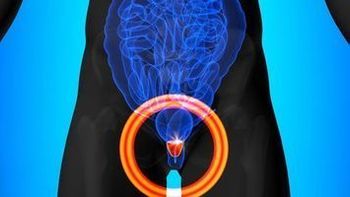
The target of the the PET-imaging agent 64Cu SAR-Bombesin is the Gastrin Releasing Peptide receptor (GRPr), which is found on prostate tumors as well as several other tumors

“I think immunotherapy in the neoadjuvant and also in the BCG-unresponsive setting are here to stay,” says Roger Li, MD.

In this interview, Eila C. Skinner, MD, discusses neobladder reconstruction in patients undergoing radical cystectomy.
Rao is an investigator on the ongoing phase 3 CASPAR trial exploring the AR pathway inhibitor enzalutamide combined with the PARP inhibitor rucaparib in patients with mCRPC.
"It's not perfect; you have to sort of retrain it, and there are some downsides to it. But it's the closest that we can get to, essentially, an artificial bladder," says Eila C. Skinner, MD.
“Less than half of the videos actually featured a medical provider, so a majority of videos are being produced by non-medical providers, commercial media, or individual YouTubers with no medical experience,” says Connie Huang, MD.
“We found in ARCHES that in the men who developed radiographic progression while on ADT-enzalutamide [Xtandi], two thirds of these patients, when they had radiographic progression, did not meet PSA progression criteria, and one third didn't have any rise at all in their PSA,” says Andrew J. Armstrong, MD, MSc.
Based on the efficacy of the LITESPARK-001 study, the phase 3 LITESPARK-005 study of belzutifan has already been launched, says Eric Jonasch, MD.

“This analysis has a median follow-up of 41 months,” says Jonasch.

The new findings, “further support the use of adjuvant pembrolizumab after nephrectomy as a standard of care in patients with localized renal cell carcinoma at increased risk for recurrence,” says Toni K. Choueiri, MD.

Janet Kukreja, MD, discusses 5 studies in bladder cancer being presented at the 2022 ASCO Annual Meeting.

Michael S. Cookson, MD, MMHC, discusses 5 studies in prostate cancer being presented at the 2022 ASCO Annual Meeting.

"We're all very aware of the impact that prostate-specific antigen [PSA] has had on screening for prostate cancer. What's underappreciated is how the biopsy technique pivoted at about the same time," says Adam S. Kibel, MD.
In this video, Adam S. Kibel, MD, discusses the development of transrectal ultrasound-guided prostate biopsy and how prostate biopsy has continued to evolve over the years.

“What would be wonderful is to have a strong, smart triaging system,” says Shirley Lee, CRNP-FNP, MPH.
