

“One of the most exciting areas of research in sexual health are new improvements on penile implants,” says Marta Skrodzka, MD.
“One of the most exciting areas of research in sexual health are new improvements on penile implants,” says Marta Skrodzka, MD.

Welcome to another installment of Uranimals, a video series featuring urologists and their pets. From an acrobatic cat to an enemy of landscaping, let’s see who some of the top medical professionals are spending time with when they’re not in the clinic!

“I would suggest a discussion with your medical oncology colleagues, just so that you and your staff know what to expect in the short term and the long term,” says Susan F. Slovin, MD, PhD.

“We really felt that this was an important question to ask because we know that OAB therapy adherence is associated with improvements in urinary symptoms, quality of life, and decreased OAB-related health care costs,” says Ekene Enemchukwu, MD, MPH.

“Instead of waiting for all the bureaucracy and paperwork, I decided just to go there, figure out what I need to do, and then figure out where I could be helpful, whether it’s medical or non-medical. I really didn’t care. I felt that I just needed to do something,” says Laura Bukavina, MD, MPH.

The approval is based on findings from the phase 3 VISION trial.

In this installment of Urology Times' 50th Anniversary Innovation Celebration, James E. Lingeman, MD, discusses the development of extracorporeal shock wave lithotripsy for the treatment of kidney stones.
“We look forward to the optimization of these drugs,” says Scott T. Tagawa, MD, MS, FACP.
"The seminal innovation was the idea that you could create a focused shock wave that could be delivered into the body in a non-invasive way that had sufficient energy to break up a stone but not damage other structures," says James E. Lingeman, MD.

“Whether it is E-cigarettes or other products, the goal should be complete cessation,” says Omar El Shahawy, MD, MPH, PhD.
“I think [this study] really addresses an unmet need for practicing urologists across the world,” says Fred Saad, MD, FRCS.
“We certainly need to move away from a model of care that is follow up driven by tumor markers or imaging alone,” says Netty Kinsella, RN, MSc, PhD.

“We need to just approach STIs as the medical conditions they are because until we do, and until we take those stigmas away, people will truly have resistance to discussing it, hesitance to discussing it, and resistance to diagnosis and intervention,” says Ashley Winter, MD.

“There are many studies now that have shown that these doublets and triplets seem to be better than just ADT alone,” says William K. Oh, MD.
“This technique is feasible, it is very well tolerated, and there’s not much of a complication rate, so it appears to be very safe,” says Amy D. Dobberfuhl, MD, MS.
“I think we need to change the mindset that chemotherapy is a bad thing. It is a very good thing when given appropriately and when patients are more likely to get long-term benefit,” says Fred Saad, MD, FRCS.
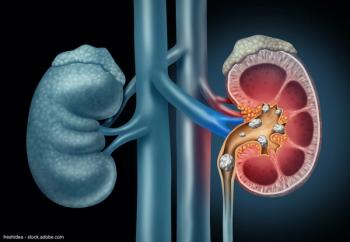
“The take home message would be that in patients with prior history of kidney stone episodes…receiving 24-hour urine testing prior to starting pharmacologic preventive therapy is associated with a lower probability of a subsequent stone-related event,” says Ryan Hsi, MD, FACS.

“I think this is an extremely exciting space,” says Jai Seth, MD, BSc, MSc, FRCS.

“[The prediction model] worked way better than we expected that it would work,” says Sevag Demirjian, MD.
“We need to improve the fact that 75% of these patients are untreated [or] unmanaged and frustrated,” says Alexandra Rogers, MD.

“Botox has been a wonderful drug for many, many years,” says Min Dong, MD.
“There are many trials that clinicians should be aware of,” says Daniel P. Petrylak, MD.
“I think we as urologists have to be proactive in providing information to our patients so that they avoid financial harm and potentially bodily harm from this sort of misinformation,” says Rena D. Malik, MD.

“The take-home message is that it's not a question of if you're going to start doing a hereditary cancer risk assessment, it's when,” says Neal D. Shore, MD, FACS.

“One of the reasons I so enjoy this conference is the multidisciplinary nature,” says Peter A. Humphrey, MD, PhD.

In this installment of Urology Times' 50th Anniversary Innovation Celebration, Sam S. Chang, MD, MBA, discusses the critical role that BCG has played in managing bladder cancer, and how the BCG shortage continues to evolve.
“It’s not only about prescribing medications or advising how to use it. It’s about support. It’s about checking how things are going. It’s about motivation when things are primarily not working. It’s about knowledge that things tend to improve with time, and certain functions can just recover independently,” says Marta Skrodzka, MD, PhD.
"It is clearly the standard and it's the treatment of choice. When you have that, and it's very good, it's evidenced by the fact that none of the agents are compared against BCG because it sets such a high standard of effectiveness," says Sam S. Chang, MD, MBA.

“There are, indeed, numerous paths that we are trying to tackle from different angles,” says Gennady Bratslavsky, MD.