

“If you're looking at our results, in terms of the percent of authors who are female, the percent of first authors are female, or last authors who are female, we've seen growth in all 3 categories over the last 18 years,” said Megan Prunty, MD.
“If you're looking at our results, in terms of the percent of authors who are female, the percent of first authors are female, or last authors who are female, we've seen growth in all 3 categories over the last 18 years,” said Megan Prunty, MD.

“I think that the most important thing to take home is that we all have implicit biases towards people who are underrepresented, whether it's women or minorities,” says Rena D. Malik, MD.

“The more you smoke, then the more prone you are to experience erectile dysfunction,” says Omar El Shahawy, MD, PhD.

“The important thing to know is that…we…aim to focus on the regions…that were not under the light of research education, in particular in the [genitourinary] space,” says Andrea Necchi, MD.

“The overall evidence in the global world literature is that saw palmetto can be effective,” says J. Curtis Nickel, MD, FRCSC.

“What we found was a signature that you can apply to patients to find out whether they're at high risk of these moderate or greater urinary side effects in the long term, and it did appear to depend on the type of radiation they were receiving,” says Amar U. Kishan, MD.
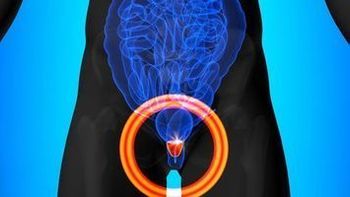
The patient received the treatment at Stanford Health Care, which had previously participated in the clinical trials examining the efficacy and safety of Exablate.

“I think there's a disconnect between the patients saying they're interested in these therapies, and the patients that actually go on to [receive] them,” says Jason Kim, MD.

In this installment of the Urology Times' 50th Anniversary Innovation Celebration, Howard Goldman, MD, discusses the development of the midurethral sling as a treatment for stress urinary incontinence.

“What's interesting in Dr Strum's analysis of these trials is that he not only looked at the English literature, which many of us are familiar with, but he looked at the many studies done in countries that were published in the non-English literature and never found [their] way into any of our analyses,” says J. Curtis Nickel, MD, FRCSC.

"Introducing something that with a prefashioned sling, [something] we're able to utilize with the patient in an ideal situation just under some deep sedation and local, really opened this up the ability for many more women to be treated and allowed many more physicians to be trained and to utilize this technology," says Howard B. Goldman, MD, FACS.

“We’re going to review CHEK2-related management guidelines, hereditary cancer implications for males and their families…and the importance of cascade testing,” says Veda N. Giri, MD.

“Open your mind to being both [a mentee and mentor,] no matter where you are,” says Anne M. Suskind, MD, MS, FACS, FPMRS.
“We wanted to see whether certain variations and these micro-RNA binding sites could be associated with the risk of developing side effects,” says Amar U. Kishan, MD.

“Our goal was to educate these patients thoroughly on the risks and benefits of each of these therapies, and try to understand what guides their choice of third line therapy based on their lifestyle and what suits them,” says Anjali Kapur, MD.

“I think now the government has realized…the work that’s involved in this procedure…[and] we’re now being reimbursed at an appropriate level,” says David M. Albala, MD.

Interesting questions raised by a paper that compared the use of 18F-fluciclovine with 68Ga-PSMA-11 imaging modalities to detect biochemical relapse in prostate cancer and implications for integrating newer techniques into clinical practice.

“To me, the overwhelming thing is understanding that treatments are, by and large, effective,” says Jerry G. Blaivas, MD, FACS.

“I think there is an urgency for us as urologists who are seeing many of these patients with kidney stones to be advocates, not just for the patients whom we're treating today, but for the populations in the future,” says Gregory Tasian, MD, MSc, MSCE.

“The message is to please consider kidney preservation for these patients with TA low-grade disease,” says Seth P. Lerner, MD.
J. Curtis Nickel, MD, FRCSC, discusses the origins of saw palmetto as an herbal therapy and how it was developed to treat lower urinary tract symptoms.

“This is an attempt to provide the clinicians with the most recent available data and evidence, and therefore, tell them how this particular imaging…may affect their decision making for the treatment and management of their patients,” says Hossein Jadvar, MD, PhD.

In this interview, Anthony Atala, MD, discusses how regenerative medicine and tissue engineering have greatly improved the quality of life for patients who have undergone urologic surgery.

Ulka Nitin Vaishampayan, MBBS, discusses the FGFR inhibitor erdafitinib and the importance of genetic/genomic testing in bladder cancer.
“Gay people have had this history of feeling like the health care system and the structures that are supposed to protect them haven't protected them and kept them safe,” says Channa Amarasekera, MD.
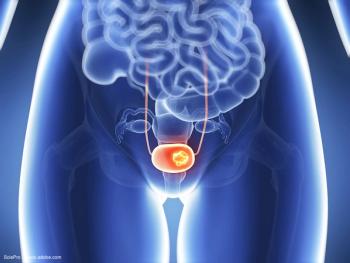
In this interview, Brant A. Inman, MD, MS, FRCSC, discusses how investigational chemothermotherapy could mitigate some challenges presented by current NMIBC treatments.

"These are fairly new technologies, but they've already made a dent into patient care," says Anthony Atala, MD.
“I think this really now suggests that Rezum is a financially viable procedure across these different treatment settings…the reimbursement now is really quite favorable,” says David M. Albala, MD.

“Andrea and I lead this from [a] President/Vice President standpoint, but we also have a group of leaders from around the world, really representing all ethnicities, genders and others, because we wanted to make sure [that] we're inclusive, andmeet the needs and expectations of everybody,” says Philippe E. Spiess, MD, MS, FRCSC, FACS.

“The main question we were interested in answering was what the impact of future climate under different scenarios of climate change would have on the incidence of kidney stone disease, using South Carolina as a model state,” says Jason Kaufman.