

“Obviously, patients benefit [from this regimen]. Not only can they enjoy longer life, but also their cancer is pretty much under control for a longer time, which is great,” says Karim Fizazi, MD, PhD
“Obviously, patients benefit [from this regimen]. Not only can they enjoy longer life, but also their cancer is pretty much under control for a longer time, which is great,” says Karim Fizazi, MD, PhD
“We actually found that treatment with percutaneous tibial nerve stimulation was…a safe and very effective way of improving sexual function,” says Varun R. Talanki, MD.

“I think one of the problems is that we do run out of treatments in many of these patients at some point,” says William K. Oh, MD.

“I think this really gave us an advantage to offer better care,” says Shiva J. Maralani, MD.

“I think that it's very clear that this test is independently prognostic,” says Daniel E. Spratt, MD.

“As [nurse specialists], we are uniquely placed in terms of supporting these men through their prostate cancer treatments, and then, obviously, through to their recovery afterwards,” says Netty Kinsella, RN, MSc, PhD.
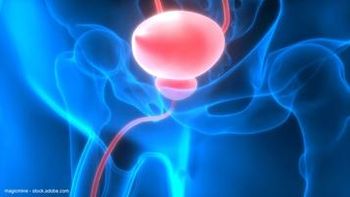
“The fascinating thing is that we have so many new treatments that are now available to us,” says Leonard G. Gomella, MD, FACS.

“I think the take home message is that [IsoPSA is] an easy test to use,” says Eric A. Klein, MD.

“We have new therapies, both AR-targeted therapies, as well as the use of SBRT, or targeted radiotherapy, that have changed the landscape,” says William K. Oh, MD.

Urology Times® Co–Editor in Chief Michael S. Cookson, MD, MMHC, recaps 5 presentations from the 2022 Genitourinary Cancers Symposium.

“The traction on this, I think, is really rather remarkable,” says Neal D. Shore, MD, FACS.

“I view OAB as a problem for many women that hasn't gotten the attention that it's needed over the decades,” says Alexandra Rogers, MD.

“I think one important message here is that MTAP is an important novel pathway in carcinogenesis, particularly bladder and urothelial carcinomas,” says Philippe E. Spiess, MD, MS, FRCSC, FACS.

At standard stimulation parameters, the Axonics F15 system is expected to function for 15+ years; at lower energy settings, this extends to 20+ years.
“We should be really trying to raise the profile of bladder symptoms [and] functional urology issues, and educating colleagues on how to inquire about and capture that information as effectively as possible,” says Jai Seth, MD, BSc, MSc, FRCS.

Abstracts highlight topics such as sacral neuromodulation and percutaneous tibial nerve stimulation.

In this installment of the Urology Times' 50th Anniversary Innovation Celebration, Kara L. Watts, MD, discusses the emergence and increasing uptake of active surveillance as a management strategy for men with prostate cancer.
“I think results from this study introduce a new standard of care for patients with metastatic hormone-sensitive prostate cancer, where we clearly need to do better than what we're doing today, since the sequence of therapy seems to be less effective than hitting them hard upfront,” says Fred Saad, MD, FRCS.
The filing is based on findings from the placebo-controlled phase 3 ARASENS trial.

"Active surveillance is an innovation because it's truly a departure from the idea that all prostate cancers or cancer, in general, needs to be treated," says Kara L. Watts, MD.
The device is indicated for overactive bladder, chronic fecal incontinence, and non-obstructive urinary retention.
“I think initiating a conversation with a patient needs to start earlier, possibly even earlier than just at the point of giving them a diagnosis,” says Netty Kinsella, RN, MSc, PhD.

“The proportion of clinics that employ an onsite urologist, where the urologist is integrated into the flow of that clinic, is relatively small,” says Akanksha Mehta, MD, MS.

“The majority of patients were able to stay on the dose of the apalutamide,” says Mario E. Lacouture, MD.

Janet Kukreja, MD, recaps 5 presentations from the 2022 Genitourinary Cancers Symposium.
“Whether a patient goes on to have radiation therapy, radical surgery, or focal therapy, or a whole host of other types of surgery or prostate cancer treatment that may follow, [that] can largely dictate where they may end up on the spectrum of having a bladder problem, a bladder outlet problem, or a urethral problem,” says Jai Seth, MD, BSc, MSc, FRCS.

“I think we're at a point where we have this luxury of many options, which is great, but we still need to continue to be really thoughtful in how we choose those options,” says Benjamin Lowentritt, MD, FACS.

“I think the audience would be encouraged to know that in the future, it seems like immunotherapy would become the standard of care,” says Shilpa Gupta, MD.

“I think that the audience should know that there is a movement going on,” says Geo Espinosa, ND.

“I think that we keep getting better and better tools…[and] I think understanding how to utilize these tools will be a challenge in the future,” says David M. Schuster, MD, FACR.