

“The idea is to develop strategies that reduce the likelihood of needing a biopsy or improving the sensitivity of the biopsy to find a high-grade cancer, one that's treatable,” says Eric A. Klein, MD.
“The idea is to develop strategies that reduce the likelihood of needing a biopsy or improving the sensitivity of the biopsy to find a high-grade cancer, one that's treatable,” says Eric A. Klein, MD.

“The management of hereditary upper tract cancer and Lynch syndrome [is] a multidisciplinary approach,” says Hong Truong, MD.

“We need to look at tumors a little bit differently. Not so much put them in the same categories, but really look at them based on whether the mutation is as identified in that specific marker,” says Philippe E. Spiess, MD, MS, FRCSC, FACS.

“I think that [these findings] definitely [warrant] standard of care radiation and hormone therapy for these patients or other forms of radical therapy,” says Daniel E. Spratt, MD.

“Patients are interested in exercise, they're really keen, they want to know what they can do to help themselves,” says Kerry S. Courneya, PhD.

“It's just working together as a team to recognize that this needs to be an ongoing active conversation about achieving autonomy in the operating room,” says Kate H. Kraft, MD.

“This study really showed that we went now beyond 2 years for radiographic progression-free survival, which is the longest we've ever seen in the first-line setting,” says Fred Saad, MD, FRCS.

At the 2022 ASCO Genitourinary Cancers Symposium, Neal D. Shore, MD, FACS, presented findings of the prospective study, "Hereditary cancer risk assessment in the community urology practice setting."

“The complete response rates were 49%, which is quite impressive compared to historical controls,” says Shilpa Gupta, MD.

In this installment of the Urology Times' 50th Anniversary Innovation Celebration, Arthur L. Burnett, MD, MBA, FACS, discusses how sildenafil citrate (Viagra) has been an integral part of erectile dysfunction management for decades.

“We're all students on this journey, and things change and evolve,” says Polina X. Reyblat, MD.

“We found in this study that the exercise group had lower prostate cancer-specific anxiety compared to the group that didn't exercise,” says Kerry Courneya, PhD.

"Viagra has revolutionized the field of sexual medicine and impacted how we go about therapies," says Arthur L. Burnett, MD, MBA, FACS.

“If you're going to be embarking upon triplet based therapy, as Arasens has now clearly demonstrated the potential advantage, having really healthy and productive and efficient conversations with your integrated cancer care team is paramount,” says Neal D. Shore, MD, FACS.

“Multidisciplinary discussion is best,” says Shawn Dason, MD, FRCSC.

“IsoPSA is a way of measuring all the different PSA-related proteins in the blood,” says Eric A. Klein, MD.

“Those that did complete the surveys generally reported average improvements in bone-metastasis-related pain and ability to function despite that pain,” says Brian D. Gonzalez, PhD.

In this interview, Kenneth M. Kernen, MD, describes his practice’s Jelmyto program and offers advice for urologists interested in implementing it in their practice.

The recommendation for EU approval was based on results from the CheckMate -274 trial.

“The prevalence of incontinence is high and increasing. We recommend routine screening for all women for this condition as a part of preventive health care,” says Ushma J. Patel, MD.
“Women often are afraid to ask for what they want because they don't want to be perceived as too aggressive or too bossy,” says Kate H. Kraft, MD.

“IsoPSA is intended to be used in men over 50 who are being screened for prostate cancer as a way of helping to decide whether or not a biopsy should be done,” says Eric A. Klein, MD.

In this video, Ryan J. Nelson, DO, and Steven Ogilvy, PA-C, demonstrate the retroperitoneal single-port robotic surgical technique for a kidney tumor.
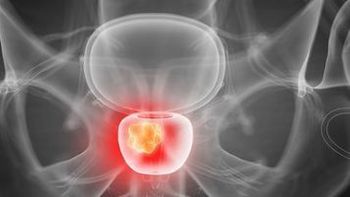
“I think the notable finding is the fact that the overall detection rate is very high, even at low PSA levels,” says David M. Schuster, MD, FACR.

In this installment of the Urology Times' 50th Anniversary Innovation Celebration, John Stoffel, MD, discusses the development of clean intermittent catheterization and how it has improved the care of patients with urologic conditions.

“I do think that this helps inform how to choose an agent for this specific stage of the disease,” says Benjamin Lowentritt, MD, FACS.

“I think this data are very compelling,” says Neal D. Shore, MD, FACS.

“We need to create this safe, comfortable, welcoming environment for men to talk about the things that they need to talk about,” says Justin Dubin, MD.

"Intermittent catheterization is an important concept in urology, and it has a long history," says John Stoffel, MD.
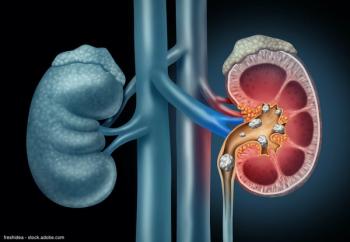
In this interview, Caleb Nelson, MD, PhD, discusses the current state of evaluation and treatment of stones in pediatric patients.