

“We found that while the NCCN guideline for Lynch syndrome is highly specific in identifying patients with Lynch syndrome, it missed about 50% of patients with upper tract cancer who had Lynch syndrome,” says Hong Truong, MD.
“We found that while the NCCN guideline for Lynch syndrome is highly specific in identifying patients with Lynch syndrome, it missed about 50% of patients with upper tract cancer who had Lynch syndrome,” says Hong Truong, MD.

“This is one of the first large-scale, and by that, I mean a national-based study throughout the United States, with geographical diversity of community-based urology practices that had a pretty sophisticated background of advanced prostate cancer care,” says Neal D. Shore, MD, FACS.
“These are consistent results that continue to demonstrate a disease-free survival benefit of pembrolizumab adjuvant versus placebo,” says Toni K. Choueiri, MD.

“I do think that this helps inform how to choose an agent for this specific stage of the disease,” says Benjamin Lowentritt, MD, FACS.

“I think, in general, patients with hereditary upper tract cancer may be under-recognized and under-referred for genetic evaluation,” says Hong Truong, MD.

“[These favorable findings just speak] to the complexity of the health index for these patients,” says Neal D. Shore, MD, FACS.

“It's the first time that any gene expression test has been analyzed in a randomized trial, even if it's post-hoc, in intermediate-risk patients,” says Daniel E. Spratt, MD.

“The prevalence of kidney stones has increased over 80% over the last 30 years, and the epidemiology has changed such that it's beginning at a younger age now,” says Gregory Tasian, MD, MSc, MSCE.

“There's no question that many patients [undergoing transurethral BPH surgery] can be done as a same-day ambulatory procedure. But you need to look at the criteria as to who you're going to keep and who you're not going to keep,” says Michael A. Palese, MD.
Kelly L. Stratton, MD, FACS, highlights 5 pivotal prostate cancer studies from the 2022 ASCO Genitourinary Cancers Symposium.

Christine Ibilibor, MD, discusses 6 noteworthy abstracts from the 2022 Genitourinary Cancers Symposium.

“I think research is a very important tool,” says Padraic O’Malley, MD, MSc, FRCSC.

"There have been few therapies that have so galvanized management of a urologic condition as what we've witnessed over the past decade regarding the use of onabotulinumtoxinA (Botox) for bladder dysfunction," says Melissa R. Kaufman, MD, PhD, FACS.
“I think it's really important for us to understand how important this is not only for patients, but for ourselves, as we participate in this career and in teaching and advocating,” says Priya Padmanabhan, MD, MPH, FACS.

“Your vision is better, your instruments are better, and so we can do an excellent cancer operation while maintaining really good rates of continence and potency recovery,” says David Lee, MD.

“I think people can feel like they're all alone, or they have something that's uncommon, and it may not be,” says J. Quentin Clemens, MD, FACS, MSCI.

“I think it's important for urologists and physicians to have an open mind in regard to complementary approaches to the treatment of BPH-related LUTS in men,” says J. Curtis Nickel, MD, FRCSC.
“I think transgender patients come in particularly with a worry about experiencing mistreatment in a clinician's office, and particularly around genitourinary care,” says Gaines Blasdel.

“We definitely don't have a clear standard,” says Shawn Dason, MD, FRCSC.
“These findings are an internal validation that the disparities we're seeing are real,” says Padraic O’Malley, MD, MSc, FRCSC.

“Goal setting for the patient is important,” says Omar El Shahawy, MD, MPH, PhD.

“We call this a ‘disruptive innovation,’” says Leonard S. Marks, MD.

“The most notable finding is that more than half of all adult US women experience urinary incontinence,” says Heidi Wendell Brown, MD, MAS, FACOG.

In this installment of the Urology Times' 50th Anniversary Innovation Celebration, Veda N. Giri, MD, highlights the role genetic testing has played in a new era of prostate cancer therapeutics.
“The current landscape of online materials about prostate cancer is generally pretty bleak,” says Stacy Loeb, MD, PhD, MSc.
“There are a few different approaches in perioperative medical chemotherapy or immunotherapy treatment, and it's unclear as to how we should consider all these different approaches,” says Shawn Dason, MD, FRCSC.

"A major innovation impacting urology and oncology is the therapeutic advances based on genetic information," says Veda N. Giri, MD.

“What really needs to be done to show that this works is to look prospectively,” says Amar U. Kishan, MD.
“Even though there [are] many therapies that one can do, it's not a sign of anything ominous for most men,” says Kevin T. McVary, MD, FACS.
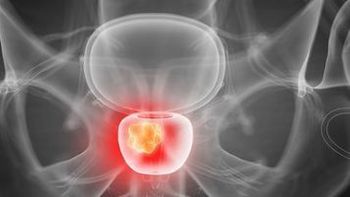
We've never had an imaging agent like this before,” says Leonard S. Marks, MD.