

Phillip Palmbos, MD, PhD, explains the latest research findings on the role of chemoimmunotherapy in patients with bladder cancer.
Phillip Palmbos, MD, PhD, explains the latest research findings on the role of chemoimmunotherapy in patients with bladder cancer.

"The fact that it was a simple blood test, it was absolutely objective, and it was…non-invasive…made it very attractive," says William J. Catalona, MD.

It's the hidden gem in medicine,” says Efe Chantal Ghanney Simons, MD.

“You can be 2 to 3 mm from another organ and still safely treat the tissue that you want to,” says Jennifer Linehan, MD.
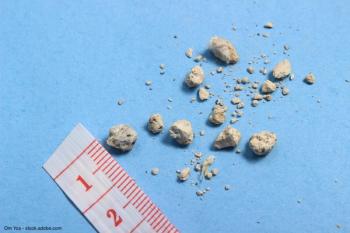
Investigators evaluated data from the Continuous National Health and Nutrition Examination Survey.

“Going into this study, we thought that potentially patients who had a stent placed with the string left in place were at higher risk of having a complication…But we found that they weren't at higher risk of a complication,” says Amy E. Krambeck, MD.

In a recent interview, Channa Amarasekera, MD, discussed some of the challenges that sexual minorities face along with ways that clinicians can be more supportive toward this population of patients.
In a cohort of nearly 30,000 patients, more than half had cystoscopy-based stent removal within 6 months post ureteroscopy, investigators reported.

Eric Jonasch, MD, shares insight on the most pivotal developments in renal cell carcinoma over the past few years.

"Many people do not examine patients who come in with urinary tract infections or overactive bladder symptoms, and it’s a mistake,” says Rachel S. Rubin, MD.
“We find that consuming more healthy, plant-based foods is associated with a lower risk of aggressive and lethal prostate cancer, and has many other health benefits, too,” says Stacy Loeb, MD, PhD, MSc.
“Imaging advances with PSMA-directed modalities…are absolutely shifting the landscape,” says Alicia K. Morgans, MD, MPH.
“There is definitely a big case gap, both in terms of capacity, but also in terms of geographic distribution in which communities have access,” says Gaines Blasdel.

Welcome to another installment of Uranimals, our video series featuring urologists and their pets.

“We…had 1 of the largest African American hereditary prostate cancer projects funded through the National Cancer Institute,” says Curtis A. Pettaway, MD.
“In non–muscle-invasive bladder cancer, we need more biomarkers, something that can hopefully reduce the frequency of invasive procedures for these patients,” says Kristen Scarpato, MD, MPH.

“We do have a long way to go across the United States,” says Scott E. Eggener, MD.
“The root cause, I think, of most of the problems is a severe erosion of the patient-physician relationship,” William Lynes, MD.

“There was a point when people thought a trial [would] not be necessary because the answers [were] so clear cut. But obviously, more than just 1 person feels that these are not so clear-cut answers,” says Badar M. Mian, MD, FACS.

Drs Steven Finkelstein and Louis J. Mazzarelli comment on limitations associated with conventional imaging modalities in prostate cancer and highlight the roles of newer tests such as 18F-fluciclovine and 68Ga-PSMA-11.

Ulka Nitin Vaishampayan, MBBS, discusses the latest developments in the second-line setting in urothelial carcinoma.

Marijo Bilusic, MD, PhD, discusses research with the diabetes drug metformin in patients with prostate cancer.
“We’re [going to] have a whole new era of immune therapies and different novel ways to treat [patients], and then [utilize] combinations of these therapies,” says Michael S. Cookson, MD, MMHC, FACS.
“If you're thinking about urology, then what I would do is get exposure as early as possible,” says Curtis A. Pettaway, MD.
“I think discussing it and talking about the different techniques out there [is important],” says Svetlana Avulova, MD.

“In addition to having a well-rounded urology residency experience, where you're gaining surgical exposure to all the different aspects of urology, I think it's really important to add on and delve into a fellowship in gender affirming surgery,” says Geolani Dy, MD.

“Physicians should take better care of their own personal needs [and] create some boundaries…for a more balanced life,” says William Lynes, MD.

“I believe we are getting to an era where we will be able to cure a significant subset of patients who we are not able to cure today,” says Neil H. Bander, MD.
“One center would report 0.5% infection after transrectal. Another colleague may report 10%. That's a huge gap. And we have to understand why that gap is. The only way to find out will be through these randomized, controlled trials,” says Badar M. Mian, MD, FACS.
"The problem is that we are not very good at predicting who is not harboring any cancer in their bladder,” says Alexander Kutikov, MD, FACS.