

“The decrease of frequency in doing these procedures may not put improving the techniques of the procedure at the forefront of the surgeon's mind,” says Svetlana Avulova, MD.
“The decrease of frequency in doing these procedures may not put improving the techniques of the procedure at the forefront of the surgeon's mind,” says Svetlana Avulova, MD.
“I think that for the urologist, a lot of what we do in practice is very much appropriate for telemedicine,” says Kara L. Watts, MD.
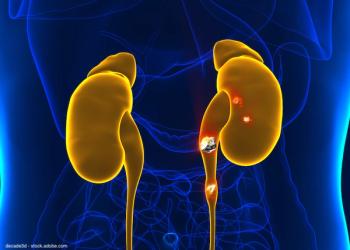
“[Kidney stones] really seems like something that we should be devoting significant resources and effort to trying to figure out the root causes and also better treatments and therapies for,” says Jonathan E. Shoag, MD.
“As president of SUO, it's really rewarding to be able to hand these giants these great awards,” says Michael S. Cookson, MD, MMHC, FACS.
“We should really try to adapt, know what we're doing to the specific patient based on their risk factors, prepare them appropriately, and understand that it's a dangerous complication. We should do everything we can to prevent it,” says Naeem Bhojani, MD, FRCSC.

“Take care of yourself, so we can take care of other people,” says Diana Londoño, MD.

“I believe that this is, of course,…a harbinger of what is to come—those of underserved backgrounds being…featured [more] in our organizations,” says Curtis A. Pettaway, MD.

“There is a whole range of ways in which urologists are involved in gender-affirming care,” says Geolani Dy, MD.

After the initial revolutionary breakthrough of sipuleucel-T (Provenge), the immunotherapy experience in prostate cancer has been challenging.

“Seeing the social media chatter, I think there is tremendous support for walking this back,” says Alexander Kutikov, MD, FACS.

“The most notable finding unquestionably was that peripheral nerve blocks have the ability to significantly reduce opioid requirements without compromising any pain control,” says Jared S. Winoker, MD.
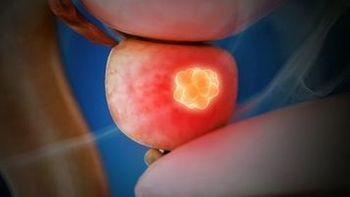
“Men who experience biochemical recurrence after radical prostatectomy or radiation therapy should undergo PET scanning so that they can have specific targeted treatments administered to the site or sites of recurrence rather than [be treated] using the historical type of clinical parameters that we used in the past,” says Gerald L. Andriole, MD.

“We really have a pretty good understanding of the genomic landscape at the DNA/RNA level, both in non–muscle-invasive disease and muscle-invasive and metastatic disease,” says Seth P. Lerner, MD, FACS.
We have a lot of work to do to define how to optimize the integration of this therapy into what we call ‘advanced prostate cancer’,” says Michael J. Morris, MD.
“We want to make sure that if it is an efficacious medicine for that patient to consider using a generic formulation,” says Kelvin A. Moses, MD, PhD, FACS.
“The SUO has never been stronger in its ability to deliver on clinical trials,” says Michael S. Cookson, MD, MMHC, FACS.

“The thought [for transperineal biopsy] is that if you can avoid introducing some rectal bacteria into the tissue, that we may be able to totally avoid or at least minimize the post-biopsy infections,” says Badar M. Mian, MD, FACS.

“I have no doubt that within 10 years…what we've been basing our treatment strategies and surveillance strategies of high-grade…papillary disease is still going to be there. But, in reality, we're really going to have a much better idea of individual risk stratification and characteristics of their tumors,” says Sam S. Chang, MD, MBA.
“We need to be aware of what patients are having to pay out of pocket, how it can impact their overall quality of life, [and] how can it impact their ability to pay for other necessities in life,” says Kelvin A. Moses, MD, PhD, FACS.
“We’re not doing enough lymph node dissections in upper tract disease,” says Siv Venkat, MD, FRCSC.

“The take-home message here is that adjuvant nivolumab improves disease-free survival in patients with muscle-invasive urothelial cancer at high risk for recurrence after surgery,” says Matthew D. Galsky, MD.
“We're really moving into not just these annual meetings, but we're going to have some programs throughout the year that will be targeted towards…really important, impactful research that comes out,” says Michael S. Cookson, MD, MMHC, FACS.

“We will also cover options for germline testing—different ways that tests can be ordered, panel options that are available commercially,” says Veda N. Giri, MD.

“New regimens should now start to be explored, both…single-agent drugs as well as combination therapies,” says Pavlos Msaouel, MD, PhD.

“[Polygenic risk scores] will help augment PSA screening and other tools to really figure out when we should initiate prostate cancer screening in men and how frequently that screening should occur,” says Isla Garraway, MD, PhD.
“[It’s] important to see all of these…clinically important endpoints going in the same direction,” says Matthew D. Galsky, MD.
“I think this is an area that needs to be really personalized to each clinical practice,” says Alicia K. Morgans, MD, MPH.

“It was incredibly humbling,” says Eila C. Skinner, MD.
“Our data suggests that we shouldn’t just be relying on metastasis-directed therapy alone,” says Andrew J. Armstrong, MD, MSc.

“It's not a replacement for clinical judgment, obviously. But at the end of the day, the idea is that it shows you what your next steps are based on what the American Urological Association and [Society of Urologic Oncology] guidelines are for non-muscle invasive bladder cancer,” Chad R. Ritch, MD, MBA, FACS.