

“I think the one thing that we're hopeful for is that people will start to look at vitamin D as a potential chemoprevention agent,” says Adam B. Murphy, MD, MBA, MSCI.
“I think the one thing that we're hopeful for is that people will start to look at vitamin D as a potential chemoprevention agent,” says Adam B. Murphy, MD, MBA, MSCI.

"We wanted to implement an opioid minimization pathway that was easy to follow and successful,” says Aaron Laviana, MD.
The study showed that the PSMA-targeting fluorophore IS-002 enabled enhanced intraoperative tumor detection during robotic prostatectomy.
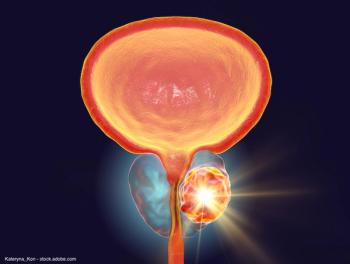
The utilization of sabizabulin in patients yielded significant and durable objective tumor responses, according to results of a phase 1b/2 trial (NCT03752099) presented at the 2022 AUA Annual Meeting.
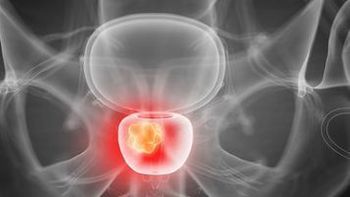
IS-002, an investigational, near-infrared, PSMA-targeting fluorophore, enhanced intraoperative cancer visualization during robotic prostatectomy.

Adding darolutamide to androgen deprivation therapy and docetaxel did not increase the incidence or severity of adverse events in patients with metastatic hormone-sensitive prostate cancer.

The study data strongly support PSA screening, particularly in Black men, for whom there is a paucity of clinical trial evidence, according to lead author Spyridon Basourakos, MD.
In the phase 3 SPOTLIGHT trial, PET imaging with 18F-rhPSMA-7.3 frequently led to post-scan disease upstaging compared with baseline conventional imaging in men with prostate cancer recurrence.

“Focal therapy represents a middle ground between active surveillance and more radical options,” says Rafael Sanchez-Salas, MD.

The benefit with darolutamide was observed, regardless of whether or not patients had prior local therapy.
The AUA partnered with ASTRO on the guideline and it was endorsed by the SUO.
The findings came from a post-hoc analysis of the phase 3 ARCHES trial.
“Relugolix, an oral nonpeptide GnRH receptor antagonist, was generally well tolerated in the phase 3 HERO study,” wrote Bryan Mehlhaff, MD, and coauthors.
A regimen combining the PARP inhibitor and the androgen receptor pathway inhibitor plus prednisone showed promise in patients with metastatic castration-resistant prostate cancer and homologous recombination repair gene alterations who had progressed on prior treatment with an androgen receptor–targeted therapy.

No grade 3 TEAEs were reported in more than 1 patient at a time, and investigators deemed these grade 3 TEAEs to be unrelated to darolutamide treatment.

“I had long thought that vitamin D deficiency could be a risk factor for prostate cancer,” says Adam B. Murphy, MD, MBA, MSCI.
Compared with baseline conventional imaging, PET imaging with 18F-rhPSMA-7.3 frequently led to post-scan disease upstaging in men with prostate cancer recurrence, according to the latest data from the phase 3 SPOTLIGHT trial.

In a recent study presented at the 2021 AUA Annual Meeting, Scarlett Gomez, MPH, PhD, and co-authors investigated the determinants of selecting active surveillance/watchful waiting as a treatment path for patients with localized, low-risk prostate cancer.
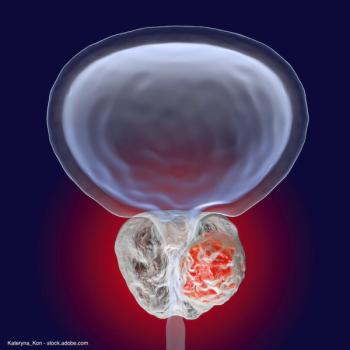
In a study presented at the 2021 AUA annual meeting, Behfar Ehdaie, MD, MPH, and colleagues assessed the efficacy of focal therapy in treating patients with grade group 2 or 3 prostate cancers.

Dharam Kaushik, MD, and a team of investigators are the first to examine the benefits of perioperative yoga in patients diagnosed with localized prostate cancer.

In a recent study presented at the 2021 AUA Annual Meeting, Laurence Klotz, MD, FRCSC, and a team of investigators determined the accuracy of the new miR Sentinel PCC4 Test, a urinalysis of low- to high-grade prostate cancer in men.
In this video, Laurence Klotz, MD, FRCSC, discusses the miR Sentinel PCC4 Test and how it could change the future of prostate cancer testing.

“Our data shows that in newly diagnosed men with prostate cancer, yoga improved quality of life [as well as] some immune markers, and [lowered] inflammation,” says Dharam Kaushik, MD.

“Some potential…combination therapy may be valuable, such as combining with a checkpoint inhibitor or some target senescence because this resistance involves those kinds of mechanisms,” says Allen C. Gao, MD, PhD.
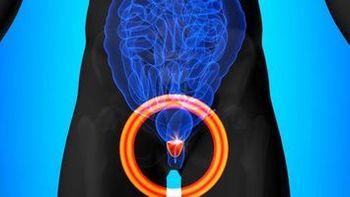
“What we found was the [progression-free survival] value was improved in the subgroup of patients with low [alkaline phosphatase levels],” says Michel Pavic, MD.

“We think given the accuracy that this is potentially a game changer,” says Laurence Klotz, MD, FRCSC.
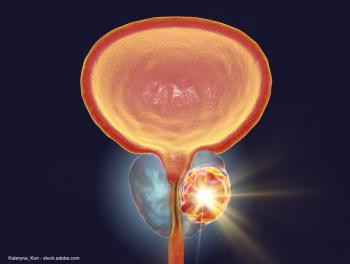
“The take-home message for all practicing urologists should be that if you have an nmCRPC patient, don't wait for them to develop mCRPC based on conventional imaging…We have 3 really efficacious level 1 evidence studies that have demonstrated the value for starting any of these 3 drugs,” says Neal D. Shore, MD.

“In those resistance cells, there is a lot of senescence occurring there, so that provides some potential target…which can be used to improve those PARP inhibitor therapies,” says Allen C. Gao, MD, PhD.

"In the clinic, I think the biggest benefit, at least immediately, is that by asking and trying to figure out what a patient's tobacco use history is, you can help with quitting,” says Richard Matulewicz, MD, MS.
“Although [whole-gland] treatments are very successful, from the oncologic perspective, our goal was to develop and test a new treatment modality in which we treat only the area with the significant cancer using focused ultrasound in the MRI gantry,” says Behfar Ehdaie, MD, MPH.