
New findings from the open-label SPLASH trial show patients with mCRPC achieved improved progression-free survival as well as response rates and antigen-specific reductions.
New findings from the open-label SPLASH trial show patients with mCRPC achieved improved progression-free survival as well as response rates and antigen-specific reductions.

“I think that these data in this approximately 700 patient trial consolidates and makes a strong case for the role of pembrolizumab in the adjuvant setting,” says Guru P. Sonpavde, MD.
“The overall survival showed a 25% reduction in the risk of death. This is statistically significant,” said Thomas B. Powles, MBBS, MRCP, MD.

At a median follow-up of 44.8 months, median DFS in the pembrolizumab arm was 29.6 months vs 14.2 months in the observation arm.

“Today, we're presenting the results of this analysis, and we show that patients who have a high Decipher score derive significant benefit from docetaxel,” says Gerhardt Attard, MD, PhD, FRCP.

The results “support the prioritized development of TAR-200 monotherapy in patients with BCG-unresponsive high-risk non–muscle-invasive bladder cancer," said Michiel van der Heijden, MD, PhD.
"It clearly shows that blocking HIF-2α is a meaningful way of interacting with disease biology in clear cell renal cell carcinoma," says Eric Jonasch, MD.

Median OS was 35.0 months in the enzalutamide-alone arm vs 42.3 months in the combination arm.
Late-breaking data from ESMO 2024 suggest ipilimumab / nivolumab may be a new standard of care for non-clear cell renal cell cancer.
“NKT2152 demonstrated robust anti-tumor activity in a heavily pretreated, high-risk advanced clear cell renal cell carcinoma population," said Eric Jonasch, MD.

Investigators observed promising clinical effect with the EGFR / HER3 bispecific antibody-drug conjugate.

"These final analysis results of LITESPARK-005 support belzutifan as a treatment option in refractory kidney cancer after checkpoint inhibitor and VEGFR-TKI therapy," says Brian Rini, MD.
Data from the TiNivo-2 trial showed a median progression-free survival of 5.7 months in the tivozanib plus nivolumab arm vs 7.4 months in tivozanib monotherapy arm.
Combining the antibody-drug conjugates sacituzumab govitecan and enfortumab vedotin was safe, feasible, and produced high and early response rates in patients with treatment-resistant metastatic urothelial cancer.
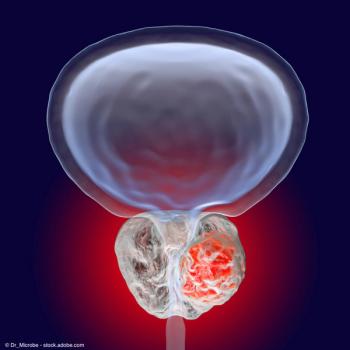
The combination of oral masofaniten (formerly EPI-7386) and enzalutamide was well tolerated and elicited durable reductions in PSA levels in patients with metastatic castration-resistant prostate cancer.
"The main highlight of this trial was the complete response rate, which was around 22%," says , Guru P. Sonpavde, MD.

"The surprise to me was the grade 3/4 adverse events [were] better with 177Lu-PSMA-617, SAEs [were] better with 177Lu-PSMA-617, and dose adjustments [were] better with 177Lu-PSMA-617," says Oliver Sartor, MD.
At the time of data cutoff, 16 patients in cohort 1 and 27 patients in cohort 3 had been treated with TAR-210, an intravesical delivery system for erdafitinib.

"With this specific study, what we wanted to do is find out whether there was more information that we could leverage from preexisting material within the STRATOSPHere Biomarker Development Study; namely, the diagnostic H&E sample," says Charles Parker, MD.
ARX517, a PSMA-targeting antibody-drug conjugate, demonstrated favorable efficacy and safety in a phase 1/2 trial in patients with metastatic castration-resistant prostate cancer.

Toni K. Choueiri, MD, highlights data from the phase 2 LITESPARK-003 trial, which were presented at the 2023 ESMO Congress.
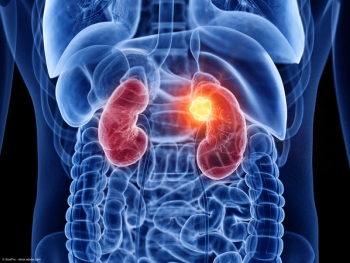
Data showed a 20% reduced risk of recurrence or death among patients who received everolimus compared with placebo.

"TAR-210 is set to become a potentially new option for this patient population after failure of BCG treatment," says Andrea Necchi, MD.
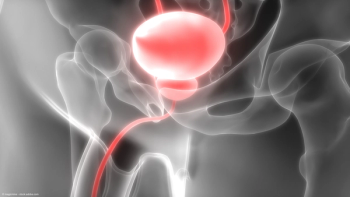
“There’s a 72% less chance of recurrence with oral erdafitinib than with standard of care. The problem is tolerability,” says James W.F. Catto, PhD, FRCS.
“In other words, there's a 72% less chance of recurrence with oral erdafitinib than with standard of care. The problem is tolerability,” says James W.F. Catto, PhD, FRCS.

“The recommended phase 2 dose was dose level 2, so 8 mg/kg of SG with EV 1.25mg/kg,” says Bradley McGregor, MD.
Treatment with the intravesical chemotherapy delivery system TAR-200 led to complete responses in over three-fourths of patients with BCG-unresponsive, high-risk non–muscle-invasive bladder cancer.

“We have not previously managed to beat first-line chemotherapy in any trial in unselected first-line urothelial cancer, so this is a big step in that direction,” says Thomas B. Powles, MBBS, MRCP, MD.

“These data from the MAGNITUDE study demonstrate the risk-benefit profile for the combination of niraparib plus abiraterone acetate for patients with metastatic CRPC and BRCA mutations and establishes a new standard of care for these patients,” says Kim Nguyen N. Chi, MD, FRCPC.

“No doubt about it, this is unequivocally a positive trial by the rPFS criteria. Quite positive,” says A. Oliver Sartor, MD.