

Alicia Morgans, MD, MPH, discusses a health economics analysis that assessed the clinical and cost impact of cabazitaxel (Jevtana) as a third-line treatment for patients with metastatic castration-resistant prostate cancer.
Alicia Morgans, MD, MPH, discusses a health economics analysis that assessed the clinical and cost impact of cabazitaxel (Jevtana) as a third-line treatment for patients with metastatic castration-resistant prostate cancer.
Scott T. Tagawa, MD, discusses a study of treatment patterns and overall survival in metastatic castration-sensitive prostate cancer between 2006 and 2019.

“The activity that we saw with the combination was very promising and…it justifies additional clinical trials to determine whether or not this could have a place in terms of our standard treatment options for patients,” says Michael Schweizer, MD.
Combining avelumab with standard neoadjuvant chemotherapy induced pathological complete responses in over half of patients with nonmetastatic muscle-invasive bladder cancer.
Adding abiraterone acetate and prednisone to androgen-deprivation therapy and docetaxel may be the new standard of care for the treatment of patients with de novo metastatic castration-sensitive prostate cancer.

Patients had received at least 1 novel hormonal agent and had non-progressive disease after subsequent treatment with taxane-based therapy.

"2 years of abiraterone-based therapy significantly improves metastasis-free survival and overall survival of high-risk nonmetastatic prostate cancer starting androgen deprivation therapy and should be now considered a new standard of care,” said Gerhardt Attard, MD, FRCP, PhD.

There was limited clinical activity with the combination in patients with HRD-negative tumors.

Sabizabulin was well tolerated and associated with significant and durable objective tumor responses in patients with metastatic castration resistant prostate cancer.

Unadjusted real-world overall survival was longer in patients receiving first-line cisplatin compared with patients receiving other first-line treatments.
The results included data for 132 patients, all of whom had prior enzalutamide and/or abiraterone acetate.
"The promising rPFS and overall survival data support further evaluation of pembrolizumab plus olaparib in molecularly unselected patients with mCRPC who received prior docetaxel treatment,” the authors concluded.

The hard-to-treat subgroups consisted of age 65 years or older, presence of liver metastasis, primary upper tract disease, and nonresponse to prior PD-1/L1 inhibitor treatment.
Perioperative treatment with cabozantinib is feasible with early signs of clinical activity in patients with intermediate- and poor-risk metastatic renal cell carcinoma.
Investigators also found high concordance between the Guardant Health (360 or Omni) assays and FoundationOne CDx for the detection of BRCA and HRR mutations.
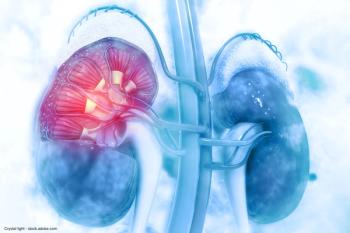
Additional prospective trials containing a larger sample size and longer follow up are needed to determine the optimal treatment sequence in favorable-risk advanced renal cell carcinoma.

The retrospective cohort study assessed outcomes in patients with advanced renal cell carcinoma who received cabozantinib or axitinib in the second-line setting or beyond.
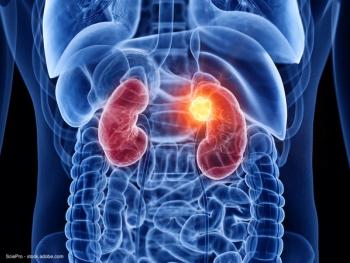
The dual immunotherapy regimen maintained a survival benefit over single-agent sunitinib in patients with advanced renal cell carcinoma.

"Clinical benefit was observed regardless of homologous recombination repair gene mutational status," the study authors wrote.

The TKI/immunotherapy combination demonstrated strong clinical activity in patients with metastatic or locally advanced urothelial carcinoma (mUC) harboring FGFR alterations.
The findings come from an exploratory subgroup analysis of the pivotal CheckMate 9-ER trial shared during the 2021 ESMO Congress.

Patients with VHL-mutated ccRCC and VHL–wild type disease often had low positive PD-L1 expression.
“Understanding the burden and time course of adverse events commonly associated with ARIs that may impact patients’ daily life will help inform optimal treatment selection for men with nmCRPC,” explained Christian Gratzke, MD.
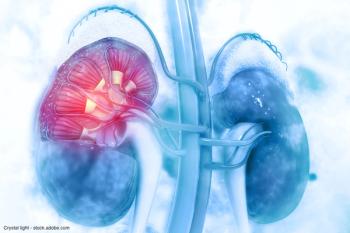
“This indicates opportunities to improve communication about diagnosis, psychosocial impacts, and clinical trials, as well as biopsies, physical exercise, and patient engagement,” wrote Rachel H. Giles, PhD, and colleagues.
The findings showed a benefit for the immunotherapy/TKI regimen over sunitinib in adjusted overall survival as well as in the type and timing of subsequent therapy.

Episodic memory by computerized cognitive assessment was significantly improved in patients who received darolutamide compared with those treated with enzalutamide.

The risk was decreased further with each additional chemotherapy cycle a patient received.
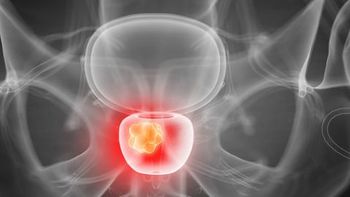
Rucaparib pharmacokinetics in men with prostate cancer were comparable to those reported for women with ovarian cancer.

Dual immune checkpoint blockade with the PD-1 inhibitor tislelizumab and the PD-L1 inhibitor BGB-A333 showed clinical activity in bladder cancer.

An analysis from the pivotal phase 3 JAVELIN Bladder 100 trial showed that the survival benefit observed with frontline maintenance avelumab in the overall population was sustained across several prespecified patients subgroups.