
Three cycles of chemotherapy was shown to improve patient-reported outcomes vs six cycles, with no detriment to overall survival.
Three cycles of chemotherapy was shown to improve patient-reported outcomes vs six cycles, with no detriment to overall survival.

With over 2 decades of experience, Edney reflects on how his passion for health policy and advocacy evolved alongside his clinical career.

Initial data on pasritamig showed that the agent was well tolerated and had encouraging preliminary antitumor activity in patients with mCRPC.

Data indicates that the DFS improvement was largely driven by the treatment effect in the higher risk population.
The PDUFA target action date for the application is April 7, 2026.


The mean baseline FACT-G total score for the niraparib group was 79.7 (standard deviation [SD], 14.9) and was 79.3 (SD, 15.2) for the placebo group.
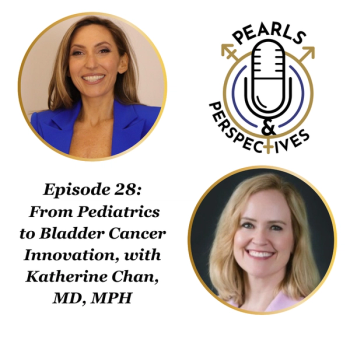
Chan shares how her passion for research and desire to impact patients on a broader scale led her from academia to industry.

In patients who were ctDNA positive, median DFS was 9.9 months (95% CI: 7.2-12.7) in the atezolizumab group vs 4.8 months (95% CI: 4.1-8.3) in the placebo group.
“Overall, the combination of saruparib plus an ARPI was well tolerated," Arun Azad, PhD, MBBS.

"The primary end point was met, showing a statistically significant rPFS benefit with the combination of capivasertib and abiraterone," said Karim Fizazi, MD, PhD.

Regarding the primary end point, “4 patients showed a partial response, leading to a response rate of 17%," said Srikala S. Sridhar, MD, MSc, FRCPC.
Stephen J. Freedland, MD, reported that with combination enzalutamide/leuprolide, the risk of death was 40.3% lower vs leuprolide alone.
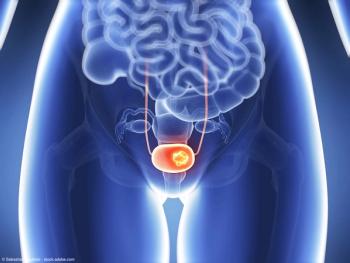
“This is the first trial to show an overall survival benefit in this population,” Christof Vulsteke, MD, PhD, noted.

Andrea Necchi, MD, reported a pCR rate of 38% (95% CI, 28%-49%) for cohort 1 vs 28% (95% Ci, 16%-44%) for cohort 2.
The median progression-free survival was 15.7 months with the combination of lenvatinib plus everolimus compared with 10.2 months with cabozantinib (HR, 0.51; 95% CI, 0.29-0.89; P = .02).

“POTOMAC met its primary end point of disease-free survival in the ITT [intent-to-treat] population," said Maria De Santis, MD.
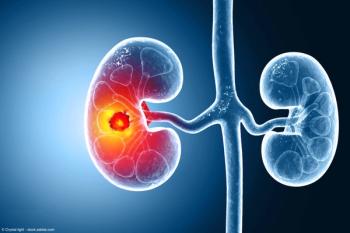
"Observed efficacy of pembrolizumab plus lenvatinib were confirmatory of prior observations for this combination," said Cristina Suarez Rodriguez, MD, PhD.

“With 5 years of follow-up, median overall survival is longer with nivolumab vs placebo on interim analysis," said Matthew D. Galsky, MD.
"The addition of perioperative durvalumab to neoadjuvant chemotherapy significantly improved event-free survival and overall survival without adversely affecting patient-reported outcomes,” said Michiel van der Heijden, MD, PhD.

Data from the phase 3 ALBAN trial showed that atezolizumab plus BCG did not improve EFS compared with BCG alone.

The grade 3-5 AE rate was 78.9% (95% CI, 70.8-85.6) in the 75 mg/m2 arm vs 61.2% (95% CI, 51.9-69.9) in the 50 mg/m2 arm (P =.0024).
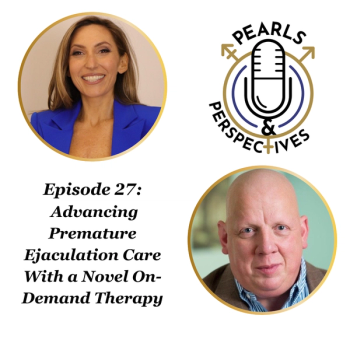
Discover innovative approaches to treating premature ejaculation with insights from leading experts in sexual health and urology.

The new CPT code will be effective starting on July 1, 2026.

The phase 2 Co-PSMA trial has met its primary end point.
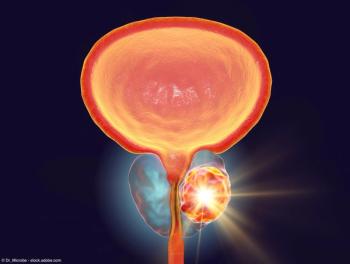
The trial will assess the effect of adding docetaxel to SOC hormone therapy plus apalutamide in mCSPC.
Discover how language and trauma-informed care reshape patient experiences in sexual medicine and improve outcomes.
Amy Pearlman, MD, and Rachel Rubin, MD, discuss groundbreaking guidelines in sexual health, emphasizing education, and patient empowerment.

The phase 1 trial is assessing VIR-5500 as both a monotherapy and in combination with ARPIs in prostate cancer.
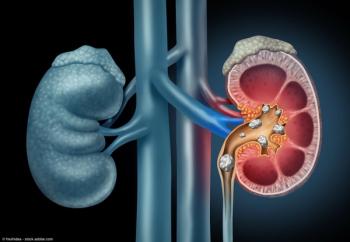
"Suctioning technology for mini-PCNL is an improvement on relying on passive outflow," says Mantu Gupta, MD.