

The level II code A9616 will be effective starting on October 1, 2025.
The level II code A9616 will be effective starting on October 1, 2025.

Mulhall offers an unfiltered, evidence-based deep dive into testosterone evaluation and treatment nuances.

The company said it plans to report interim efficacy data from the trial in September 2025.
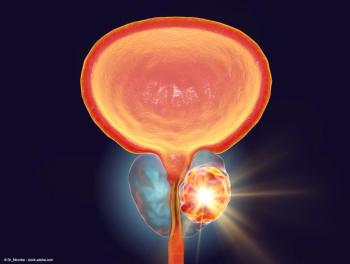
“Our data support adherence to guideline recommendations for treatment of prostate cancer,” says Pietro Scilipoti, MD.

In healthy aging men without developing diabetes mellitus, modest increases in HbA1c were linked with declines in sperm motility and erectile function.

“This designation is a powerful validation of our software's potential to transform how we treat cancer,” said Andre Esteva, CEO of Artera.
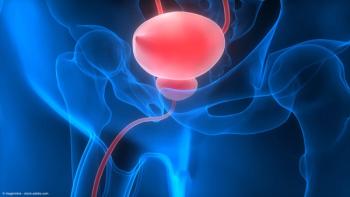
“This study adds to the growing body of evidence supporting combination intravesical chemotherapy as a feasible option even after prior treatment failure," says Ian M. McElree, MD.

According to the news release, detailed OS data from EMBARK are set to be presented at an upcoming medical conference.

The investigational treatment is being evaluated in phase 1 clinical trials for solid tumors.

Among the content is additional information on types of urinary incontinence, ways to control urgency, and frequently asked questions about a healthy bladder.
Colin M. Goudelocke, MD, discusses the PEER trials, which are assessing the safety and efficacy of SNM lead sensing for optimizing SNM programming.

According to the company, the MHRA approval represents the first marketing approval outside the US for NAI.

Eligible patients will receive UGN-103 75 mg intravesically once per week for 6 weeks.
The data, collected as part of the phase 1/2 Duravelo-1 trial, showed an objective response rate of 65%.
For the trial, a biomarker will be utilized to aid in patient selection for the treatment.
The application is supported by data from the phase 3 AMPLITUDE trial.

Take a look through all the regulatory milestones in urology from the first half of the 2025.

Catch up on exclusive videos you may have missed from the first half of the year.
Here’s a look back at notable news between April and June 2025.
The da Vinci 5 platform is approved for use across urologic, gynecologic, and general laparoscopic procedures in adult and pediatric patients.

In this video, part 5 in a 5-part series, panelists examine the economic and logistical realities of bringing mitomycin for intravesical solution (Zusduri; formerly UGN-102) into private practice.
In this video, part 4 in a 5-part series, Nick Liu, MD, outlines key scenarios where surgical resection remains preferred for treating LG-IR-NMIBC.
In this video, part 3 in a 5-part series, panelists discuss the long-term clinical impact and health care system implications of mitomycin for intravesical solution (Zusduri; formerly UGN-102).
In this video, part 2 in a 5-part series, Nick Liu, MD, breaks down the formulation behind mitomycin for intravesical solution (Zusduri; formerly UGN-102).
In this video, part 1 in a 5-part series, panelists discuss how mitomycin for intravesical solution (formerly UGN-102, now marketed as Zusduri) fits into the evolving management landscape for recurrent bladder tumors.
The study will utilize the companion lipid biomarker test, PCPro, to identify patients who may benefit from the addition of opaganib to darolutamide.

The trial is evaluating the efficacy of leflutrozole in improving testicular function and promoting spermatogenesis.
The combination demonstrated a 6-month radiographic progression-free survival of 66%.
A recap of the FDA submissions and regulatory decisions in urology from June 2025.

Pearlman and Parekattil dig deep into novel surgical and non-surgical approaches to chronic orchialgia and pelvic pain.