

The study found differences in genomic alteration frequencies between non-Hispanic Black and non-Hispanic White veterans with metastatic prostate cancer, but showed similar survival outcomes.
The study found differences in genomic alteration frequencies between non-Hispanic Black and non-Hispanic White veterans with metastatic prostate cancer, but showed similar survival outcomes.

The bladder transplant procedure involved a collaboration between the University of California, Los Angeles and the University of Southern California.
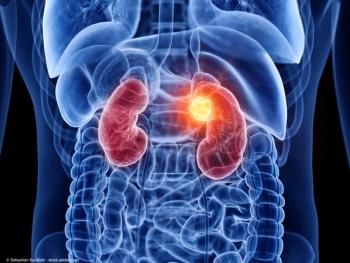
"Appropriate patient selection for CN is a highly individualized process that is improved with a multidisciplinary approach," write the authors.
Explore the latest insights on testosterone therapy, its benefits, and practical applications from leading urologists in men's health.

Data from the SCIMITAR trial showed that SBRT appeared safe and demonstrated comparable PROs compared with CFRT.

The CELLEBRATE trial is aiming to provide additional evidence to support the safety and efficacy of iltamiocel.

Professor Andreas Skolarikos shares his experience with the LithoVue Elite System.

"The use of telemedicine is heavily dependent on supportive legislature," write Tracey L. Krupski, MD, and Jeunice Owens-Walton, MD.

Yōni.Fit bladder support was granted FDA 510(k) clearance in May 2024.

ACOU085 will be administered in 1 ear, with a matching placebo injection in the respective contralateral middle ear.

The freedom from re-intervention rate was 71%.
Use of focal therapy was shown to prolong the duration of active surveillance.

"I’m hopeful because women in urology are no longer an exception—they’re becoming the norm," says Shaya Taghechian, MD.
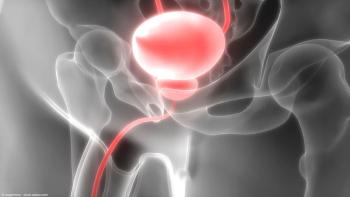
The phase 3 RC48-C016 trial met its primary end points.

Urologist Garrett D. Pohlman, MD, reflects on the benign prostatic hyperplasia offerings from the 2025 American Urological Association Annual Meeting.
The data are to be presented at an upcoming medical conference.
"This trial will be the benchmark for research reporting in the future," says Melissa R. Kaufman, MD, PhD, FACS.
Patient-reported pain scores were significantly improved with stent omission.

“We do not feel that our results undermine the importance of fluid intake for stone prevention," says Alana C. Desai, MD.

Data showed that physical function and self-reported frailty assessments were poorly correlated.

The Oncologic Drugs Advisory Committee meeting is scheduled for May 21, 2025.

Initial study results may be available as soon as the first half of 2026.
Jennifer Miles-Thomas, MD, URPS, MBA, discusses the AUA's legislative priorities along with issues in medicine related to artificial intelligence.

Take a look through some of the notable studies that were spotlighted during this year’s meeting.
The sBLA for NAI was submitted to the FDA in March 2025.
Urologists discuss innovative BPH treatments, emphasizing personalized care, and the importance of ejaculatory preservation.

"Developing a relationship with your legislator is just as important at the state level as it is at the federal level," says Hans Arora, MD, PhD.

Experts discuss urgent priapism management strategies, emphasizing timely intervention and collaboration for optimal patient outcomes.
These results are expected to support submission of the Hugo system to the FDA for use in urologic procedures.
Data showed an overall CR rate of 82.4%.