

At week 12, patients in the URO-902 cohorts demonstrated significantly greater improvements in daily microuritions vs placebo.
At week 12, patients in the URO-902 cohorts demonstrated significantly greater improvements in daily microuritions vs placebo.
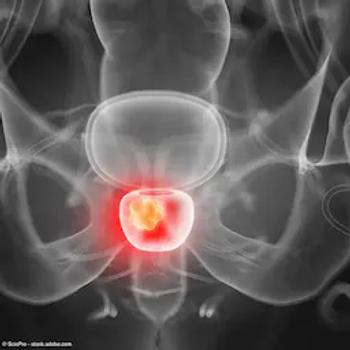
"For every 1 unit increase in whole body tumor SUVmean, there was a 12% decrease in the risk of an rPFS event and a 10% decrease in the risk of death," says Phillip H. Kuo, MD, PhD, FACR.
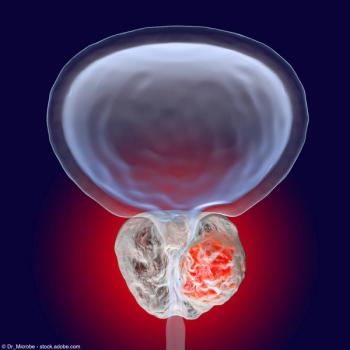
"This finding reinforces PROSTOX ultra as a true measure of the biological response to radiation, independent of treatment era or technique that can identify the safest course of treatment to avoid toxicity," says Amar U. Kishan, MD.

A lookahead of the notable FDA decisions and conferences slated for Q2 2025.

"The biggest message from this study is that 60% can expect resolution of UUI, simply by fixing the prolapse and placing a sling, which is not normally indicated for UUI," according to Christina M. Mezes, DO, and Catherine A. Matthews, MD.

“The differences in patient experience between UroLift System and Rezūm, particularly in terms of early recovery, sexual function, and overall satisfaction, are key considerations for both clinicians and patients selecting a treatment path," says Mark Rochester, MD, FRCS.

"The Inflation Reduction Act was a major step in the right direction. The question now is going to be, are commercial insurers going to follow Medicare and enact the same cap that they have as well," says Benjamin Pockros, MD, MBA.

"The combination demonstrated clinical activity and an acceptable safety profile in the perioperative setting for locally advanced, non-metastatic clear cell RCC," says Mehmet Asim Bilen, MD.
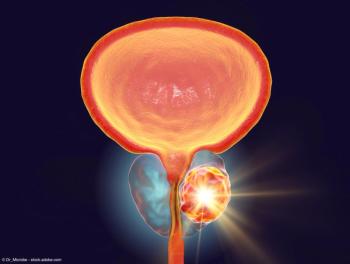
The company plans to initiate the phase 2 monotherapy trial by mid-year.

"In terms of making it a safe, highly reliable operation, if you're comfortable with slings and sphincters, you are very well positioned to learn this surger," says Kiran Sury, MD.

"Glean will enable patients to void naturally, without catheters in place. I believe this advance will yield a better test that mimics actual symptoms," says Bilal I. Chughtai, MD.

"We must lobby to maintain our current funding levels and push for increased support to continue driving progress in cancer care," says Michael S. Cookson, MD, MMHC, FACS.
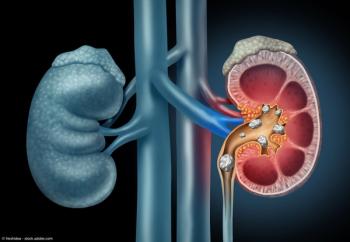
“The data presented at EAU25 add to the growing body of evidence supporting the CVAC System as the emerging standard of care in kidney stone removal,” says Brett Johnson, MD.
A recap of the FDA submissions and regulatory decisions in urology from March 2025.
"I think a take-home message there is that in the prostate/prostate bed, you have to take extra time and caution in reading that region," says Phillip H. Kuo, MD, PhD.

The European Commission must issue a decision on the application on or by June 2, 2025.
The approval is supported by results from the phase 3 NIAGARA trial.
The approval is supported by positive data from the phase 3 PSMAfore trial.
The test can deliver diagnostic results for chlamydia, gonorrhea, and trichomoniasis.
“Our results show that by using NeuroSAFE, nearly twice as many men don’t have to face potentially life-changing loss of erectile function after prostate surgery,” says Professor Greg L. Shaw.

The use of pre-diagnostic MRI was 3.8% in 2012, which increased to 32.6% in 2019.
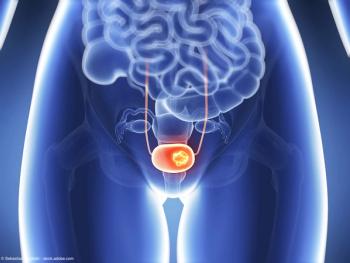
"The striking CR rates observed in these early cohorts are highly encouraging, particularly for BCG-unresponsive NMIBC patients who currently have limited treatment options," says Paul D. Anderson, MBBS, FRACS.
"Provided that we will confirm the efficacy data long-term, there is an opportunity to spare, de-escalate a bit, the treatment in select patients, and to expose the patient with inferior risk of developing severe [adverse] effects," says Andrea Necchi, MD.
In patients with intermediate-risk disease, 4 of 5 patients demonstrated a complete response.

"I think [gepotidacin] gives a different side effect profile available to the clinicians, and I think for patients as well, it provides a better, more durable option over time," says Ryan Haumschild, PharmD, MS, MBA, CPEL.
The approval is supported by data from the phase 3 EAGLE-2 and EAGLE-3 trials.

"Now with the new translational data indicating that post-treatment close contact precautions are unnecessary, I am confident that cretostimogene will represent a breakthrough in bladder cancer treatment, if approved by the FDA," says Trinity J. Bivalacqua, MD, PhD.
The mean change in IPSS from baseline to 3 months was 12.9 in the Aquablation arm vs 13.1 in the LEP arm.
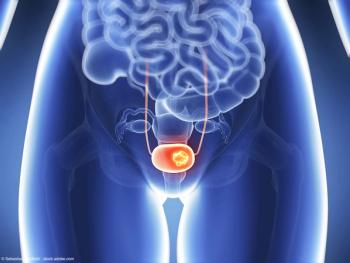
“The addition of the durvalumab did not make treatment more morbid than chemotherapy alone, and it didn't change or increase the surgical complications you saw in the ward," says James W.F. Catto, MBChB, PhD, FRCS.

“These findings reinforce isodose MHFRT as the standard of care, offering the same cancer control as conventional treatment but with fewer side effects than dose-escalated MHFRT,” says Amar U. Kishan, MD.