

The pCR was 37.3% (95% CI, 33.2-41.6) in the durvalumab arm and 27.5% (95% CI, 23.8-31.6) in the comparator arm.
The pCR was 37.3% (95% CI, 33.2-41.6) in the durvalumab arm and 27.5% (95% CI, 23.8-31.6) in the comparator arm.

OS was found to be prolonged with avelumab plus BSC vs BSC alone regardless of diabetes mellitus status.
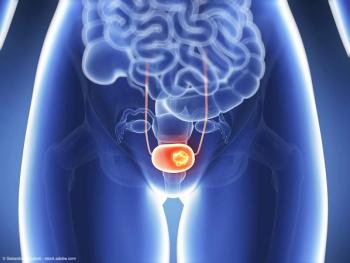
The investigators reported that there were 24 evaluable patients with CIS with/without papillary disease, of whom 79% had a CR at 3 months.

A total of 37 studies included real-world OS as an outcome; in these studies, median real-world OS ranged from 9 months to 23.5 months.

"Efficacy outcomes with darolutamide plus ADT were improved vs placebo plus ADT regardless of disease volume," said Fred Saad, MD, FRCS.

The median number of re-injections was 6 (range, 1-12).

"Patients with metastatic hormone-sensitive prostate cancer benefited from treatment with darolutamide plus ADT and docetaxel regardless of age," said Joan Carles, MD, PhD.
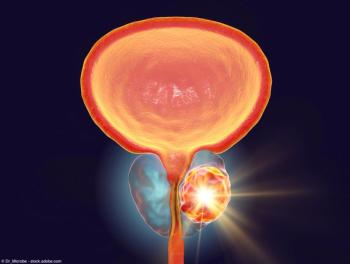
In both racial cohorts, median MFS was not reached in the darolutamide group.
“Looking at our overall results, not surprisingly, we can show a clear benefit of ARPIs on overall survival," says David Fisher, MSc, MA.

The investigators reported an HR for OS of 0.796 (95% CI, 0.661-0.958; 2-sided P = .0155) for talazoparib/enzalutamide vs enzalutamide/placebo.

The median duration of response was 47.8 months among patients who achieved an initial complete response.
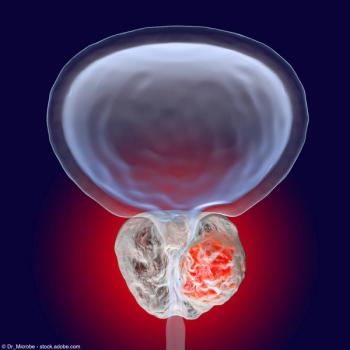
The treatment combination was associated with median radiographic progression-free survival of 14.3 months vs 6.2 months with enzalutamide alone.
Illuccix has been previously approved in the US, Australia, Canada, and Europe.

Overall, 85% of respondents indicated they experienced frequent bladder leaks.

Arpeet Shah, MD, highlights the shift toward precision medicine, ongoing work force challenges, the integration of AI, and more.

The software generates heatmaps to help identify prostatic tumors that may have been missed on initial reads.
"The management of advanced prostate cancer has evolved significantly, driven in part by the integration of diverse biomarkers that guide treatment decisions from diagnosis through progression," says Nedim Ruhotina, MD.

"The take-home point from our study of these 92 patients is that in metastatic kidney cancer, there's a high concordance [between] MRD positivity and patients having progressive disease," says Alan Tan, MD.

At 24 months, 79% of patients experienced a response to therapy, and 56% achieved at least a 75% reduction in UUI episodes.
"One way to think about how Anktiva works is it is the first molecule, based on the package insert, that increases and proliferates the NK cells, the T cells, and the CD4+ and CD8+ T cells, without up-regulating the suppressive T cells," says Patrick Soon-Shiong, MD.
At a median follow-up of 40.2 months post-surgery, no patients had experienced a disease recurrence.
A phase 1/2 trial of ABO-101 is expected to launch in the first half of 2025.
In total, 28% of patients with luminal tumors and 41% of patients with nonluminal tumors experienced upstaging to nonorgan confined disease.
A recap of the FDA submissions and regulatory decisions in urology from January 2025.

The primary end point is 12-month radiographic progression-free survival.

A list of facts and trends to know about the current landscape of urologic cancer management and research in the US.

The data also showed that mortality plateaued in recent years despite declining in years prior.

"Wearable devices are increasingly being used to understand and improve male sexual dysfunctions," write the authors.

Overall, 403 medical students and other applicants were matched across 148 urology residency programs nationwide.
The incidence of late grade 2 or greater GU toxicity at 5 years was 12.5% among those who did experience acute toxicity vs 7.5% among those who did not.