

Social media spreads significant misinformation about prostate cancer. Experts urge clinicians to provide trusted information sources.
Social media spreads significant misinformation about prostate cancer. Experts urge clinicians to provide trusted information sources.

Clarius Mobile Health said it will be demonstrating the application at the AUA Annual Meeting in Las Vegas, Nevada.

The RAPID-III trial will assess outcomes with flexible cystoscopy with or without the FloStent implant deployed.

"What is truly exciting is the potential for this device to meaningfully improve early and long-term continence rates, which can profoundly impact a patient's recovery and overall quality of life,” says Patrick Daily, MD.

Host Amy Pearlman, MD, discusses premature ejaculation with Brian L. Steixner, MD, a board-certified urologist in Linwood, New Jersey.

Data from the SOUND trial are intended to support submission for FDA 510(k) clearance of the Break Wave device.

View slated interviews with experts as well as insights from urologists on what to watch for.

"In this large study of over 1500 men with an elevated PSA, we found that a low IsoPSA is incredibly reassuring,” says Christopher J. Weight, MD.

"We’ve achieved a lot, but the focus now must shift from cure alone to comprehensive, patient-centered care," says Vladimir Hugec, MD.

Take a look through several of the notable phase 3 trials in progress that will be spotlighted at AUA 2025.

"The AACU has been discussing the evolution of state policy to ensure that biomarker testing, including PSA screening, is covered by payers," writes Ron Lanton, Esq.
Pearls & Perspectives, hosted by Amy Pearlman, MD, is the latest multimedia program from Urology Times.
Treatment with nadofaragene led to a complete response rate of 75% at 3 months.

We preview several noteworthy P2 presentations in the urologic oncology space.
Overall, 71% of patients had no fragment greater than 2 mm following treatment.

“We are witnessing the dawn of teletreatment,” says Jihad Kaouk, MD, FACS.
Two recent Clinical Forum discussions sought to examine how emerging therapeutic options and evolving treatment standards in non–muscle invasive bladder cancer affect clinical practices and patient outcomes.

Three recent expert-led Clinical Forums explored current challenges and advancements in the management of non–muscle invasive bladder cancer.

Data showed a significant association between the C allele of the SNP-765G>C of the PTGS2 gene and BPH.

Data from the pivotal CONTINENCE trial showed encouraging efficacy of SCONE neuromodulation therapy.
The first patient in the trial will be receiving 67Cu-SAR-bisPSMA in combination with enzalutamide.
The sBLA is supported by data from cohort B of the pivotal QUILT-3.032 trial.

Christian Gratzke, MD, explains why an app shows promise for patients with lower urinary tract symptoms.
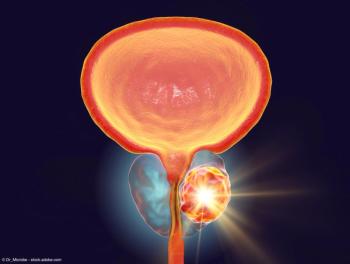
"The goal of the PRECISION study is to ensure that treatment with 3 radiation doses does not lead to greater side effects than those observed in the PACE-B study," says Professor Duncan B. McLaren, MBBS.
Jonathan Rubenstein, MD, and Mark Painter answer a question regarding coding for use of the second-generation Calyxo CVAC system.
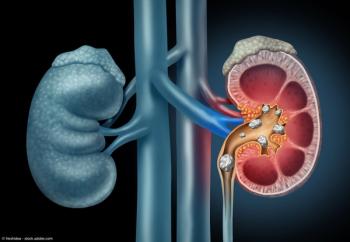
“The technology in the field of stone management is exciting, and I think it offers patients a lot more options than what they've had in the past,” says Brian Stork, MD.
An approach to WVTT involving 1 treatment per prostate lobe was associated with decreased post-operative complications.

This approval marks the first clearance of a stapler designed for single-port robotic surgery in the US.
"Building on decades of research into the genetic markers of prostate cancer, our study shows that the theory does work in practice—we can identify men at risk of aggressive cancers who need further tests and spare the men who are at lower risk from unnecessary treatments," says professor Ros Eeles.

In February 2025, the FDA recommended a removal of the black box warning related to an increased risk of adverse cardiovascular outcomes for all testosterone products. This recommendation has important implications for urologists and the patients they treat.