

Benjamin M. Brucker, MD, discusses best practices for the onabotulinumtoxinA procedure, spanning all phases of treatment—before, during, and after administration.
Benjamin M. Brucker, MD, discusses best practices for the onabotulinumtoxinA procedure, spanning all phases of treatment—before, during, and after administration.

The approval is supported by findings from the phase 3 ENVISION trial.

"I'm excited to see how these models are going to continue to be developed and applied in clinical practice, because precision medicine is here, and I’m looking forward to it," says Madhur Nayan, MD, PhD.

Gozellix was approved by the FDA in March 2025.

However, this regimen was associated with substantial toxicity, so careful patient selection is paramount, according to the authors.
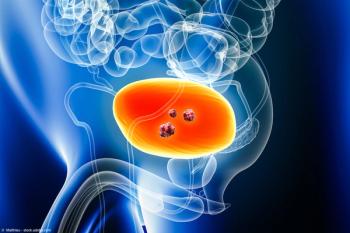
The objectives of the trial are to further confirm the recommended phase 2 dose and to assess the efficacy of MVR-T3011.
The NDA is supported by a pivotal phase 3 trial of zoliflodacin vs ceftriaxone plus azithromycin in patients with uncomplicated gonorrhea.

The regimen showed activity regardless of the prior immunotherapy-based combination used in the first-line setting.

"As urologists, we are the gatekeepers, and we must always perform the best possible surgery to optimize oncological outcomes," writes Jeremy Teoh, MBBS, FRCSEd (Urol), FCSHK, FHKAM (Surgery).

In preclinical studies, ACE-232 demonstrated superior potency, efficacy, and pharmacokinetic properties compared with other CYP11A1 inhibitors.

The Cancer BioShield platform is being assessed as a treatment for lymphopenia in adult patients with refractory or relapsed solid tumors, including genitourinary tumors.

"As clinicians, researchers, and advocates, this moment invites us to reflect on how far we’ve come—and how much further we must go," writes Michael S. Cookson, MD, MMHC, FACS.

Data from the #HOPE4KIDNEY trial is intended to support submission for regulatory clearance of the Edison Histotripsy System.
Data showed that Non-Hispanic Black and Latinx/Hispanic patients were less likely to receive PSMA-PET imaging than non-Hispanic White patients.

"Time and again, we see physicians make avoidable mistakes that hinder or delay their ability to reach their financial goals," writes Jeff Witz, CFP.

The new drug application is backed by data from the phase 2/3 FRUSICA-2 trial.

According to the authors, the mitomycin/BCG regimen could alleviate some of the burden of the global BCG shortage.

ORR in the zanzalintinib plus nivolumab arm was 63% (95% CI: 46-77) vs 40% (95% CI: 25-57) in the zanzalintinib plus nivolumab/relatlimab arm.

In 2015, 1245 patients had prostate cancer and had also initiated a GLP-1 or GIP/GLP-1 receptor agonist compared with 69,808 patients in 2024.

“AMPLITUDE supports early genomic testing and niraparib plus AAP as a new treatment option for patients with mCSPC and HRR gene alterations," the authors wrote.
Treatment with darolutamide was found to extend median time to deterioration of FACT-P total score by 5.1 months vs placebo

“This was a positive study, resulting in a statistically significant improvement in the primary end point of rPFS in the intent-to-treat population," said Rana R. McKay, MD, FASCO.
The approval is supported by data from the pivotal phase 3 ARANOTE trial.

According to the authors, these data continue to support enzalutamide plus ADT as a standard-of-care for patients with mHSPC.

"CAN-2409 immunotherapy could represent the first new therapy for men with localized prostate cancer in over 20 years," wrote the authors.

Clinical benefit rate was observed 5 (27%) patients in cohort 1, 7 (27%) patients in cohort 2, and 2 (11%) patients in cohort 3.

“As of April 2025, 616 patients have been randomized,” said Alicia Morgans, MD, MPH.

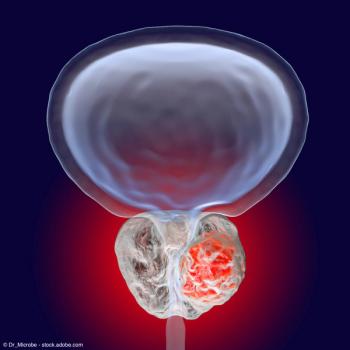
Data also showed a positive trend in overall survival.
Lower-dose abiraterone acetate was found to demonstrate comparable efficacy to standard-dose abiraterone.