

“Prior taxanes did not increase reported hematological adverse events during treatment with Ra-223,” the investigators reported.
“Prior taxanes did not increase reported hematological adverse events during treatment with Ra-223,” the investigators reported.

Results of an exclusive Urology Times survey point to urologists preferring intravesical chemotherapy for treating BCG-unresponsive NMIBC.

“On the intention-to-treat efficacy analysis...the median PFS was numerically higher for the paclitaxel arm," said Aditya Dhanawat, MBBS, MD, DM.

A recap of the FDA submissions and regulatory decisions in urology from May 2025.

The findings also lend further credence to the muscle-invasive bladder cancer treatment regimen, investigators reported.

"This final analysis of this study continues to support nivo+ipi as a standard of care for patients with untreated RCC," says Robert J. Motzer, MD.

"The pre-specified thresholds for statistical significance were not met for the dual primary end points of overall survival in cisplatin-ineligible and PD-L1 positive patients," said Michiel Van der Heijden, MD, PhD.

According to the authors, these data reinforce EV plus pembrolizumab as the first-line standard of care for la/mUC.

"These long-term results continue to support [pembrolizumab's] use as a standard of care for patients at increased risk of recurrence," says Naomi B. Haas, MD.

"There was activity across all the groups from an EFS perspective," said Thomas B. Powles, MBBS, MRCP, MD.

The cCR rate was 44.4% in the intent-to-treat population.

Vitaly Margulis, MD, reported an overall response rate of 86.5%, and a complete response rate of 73%.
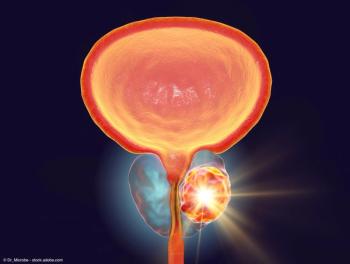
The addition of Ra223 to enzalutamide was associated with a 31% reduction in the risk of progression or death compared with enzalutamide alone.

The trial plans to enroll approximately 70 patients with mCRPC.

Campbell emphasized that although gender representation in medicine is shifting, structural and cultural biases continue to influence academic recognition.

Overall, 59% of patients achieved at least a 50% decline in PSA level.

This year's meeting with feature several notable sessions in prostate cancer, bladder cancer, kidney cancer, and other GU malignancies.
The company plans to submit a Biologics License Application to the FDA at the end of 2026.

Further follow-up and additional treatments in the study are ongoing.

The approvals are supported by findings from the phase 3 CheckMate-67T trial.

These data are intended to support a new drug application to the FDA in the second half of 2025.

The single-use test can deliver diagnostic results for chlamydia and gonorrhea in approximately 30 minutes.

However, the data did not show any benefit of a docetaxel doublet vs an ARPI doublet.

Jonathan Rubenstein, MD, and Mark Painter tackle a coding question for treating stones.

James C. Ulchaker, MD, shares his insights on the current range of BPH therapies.
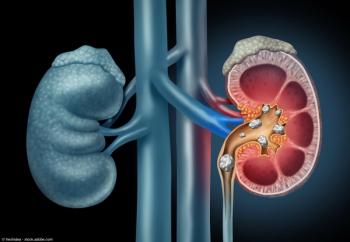
Jared S. Winoker, MD, addresses the wide range of stone burdens treated by the CVAC system for the study.
The application is seeking an expanded indication of talazoparib plus enzalutamide for mCRPC.
The committee voted 4-5 in opposition of a favorable benefit-risk profile.

Results from the phase 3 AMPLIFY trial are intended to support an application to the FDA for potential approval of 64Cu-SAR-bisPSMA.
The phase 3 study design will now be submitted for final review by the agency.