

In total, 73% of patients showed an increase in 24-hour urine volume from baseline to the end of the 1-month trial period.
In total, 73% of patients showed an increase in 24-hour urine volume from baseline to the end of the 1-month trial period.

Flotufolastat F 18 is now included in the NCCN prostate cancer guideline recommendations for all the same categories as the other PSMA-PET imaging agents approved by the FDA.
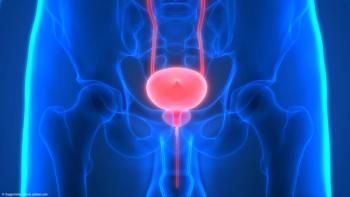
Pre-surgical treatment with the antibody-drug conjugate enfortumab vedotin elicited substantial antitumor activity in patients with cisplatin-ineligible muscle-invasive bladder cancer.

In total, 77.8% of Black respondents, 72.7% of Asian respondents, 57.1% of Latino respondents, and 46.5% of White respondents indicated that the racial and ethnic diversity of residents at a program influenced their decision to preference signal or sub-internship with that program.

While practice ownership has declined among physicians of all ages, the sharpest drop occurred among doctors under age 45.

The UroActive device is currently being studied in the SOPHIA study, which published initial results earlier this year.
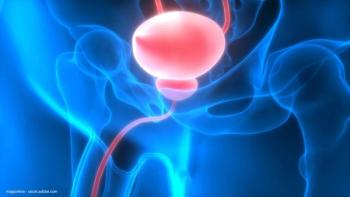
“Patients who present with [node-positive nonmetastatic bladder cancer] have a poor prognosis and should be counseled as to the most appropriate treatment, empowering them in their decision making with the knowledge that bladder preservation is a real alternative to radical surgery,” the authors wrote.
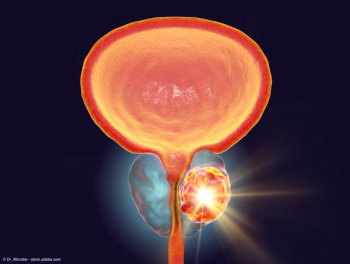
The SABRE trial is exploring the PET-imaging agent 64Cu SAR-Bombesin in patients with PSMA-negative biochemically recurrent prostate cancer following definitive therapy.

Dr. Vince has an interest in disparities in urologic care, specifically among patients with prostate cancer.

"Extra support from trusted peers can help make navigating complex health care systems easier for transgender patients, who often have to wait years before receiving gender-affirming genital surgery—while also managing the stress and trauma associated with being part of a society that often doesn’t accept non-conforming gender expression,” says Geolani Dy, MD, FACS

With healthcare data breaches approaching a boiling point, care providers need to adopt an approach that prioritizes operational continuity.
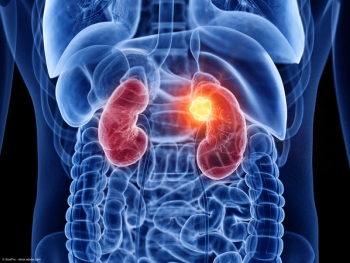
Investigations of treatment regimens featuring antibody-drug conjugates or radiotherapeutics are part of the ongoing wave of research in renal cell carcinoma, according to Rana R. McKay, MD.
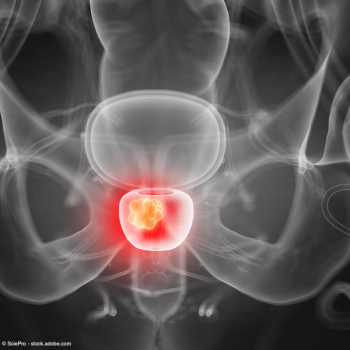
“Water vapor therapy shows great promise to provide patients with another option to proactively manage their cancer risk while preserving quality of life,” said Naveen Kella, MD.

"This landmark registry will facilitate more comprehensive knowledge of treatment and management [of Peyronie's disease] using real-world evidence," said Mohit Khera, MD.

ARX517 is currently being studied in the phase 1/2 open-label APEX-01 trial.

Data among patients with follow-up of greater than 48 months demonstrated an IPSS reduction of 45.2% from baseline to 79 months following treatment.
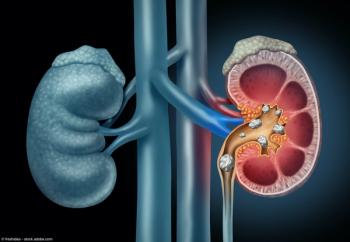
"Prescription alkali therapy is very costly; it has a lot of side effects, and the compliance is very low," says Brett Johnson, MD.

"CPT codes 50080 and 50081 describe the antegrade approach to stone removal requiring lithotripsy through a nephrostomy tract, with 50080 being reported for stones less than 2 cm in size in a single location, whereas 50081 would be reported for large or complex stones, stones in multiple locations, or stones in the ureter (such as in the example provided)," write Jonathan Rubenstein, MD, and Mark Painter.

"We are hoping this is something that we can repurpose quickly for those affected by these variants,” says Heather Christofk, PhD.
The minimally invasive surgical therapy Optilume was recently approved by the FDA for the treatment of lower urinary tract symptoms secondary to BPH.

The rule includes a proposed unadjusted national average payment rate of US$21,376.53 for the device in 2024.
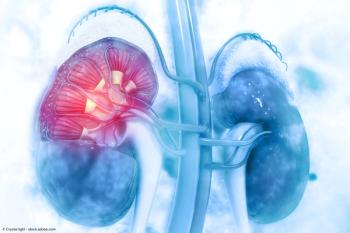
Researchers may be able to use imaging mass cytometry to capture and classify the tumor-immune evasion cell networks in clear cell renal cell carcinoma.
The PARP inhibitor olaparib demonstrated antitumor activity in patients with BAP1-mutated renal cell carcinoma.

“Although the future of AI within science is uncertain, disclosure of the use of AI is an excellent first step to balance academic integrity with disruptive innovation,” the authors write.

From urologic oncology and pediatric oncology to single port robotic surgery, the Department of Urology team is celebrating several achievements.
Analysis shows MRI is comparable to post-surgery pathologic staging for assessing risk of biochemical recurrence.
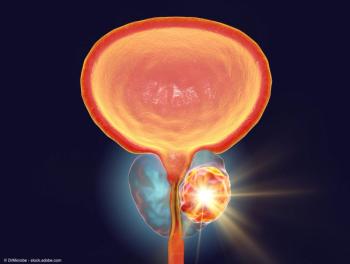
"The beauty is, now we can deliver a cisplatin-based chemotherapeutic orally, which is usually never done. And by targeting the prostate, we can reduce kidney and liver toxicity and the risk of peripheral neuropathy," says Shanta Dhar, PhD.

The prospective cohort study seeks to enroll 200 patients from the South Florida region and 1800 patients from international sites.

Urologists and other medical professionals can begin using the code on January 1, 2024 to facilitate the reimbursement of Li-ESWT involving the corpus cavernosum.

“Regardless of the size of the practice, medical scribes are a valuable resource for health care providers, helping to streamline workflow and coordinate patient care,” writes Brian Hudson.