

The phase 3 PROpel trial provided the primary supporting data for the approval.
The phase 3 PROpel trial provided the primary supporting data for the approval.

Men of African ancestry were less likely to be treated on clinical trials after undergoing comprehensive genomic profiling compared with men of European ancestry.

Dr. Avi Baskin and Dr. Katsuto Shinohara were honored for their extraordinary work.
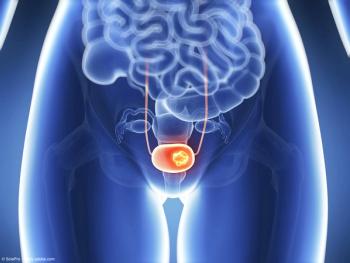
In this episode, Ashish M. Kamat, MD, MBBS, highlights the state of bladder cancer care in recognition of Bladder Cancer Awareness Month.

Outstanding early-career researchers acknowledged for novel studies to enhance the well-being of patients with bladder cancer.
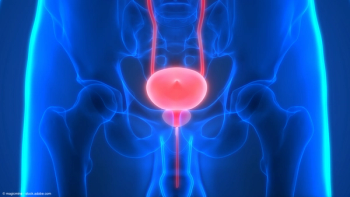
The investigators found that patients who experienced recurrence following BCG therapy were more likely to have BRS3 tumors compared with BRS1 or BRS2.

"From a LUGPA vantage point, we are extremely excited to see the significant congressional attention to PBMs," says Mara R. Holton, MD.
The approval of flotufolastat F 18 (formerly 18F-rhPSMA-7.3) in prostate cancer is based on findings from the phase 3 SPOTLIGHT and LIGHTHOUSE trials.

The study assessed US veterans receiving care at the Veterans Health Administration for all cancer types, including prostate cancer.

Social Security benefits aren’t sufficient to fund retirement for most people. And given the aging of the population and projected trust-fund shortfall, they may be less generous in the future.

The study assessed 120 women with overactive bladder for associations between anxiety and somatic symptoms, quality of life, quantitative sensory testing measures, and psychological stress symptoms.

“Patients will never change, and demanding family members will never change. The solution to the problem is to manage the way we think about them,” writes Joan Naidorf, DO.
The intravesical drug delivery system TAR-210 is designed to provide localized continuous release of erdafitinib in patients with bladder cancer.

Patients classified as GC high risk had a 5-year disease progression of 40%, compared with 20% among GC low-risk patients.

The 5-year metastasis-free survival rate was 75% with trimodality therapy vs 74% with radical cystectomy.

Increasing numbers of older patients with cancer necessitates adoption of an age-friendly approach to cancer care.
"With intravesical chemotherapy, there aren't the side effects we see with intravenous chemotherapy because the drugs only treat the bladder lining and very little, if any, of the medicine gets absorbed in the bloodstream," said Nitin Yerram, MD.
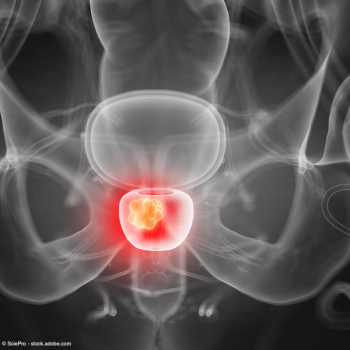
The theranostic 64Cu/67Cu SAR-bisPSMA yielded positive safety and efficacy signals in patients with metastatic castration-resistant prostate cancer.

"We believe that more thorough body weight control in childhood could serve as a preventive measure for preserving testicular function in adulthood," says Rosella Cannarella, MD, PhD.
"At 1 month, there was a clinically significant improvement in SHIM scoring in men that did receive the treatment vs the sham arm, which didn't," says Jeunice Owens-Walton, MD.
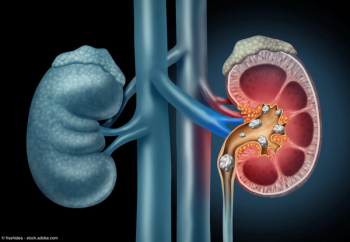
The trial assessed outcomes in patients who had kidney stones between 1 to 2 cm.

"I’m frank with them. If it’s something I haven’t heard of, I tell them. I also tell them where I get my information," says Kevin Krughoff, MD.

The data were presented at the recent American Urological Association Annual Meeting.
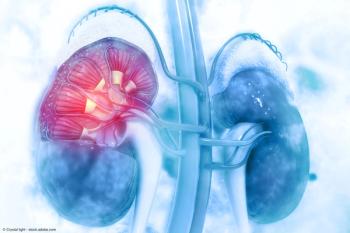
Trajectory inference analysis pointed to SIX2+CITED1+ as the nephrogenic cancer stem cells at the origin of Wilms tumor.

While online reviews are critical in any industry, patient expectations are simply different when it comes to health care.

“These results validate the clinical value of bone biomarker assessment in the HSPC state," state the authors.

Men with high-risk prostate cancer who received immunotherapy treatment with enoblituzumab in the weeks leading up to surgery had favorable rates of disease remission and tumor downgrading after surgery.

Bradley Gill, MD, MS, recaps several presentations on benign prostatic hyperplasia from the 2023 American Urological Association Annual Meeting in Chicago, Illinois.
"A couple [of] times recently, I’ve done 6 in 1 day. A couple weeks ago, I did 4, the week before that, 5. So I would say I’ve seen an uptick," says urologist Bradford Black, MD.

The findings held even when the investigators adjusted for age, past medical history, smoking status, and type of surgery.