
The latest updates from AUGS.
The latest updates from AUGS.

Press Release
Join the discussion on Health Reform with world leader in health policy and bioethics, Ezekiel J. Emanuel, MD, PhD, the Vice Provost for Global Initiatives and expert panelists and UCSF leaders.

Press Release
"I have no doubt we’ll become a destination program. We have a great team. Combined with a few key recruitments, we will be set to take our place on the global stage of urology," says Isaac Y. Kim, MD, PhD, MBA, urology professor and chair, Yale Urology.

Press Release
The symposium brings together clinicians devoted to solving the disease of cancer and the many challenges associated with it.
Access the latest resources from AUGS
Latest events from AUGS

Press Release
Yale Urology has ranked among the top 50 urology programs in the nation and #1 in Connecticut in U.S. News & World Report’s just-released listing.

ADT and other mainstays of therapy for men with castration-resistant prostate cancer may be effective in the management of Skene’s gland malignancy, a rare paraurethral adenocarcinoma.

Press Release
Tosoian is developing the Contemporary Uro-oncologic specimens and Protocols (CUSP) program, which will implement prospective collection of the biospecimens and correlative clinical data essential to basic, translational, and clinical genitourinary cancer research.
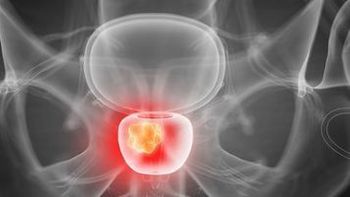
Multiple PSMA-PET imaging agents are approved by the FDA for use in prostate cancer.

Urology areas covered for this FDA clearance include conditions of the prostate, bladder, kidneys, and genitalia.

The SAP program cultivates a community of advocacy groups, medical associations, and medical institutions to foster collaboration and an open exchange of information among trusted peers for the ultimate benefit of patients and their families.

The noninvasive UriFind test identifies bladder cancer based on methylation detection of exfoliated cell DNA in urine.

The federal agency has issued final guidance on how to design studies that include this patient population.
Questions remain surrounding the origin of the global pandemic.

Here are some news items in the urology field you may have missed this week.

Concepcion is editor-in-chief of Urology Times' sister publication, Urologists in Cancer Care.

Lantheus, the developer of piflufolastat F 18, selected oncology provider GenesisCare to administer the first commercially available dose of the agent.

The new treatment is a ready-to-use 6-month subcutaneous depot formulation of leuprolide mesylate.
The FDA has approved the PSMA PET imaging agent 18F-DCFPyL for use in prostate cancer.
The Uro-G single-use device arrives at a time when the FDA is actively investigating reports of infections associated with reusable cystoscopes.

The device can now be marketed throughout the EU, as well as in Iceland, Liechtenstein, and Norway.
Tadfin is a once-daily capsule that combines 5 mg of tadalafil (Cialis) with 5 mg of finasteride (Proscar).
The targeted focal laser ablation system is intended to be an office-based treatment for localized prostate cancer delivered under local anesthesia.
The SECURE trial is exploring the PSMA PET imaging product 64Cu-SAR-bisPSMA and the PSMA targeted therapy 67Cu-SAR-bisPSMA.
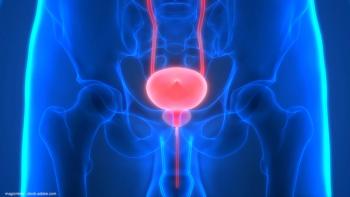
Final FDA decision on approvals is still pending.
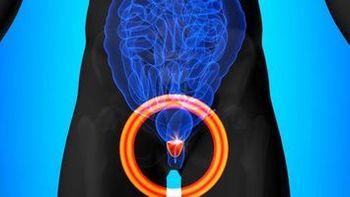
The approval was based on data from the phase 3 ARCHES trial.
Around the Practice: High-Risk Renal Cell Carcinoma

Both medical professionals bring experience and expertise that will elevate the future work of the publication.