

Physicians are now using the AI-powered Unfold AI platform to work with patients on treatment selection and establishing an optimal overall management plan.
Physicians are now using the AI-powered Unfold AI platform to work with patients on treatment selection and establishing an optimal overall management plan.

“Our results indicate that avoiding unhealthy dietary habits could be the best nutritional strategy to prevent aggressive prostate cancer,” says Adela Castelló-Pastor, PhD.

“I think being savvy about how you deal with BCG supply on the administrative side is important,” says Suzanne B. Merrill, MD, FACS.

The designation is for patients with mCRPC who have progressed on an androgen receptor pathway inhibitor and are not eligible for or decline to receive chemotherapy.

"At the end [of my talk], I really wanted to focus on how Specialty Networks could partner with us," says Jannah H. Thompson, MD, FPMRS.
This marks the first worldwide approval for the niraparib/abiraterone dual-action tablet.

“There is a growing consensus that a hard medical liability insurance market exists in a considerable number of states and is slowly spreading across the United States as more physicians face higher insurance premiums,” said AMA President Jack Resneck Jr., MD.
Melissa A. Laudano, MD, highlights 3 studies in overactive bladder/incontinence being presented at the 2023 American Urological Association Annual Meeting.

The tool uses a tumor-to-salivary gland ratio (PSG score) to predict outcomes.
Helen L. Bernie, DO, MPH, highlights 4 studies in sexual dysfunction being presented at the 2023 American Urological Association Annual Meeting.

"Our findings underscore the commercial and market factors that have been influencing bladder cancer care," says Brian Chun, MD.
Michael S. Cookson, MD, MMHC, highlights 5 studies in prostate cancer being presented at the 2023 American Urological Association Annual Meeting.

Shilpa Gupta, MD, shares her expert insight on the evolving treatment paradigm for patients with muscle-invasive bladder cancer, along with obstacles that must be overcome to further advance the field.

TLX250-CDx PET/CT demonstrated a high degree of sensitivity (85.5%) and specificity (87.0%) for detection of clear cell renal cell carcinoma in patients with indeterminate renal masses.

"Although payers are supposed to adopt CPT instructions, we unfortunately do not have a system that contractually binds payers to follow CPT instructions verbatim," write Jonathan Rubenstein, MD, and Mark Painter.

"When we looked at those cumulative effects of these 3 characteristics: 65 years and older, 3 or more OAB symptoms, 4 or more comorbid conditions, the odds of screening positive were about 6-fold higher in women," says Steve R. Fisher, PhD, PT, GCS.

Results from the phase 1 TRAVERSE trial showed signals of anti-tumor activity with the CAR T-cell therapy ALLO-316 in patients with advanced or metastatic clear cell renal cell carcinoma.

"The sad thing is that with something like OAB, we already have so many barriers to getting patients in to initiate care in the first place," says A. Lenore Ackerman, MD, PhD.

“The answer won’t be found in telling physicians to be more resilient,” said AMA president and health policy expert Jack Resneck Jr., MD.

“There is a lack of information regarding the prevalence and implications of [prostate cancer] in transgender women, and this highlights the crucial need for further research into prevention, detection, and treatment," says Hayley Premo.
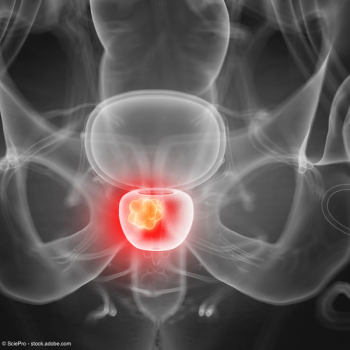
The PSMA-targeted fluorescent tracer OTL78 was shown to be safe and enabled real-time imaging during robot-assisted radical prostatectomy and provided valuable information on the localization and extent of prostate cancer.

“Our data indicate that usage of a PCNL equipment whiteboard led to significant improvements in team perception of inter-disciplinary communication and case item selection accuracy," says Jenny N. Guo, MD.

"The evidence is starting to show us that although efficacy in terms of managing OAB symptoms may be equal or similar across studies for these 2 classes of medications, safety and tolerability are very different," says A. Lenore Ackerman, MD, PhD.

In this installment, Jonathan Clavell, MD, FACS, highlights Clavell Urology, his private practice within Robert J Cornell MD, PA, in Houston, Texas.

The courses from the American Urogynecologic Society allow urologists to earn CME credits on their own time.

Press Release
This legislation a bipartisan bill designed to improve affordability and access to prescription medications.
"The need for maintaining the high quality of education within the increasing number of restrictions and regulations is making the job as program director complex and time-consuming," writes Gopal H. Badlani, MD.
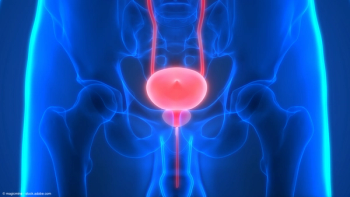
"Our preliminary clinical trial found that TAR-200 was generally safe, well tolerated, and had beneficial effects on bladder cancer outcomes in a group of patients with limited treatment options," said Mark Tyson, MD, MPH.

What plays out in real-life courtrooms differs greatly from those on television.

“Together, these changes will help ensure enrollees have consistent access to medically- necessary care while also maintaining medical management tools that emphasize the important role MA plans play in coordinating medically-necessary care,” CMS said.