

In this patient population, erdafitinib reduced the risk of death by 36% versus physician's choice of chemotherapy.
In this patient population, erdafitinib reduced the risk of death by 36% versus physician's choice of chemotherapy.

"In EV-103 dose escalation/cohort A, the safety profile of the combination was manageable, with no new safety concerns observed at nearly 4 years of follow-up," said Shilpa Gupta, MD.
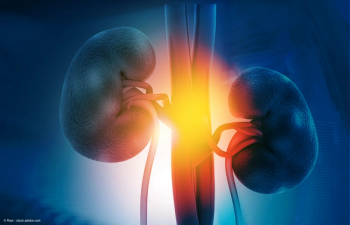
At a median follow-up of about 50 months, lenvatinib plus pembrolizumab maintained an overall survival benefit compared with sunitinib in patients with advanced renal cell carcinoma.
The antibody-drug conjugate trastuzumab deruxtecan is being explored across a wide-range of HER2-positive solid tumors, including difficult-to-treat cancers.

The benefit in radiographic progression-free survival extended across all subgroups of patients with HRR-deficient metastatic castration-resistant prostate cancer.

“These results further support the importance of screening for germline and somatic BRCA1/2 alterations to deliver more precise care for our patient," says David Olmos, MD, PhD.

Overall, 86% maintained a response for greater than 6 months.

Belzutifan plus lenvatinib elicited promising antitumor activity with a manageable safety profile as a second-line or later treatment for patients with advanced renal cell carcinoma.

“Our observations in this study show that radium-223 can be integrated into the treatment sequence for patients with (metastatic castration-resistant prostate cancer),” said Daniel Y. Song, MD.

A total of 398 patients with mCRPC, unselected for homologous recombination repair gene alterations.were included in the safety cohort.

The proportion of patients who discontinued initial ARI treatment was 30.4% for darolutamide compared with 40.8% for enzalutamide and 46.0% for apalutamide.

“We showed that genetic correction of PSA levels has the potential to both reduce unnecessary biopsies and improve our ability to detect tumors with a more aggressive profile," says Linda Kachuri, PhD, MPH.

"The pressures on physicians are making it extremely difficult to run a medical practice, and something needs to be done," says William C. Reha, MD, MBA.

"The emulation framework lends the design and conduct of observational analyses some of the rigor required for the planning of a randomized trial. In doing so, it provides an innovative and principled approach to improve the evidence base on the comparative effectiveness of interventions," writes Boris Gershman, MD, and Aaron Fleishman, MPH.

"This is the first data to show that antegrade instillation of UGN-101 had lower ureteral stricture rates compared [with] retrograde approaches,” said Josh Gottlieb, DO.

"It's certainly a bigger problem with advancing age in the geriatric population, and it can be a tremendous source of cost for patients who have these issues," says Gina M. Rooker, MD.

The phase 3 PROpel trial provided the primary supporting data for the approval.

Men of African ancestry were less likely to be treated on clinical trials after undergoing comprehensive genomic profiling compared with men of European ancestry.

Press Release
Dr. Avi Baskin and Dr. Katsuto Shinohara were honored for their extraordinary work.

In this episode, Ashish M. Kamat, MD, MBBS, highlights the state of bladder cancer care in recognition of Bladder Cancer Awareness Month.

Press Release
Outstanding early-career researchers acknowledged for novel studies to enhance the well-being of patients with bladder cancer.
The investigators found that patients who experienced recurrence following BCG therapy were more likely to have BRS3 tumors compared with BRS1 or BRS2.

"From a LUGPA vantage point, we are extremely excited to see the significant congressional attention to PBMs," says Mara R. Holton, MD.
The approval of flotufolastat F 18 (formerly 18F-rhPSMA-7.3) in prostate cancer is based on findings from the phase 3 SPOTLIGHT and LIGHTHOUSE trials.

The study assessed US veterans receiving care at the Veterans Health Administration for all cancer types, including prostate cancer.

Social Security benefits aren’t sufficient to fund retirement for most people. And given the aging of the population and projected trust-fund shortfall, they may be less generous in the future.

Press Release
The study assessed 120 women with overactive bladder for associations between anxiety and somatic symptoms, quality of life, quantitative sensory testing measures, and psychological stress symptoms.

“Patients will never change, and demanding family members will never change. The solution to the problem is to manage the way we think about them,” writes Joan Naidorf, DO.
The intravesical drug delivery system TAR-210 is designed to provide localized continuous release of erdafitinib in patients with bladder cancer.

Patients classified as GC high risk had a 5-year disease progression of 40%, compared with 20% among GC low-risk patients.