

Adam B. Weiner, MD, and Ruchika Talwar, MD, discuss some of the notable urologic oncology abstracts that were presented at the 2023 AUA meeting.
Adam B. Weiner, MD, and Ruchika Talwar, MD, discuss some of the notable urologic oncology abstracts that were presented at the 2023 AUA meeting.
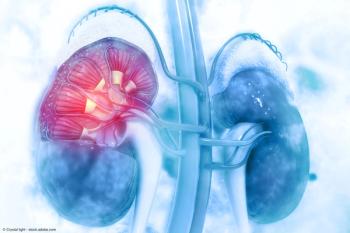
Adding cabozantinib to nivolumab/ipilimumab improved PFS in frontline renal cell carcinoma; however, there was increased toxicity with the triplet, including more adverse event–related discontinuations.

Optimal bedtime was determined using the bedtime and mid-awake time for each patient, which was gathered from an Actiwatch Spectrum device.

The FDA has issued a complete response letter to ImmunityBio regarding its biologics license application for N-803 (Anktiva) for use in combination with BCG for the treatment of patients with non–muscle-invasive bladder cancer.

In this installment, Suzanne B. Merrill, MD, FACS, and Dan Humer, PA-C, highlight Colorado Urology, a Denver-based practice within the United Urology group.

"We anticipate that in the next decade, breakthroughs in genetic profiling of tumors for precision therapies will further reduce suffering and death from bladder cancer," writes Michael S. Cookson, MD, MMHC.

"In summary, it was safe and effective. There [were] no serious adverse events...and the vast majority of patients received no anesthesia with very similar results to shock wave lithotripsy,” said Ben H. Chew, MD, MSc, FRCSC.

"There is no simple or universal answer to the question of retirement savings. Many factors must be considered, but your financial adviser should be able to direct you so that you can enjoy a financially stable life once you stop working," writes Jeff Witz, CFP.

"It is unique given that in addition to providing prognostic information, it can serve as a marker to predict sensitivity to androgen deprivation therapy (ADT), which is the backbone of systemic therapy for men with prostate cancer," says Rana R. McKay, MD.

The tool uses clinical covariates to predict changes in storage, voiding, and nocturia LUTS for patients receiving placebo, dutasteride, tamsulosin, or DUT/TAM combination therapy.
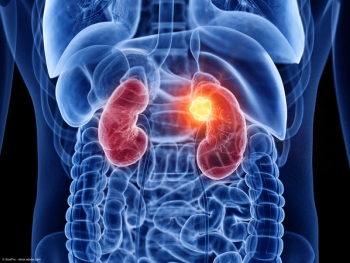
The phase 3 RENOTORCH study is comparing the combination of the PD1-inhibitor toripalimab and axitinib with single-agent sunitinib in patients with renal cell carcinoma.

"Proxies for social determinants of health that we found to be associated with higher overall mortality included living in a more deprived area, as well as having Medicaid or Medicare insurance," says David Miller, MD.

Vivally System is a neuromodulation system that uses a closed-loop control algorithm and electromyography to personalize treatment for each patient.
In the ARASTEP trial, the primary outcome measure of rPFS is being measured by PSMA-PET/CT imaging with 68Ga-PSMA-11 (prepared using Illuccix) or piflufolastat F 18.

Here are some ways in which lawyers can remove potential jurors from a case.

"The study demonstrated that AS rate in the MUSIC cohort, which in 2014 had been lower than in the SEER cohort, increased rapidly, from approximately 20% in 2014 to nearly 50% in 2019, whereas the SEER cohort showed only a modest increase," writes Badar M. Mian, MD.
The CDK4/6 inhibitor abemaciclib showed clinically activity in patients with heavily pretreated metastatic castration-resistant prostate cancer.
The addition of STAD did, however, improve secondary end points, including metastases rates, prostate cancer-specific mortality, and PSA failure.

Illuccix is approved by Health Canada for imaging in patients with suspected metastasis who are candidates for initial definitive therapy, or in patients with suspected recurrence based on an elevated PSA level.
The methylation-based urine test is performed on a qPCR platform and is intended for use in conjunction with cystoscopy.
"The most important thing for transgender women and their health care providers to remember is that prostate cancer screening shouldn’t be neglected," said Stephen J. Freedland, MD.

Treatment with the Optilume BPH System resulted in significant, immediate symptomatic and functional improvements in patients with BPH, according to 12-month data from the PINNACLE study.

Among medical groups, 65% said they will employ advanced practice providers in 2023.
“The ARAMIS Rollover Study extended the duration of darolutamide treatment and demonstrated the long-term safety of darolutamide in patients with [nonmetastatic CRPC],” said Neal D. Shore, MD.
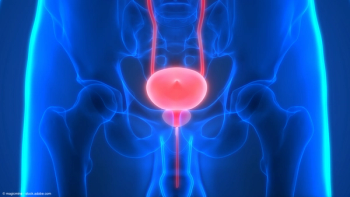
Preliminary findings from the single-arm, phase 2 CORE-001 trial showed that the combination of the oncolytic immunotherapy cretostimogene grenadenorepvec (CG0070) and pembrolizumab (Keytruda) elicited a high complete response rate in patients with BCG–unresponsive non–muscle invasive bladder cancer.
“The combination of sintilimab and axitinib had a manageable safety profile and achieved a promising tumor response rate in patient with advanced FH-deficient RCC,” said Xingming Zhang.
Data from the retrospective DEAR study linked darolutamide to lower rates of discontinuation and progression to metastatic disease vs enzalutamide and apalutamide in patients with nonmetastatic castration-resistant prostate cancer.
“The results of the study imply that UGN-101 is not only a renal-preserving therapy for UTUC in this comorbid population, but could potentially delay the time to dialysis or radical nephroureterectomy," says Kyle M. Rose, MD.
The indication is restricted from the indication in the FDA supplemental New Drug Application for olaparib/abiraterone, which is for the population at-large in the BRCA–mutation positive setting.

"At our institution, we used a [quality improvement] protocol to first decrease overall antibiotic duration from the more standard 30 days, and then we further decreased it along with ureteral stent decrease,” says Jessica Wenzel, MD, MPH.