
The deep learning software also showed no difference in the consistency of scoring with the Prostate Imaging-Reporting and Data System (PI-RADS).
The deep learning software also showed no difference in the consistency of scoring with the Prostate Imaging-Reporting and Data System (PI-RADS).
Patients received standard-of-care testosterone suppression with either oral enzalutamide or standard non-steroidal antiandrogen therapy.
Prostate cancer, bladder cancer, renal cell carcinoma were among the multitude of tumor types assessed in the analysis supporting the approval.
"The improvement in technologies could potentially assist radiation oncologists in making timely decisions,” said Himanshu Arora, PhD.

“The potential benefits of incorporating AI into health care are numerous but like every technology, AI comes with risks that must be managed if the benefits of these tools are to outweigh the potential costs,” writes cybersecurity expert Jon Moore.

Michael S. Leapman, MD, MHS, highlights a study of patient experiences with tissue-based genomic testing during active surveillance for prostate cancer.

"Some of these patients newly referred don't have any other proven therapies remaining...This is the only one on the shelf that has a proven benefit. Unfortunately, we can't offer them that at this stage," says Praful Ravi, MD, BChir, MRCP.

Researchers identified 9 novel susceptibility loci for prostate cancer, 7 of which were substantially more prevalent in patients of African ancestry.
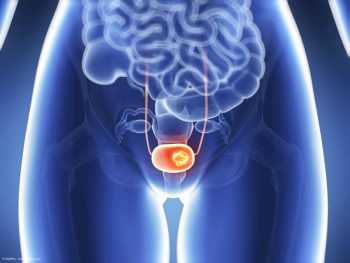
No CxM-negative patients had findings of a recurrent tumor on a follow-up cystoscopy.
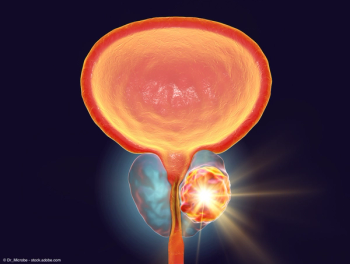
The PSMA-targeted monoclonal antibody J591 is effective in non-metastatic CRPC when it is radiolabeled with either 177Lu or 111In.

"These studies, taken together, offer important insight into the direction we should be heading in prostate cancer diagnosis: toward a targeted-only TP biopsy," write Tarik Benidir, MD, and Zeyad Schwen, MD.

In 2021, small urology programs had 28.1% spots filled by applicants at their home program, compared with 16.2% between 2016 and 2020.

"I've worked in 3 different countries, I've seen dozens of people doing robotic radical prostatectomy...so my current practice is kind of a “best of” what I have seen and learned," says Ricardo Soares, MD.
"With ARASTEP, we are optimistic about the potential to help patients at this earlier stage of [prostate cancer]," says Tara Frenkl, MD.
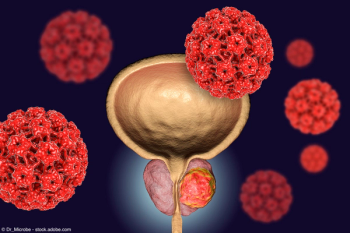
Amar Kishan, MD, highlights findings showing that MRI-guided SBRT is superior to CT-guided SBRT in localized prostate cancer.

The median overall survival in renal cell carcinoma patients was similar, regardless of whether or not patients received a break from treatment.
Press Release
Darolutamide increased overall survival compared to placebo in the overall patient population and patients with high-volume, high-risk mHSPC as well as in patients with low-risk metastatic hormone-sensitive prostate cancer.

"While CBD oil appears safe, it does not seem to reduce pain or discomfort during the typically brief recovery period after this common procedure,” says Karen Stern, MD.

Press Release
Ash Tewari, MBBS, MCh, is Chair of the Milton and Carroll Petrie Department of Urology at the Icahn School of Medicine at Mount Sinai.
Antibody-drug conjugates, including those targeting PSMA, are among the next wave of treatment advances in mCRPC.
"The results of this study demonstrate that peroneal eTNM using the URIS neuromodulation system is safe, well tolerated, and effective, with over 85% of patients experiencing clinically significant improvement in most bothersome OAB symptoms," says Jan Krhut, PhD.

Improving your patient payment process in 2023 is important to maintain a positive relationship with your patients and with your practice’s bottom line.
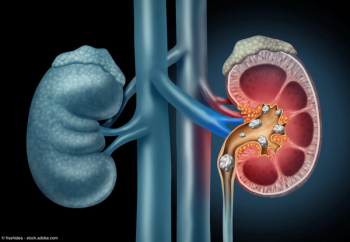
The highest cumulative 120-day rates of ED visits and HA were observed in patients who underwent percutaneous nephrolithotomy procedures.

"UH is working on starting clinics throughout rural Northeast Ohio, and we're meeting to develop a FPMRS program, both virtual and in-person, so patients can have access to this point of care," says David Sheyn, MD.

“Vanderbilt researchers are participating in numerous projects related to PRS and disease risk; studies such as this highlight the importance of evaluating whether novel clinical tools actually enhance care,” said Kerry Schaffer, MD.
“Now in 2023, it’s really a question of how to apply these agents and which combinations to use in the first line,” said Vincent (Wenxin) Xu, MD.
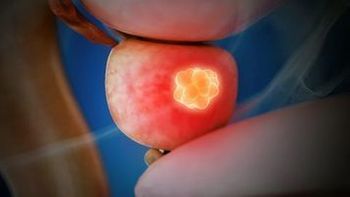
The enzalutamide/leuprolide combo also led to statistically significant improvements in time to PSA progression and time to start of new antineoplastic therapy.
Findings suggest many patients with localized disease can delay surgery or radiation without increasing their mortality risk.
“As the ability to target improved, what we really clearly saw was the idea that perhaps a treatment course could be shortened significantly, and that the term hypofractionation became commonly applied to men with prostate cancer,” said Walter J. Curran Jr, MD, FACR, FASCO.

“What is precision medicine? This is not just a vague term; it really looks at individual characteristics of a patient to decide treatment," said Leonard G. Gomella, MD, FACS.