

Experts compare and contrast direct in-scope suction with the flexible and navigable ureteric access sheath.
Experts compare and contrast direct in-scope suction with the flexible and navigable ureteric access sheath.
In this opening segment, the discussion focuses on the rapid evolution of kidney stone surgery and how suction has transitioned from an aspirational idea to a core component of modern ureteroscopy.

Panelists discuss how proactive education, regular follow-up, and multidisciplinary support improve adherence to oral ARPI therapy and drive better real-world outcomes in mCSPC.
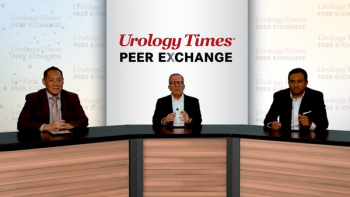
The expert faculty analyze the recently presented ALBAN trial, a phase 3 study evaluating atezolizumab in combination with intravesical BCG versus BCG alone for BCG-naïve, high-risk non–muscle invasive bladder cancer (NMIBC).
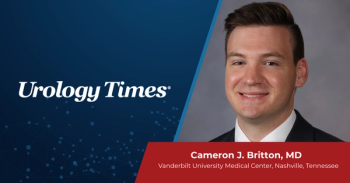
Cameron J. Britton, MD, highlights key findings from a study of the MyProstateScore 2.0 in predicting upgrading to GG≥3 prostate cancer.
The expert faculty discuss the expanding use of immune checkpoint inhibitors in high-risk non–muscle invasive bladder cancer (NMIBC), emphasizing how these agents are reshaping treatment delivery and safety monitoring.
Panelists discuss how promoting transparency, methodological rigor, and clinical relevance helps overcome skepticism around real-world evidence and strengthens its role in guiding mCSPC care.

Roger Li, MD, discusses the development and validation of a CHAI-based biomarker to identify patients with LG NMIBC who are at higher risk of progression.

INVITE is a 2-part clinical trial designed to evaluate the safety, feasibility, and patient experience of administering intravesical bladder cancer therapies in the home.

One notable trend is the shift of therapies originally reserved for heavily pretreated, castration-resistant prostate cancer into earlier phases of disease.

The ENLIGHTED trial is evaluating the safety and efficacy of padeliporfin vascular targeted photodynamic therapy for low-grade upper tract urothelial carcinoma.
The 510(k) clearance was supported by 12-month data from the VAPOR 2 trial, which were presented at the 2025 SUO Annual Meeting.

Sameena A. Rahman, MD, emphasizes that menopause care requires precision medicine rather than a one-size-fits-all approach.

Leila Momtazi-Mar notes that although some studies suggest a decline in retrieval rates after age 40, this association remains preliminary.

Félix Guerrero-Ramos, MD, PhD, FEBU, discusses key findings from the phase 3 POTOMAC trial and other studies of BCG/ICI combinations in high-risk NMIBC.

Angela B. Smith, MD, MS, stresses that balancing PROs with traditional clinical end points begins with engaging patients early in the trial design process.

Healthcare professionals discuss the importance of patient characteristics and comorbidities in selecting effective and tolerable treatments.

Panelists discuss how the recent FDA approval of darolutamide for metastatic hormone-sensitive prostate cancer (mHSPC) expands treatment options, offering improved tolerability with lower fatigue rates and fewer central nervous system adverse effects than other androgen pathway inhibitors, while exploring considerations for patient selection, trial design interpretation, and the evolving role of real-world evidence in clinical decision-making.
Panelists discuss how the recent FDA approval of darolutamide for metastatic hormone-sensitive prostate cancer (mHSPC) expands treatment options, offering improved tolerability with lower fatigue rates and fewer central nervous system adverse effects than other androgen pathway inhibitors, while exploring considerations for patient selection, trial design interpretation, and the evolving role of real-world evidence in clinical decision-making.
Healthcare professionals discuss the importance of patient characteristics and comorbidities in selecting effective and tolerable treatments.

Mills describes TRT not merely as a prescription but as an ongoing therapeutic relationship aimed at comprehensive, long-term wellness.

An expert discusses how KEYNOTE-905 sets the stage for the next generation of bladder cancer research and multidisciplinary care, shaping the evolving future of MIBC treatment.

Beyond rectal protection, rectal spacers may facilitate curative radiation dosing and reduce the likelihood of local recurrence.

The series concludes with a forward-looking discussion on ongoing research and unresolved questions about long-term enzalutamide therapy. Freedland reflects on evolving treatment paradigms and offers key takeaways for practicing urologists to help guide their management of men with high-risk, biochemically recurrent prostate cancer.

Schmidt notes that differences in response rates between disease subtypes largely reflect inherent tumor biology.
Panelists discuss how integrating high-quality real-world evidence with clinical trial data enhances confidence in treatment decisions and guides tailored ARPI selection for patients with mCSPC.
The expert faculty transition to a discussion on emerging therapies for high-risk, Bacillus Calmette–Guérin (BCG)-naïve non–muscle invasive bladder cancer (NMIBC), focusing on the wave of ongoing phase 3 immunotherapy trials.
The expert faculty explore the definitions, management strategies, and evolving treatment approaches for patients with Bacillus Calmette–Guérin (BCG)-naïve and BCG-unresponsive non–muscle invasive bladder cancer (NMIBC).
Panelists discuss how understanding the generalizability of real-world evidence and clearly communicating its differences from trial data help clinicians personalize treatment and build patient trust.

Once patients are ready to explore treatment, Fosnight stresses the importance of shared decision-making.