

Panelists discuss how IsoPSA’s long-term predictive performance supports safer follow-up strategies and greater confidence in risk-based management.
Panelists discuss how IsoPSA’s long-term predictive performance supports safer follow-up strategies and greater confidence in risk-based management.

This discussion compares subcutaneous and intravenous immunotherapy delivery, highlighting differences in clinical use, patient convenience, and overall treatment experience.
Panelists discuss how real-world evidence confirms IsoPSA’s predictive value, showing that high scores align with significantly greater long-term cancer risk.

Panelists discuss how practical implementation of the gemcitabine intravesical system requires integrating cystoscopic procedures into urology clinic workflows, training providers (including advanced practice providers) for device placement and removal, and developing effective patient counseling strategies for managing a 3-week indwelling device with proper tracking systems.

Scott Tagawa, MD, provides an overview of key findings from the PSMAddition study, evaluating 177Lu-PSMA-617 combined with ADT and ARPI in mHSPC.

Jeremie Calais, MD, PhD, shares key findings from the phase 2 LUNAR trial, assessing the safety and efficacy of adding 177Lu-PSMA therapy before SBRT in omHSPC.

An expert discusses how comparing the durability and treatment effects of newer minimally invasive therapies to gold standard transurethral resection of the prostate (TURP) or holmium laser enucleation depends heavily on surgeon skill. He notes that while an excellent TURP taken to the capsule or excellent holmium laser enucleation would generally be more durable and potentially lifelong, the reality is that surgical quality varies significantly between practices, making direct comparisons difficult as outcomes are largely surgeon dependent.
An expert discusses how the most common complications with minimally invasive benign prostatic hyperplasia (BPH) therapies are extremely mild (typically irritative voiding symptoms for a few days and some blood in urine) and how he counsels patients about trade-offs by explaining that every procedure has re-treatment and complication rates. He asks patients which “flavor of risk” they prefer while emphasizing that minimally invasive procedures “burn no bridges” and allow stepwise treatment progression because you can try something less invasive first and escalate later if needed.

Enrique Grande, MD, shares key findings from the DISCUS trial, exploring 3 vs 6 cycles of platinum-based chemotherapy for advanced urothelial carcinoma.

Stephen J. Freedland, MD, shares 'unprecedented' overall survival data from the phase 3 EMBARK trial.

Srikala Sridhar, MD, MSc, FRCPC, outlines phase 2 data on avelumab in patients with locally advanced or metastatic penile cancer.

The data continue to support adjuvant nivolumab as a standard of care for patients with high-risk muscle-invasive urothelial carcinoma.

Andrew W. Hahn, MD, details phase 2 efficacy findings on lenvatinib plus everolimus vs cabozantinib in patients with metastatic ccRCC.

Andrea Necchi, MD, shares key findings from the phase 2 GDFather-NEO trial, presented at ESMO 2025.

Amy E. Krambeck, MD, explained that active suction provided by FANS helps reduce intrarenal pressure by continuously removing irrigation fluid.

Sevann Helo, MD, recaps an SMSNA 2025 session on setting patient boundaries.

Muhammed A. Moukhtar Hammad, MBBCh, outlines key findings from a study evaluating testosterone replacement therapy and hearing-related outcomes.

Michael J. Morris, MD, discusses the mechanism of action for AB001, a PSMA-targeted radioligand therapy for patients with mCRPC.
Panelists discuss how IsoPSA improves diagnostic accuracy by targeting PSA protein structure, offering clearer insights for patient selection than concentration-based testing.
Panelists discuss how the gemcitabine-releasing system fits into the non–muscle-invasive bladder cancer (NMIBC) treatment algorithm by offering patients a promising intravesical option with excellent response rates and durability, though sequencing decisions must consider patient logistics, treatment availability, and individual preferences while potentially reducing but not eliminating the need for radical cystectomy.
This segment outlines how immune checkpoint inhibitors have become essential in bladder cancer management, examining their roles across treatment lines and the current standards of care.
Panelists discuss how structure-based biomarkers such as IsoPSA improve risk stratification by distinguishing aggressive disease from indolent cases more effectively than PSA level alone.

Landon Trost, MD, discusses patient-reported outcomes from a study comparing CCH treatment vs surgery for Peyronie's disease.
An expert discusses how the proposed Centers for Medicare & Medicaid Services (CMS) rule represents an unusual circumstance that benefits smaller private practices by reducing work relative value units (RVUs) while increasing practice expense and malpractice RVUs. This could potentially result in substantial reimbursement increases for prostatic urethral lift and water vapor therapy, which may enable earlier intervention in younger men who want to avoid more invasive surgeries and preserve bladder function long-term rather than relying on α-blockers that don’t prevent disease progression.

Aleece Fosnight, MSPAS, PA-C, highlights that although urinary leakage is common, it is not normal—and effective treatment options exist.
An expert discusses how the greatest unmet need in minimally invasive benign prostatic hyperplasia (BPH) treatments is achieving durability and retreatment rates that match those of surgical options such as transurethral resection of the prostate (TURP) while maintaining sexual function preservation. He also discusses how barriers to broader adoption include inadequate technical training in office-based procedures, ongoing reimbursement challenges, and poor patient awareness because many patients and even well-meaning primary care physicians are unaware of options beyond medications or TURP.
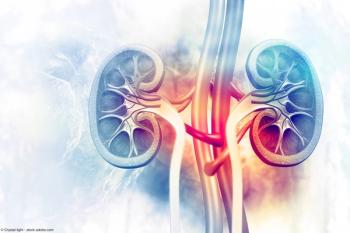
Krambeck highlights that FANS combine enhanced maneuverability and effective fragment evacuation, leading to higher stone clearance rates and improved procedural outcomes in endourology.
Ellen Cahill, MD, discusses a recent study on testosterone usage among men interested in fertility.

A. Lenore Ackerman, MD, PhD, discusses how clinicians should approach conversations with patients on the risks and benefits of vaginal estrogen.

Apolo highlighted the positive topline results from the phase 3 EV-303 trial (NCT03924895) evaluating EV plus pembrolizumab in cisplatin-ineligible patients with muscle-invasive bladder cancer.