
Sandip M. Prasad, MD, MPhil, discusses the safety profile for mitomycin for intravesical solution based on data from the ENVISION trial.
Sandip M. Prasad, MD, MPhil, discusses the safety profile for mitomycin for intravesical solution based on data from the ENVISION trial.

Avani Desai emphasizes that inadequate or unclear parental leave policies carry significant consequences, particularly during residency.
Kevin Shee, MD, PhD, shares findings on factors associated with recurrence and treatment failure following HIFU for prostate cancer.

The tool is designed as a patient-facing application that can be used both during clinic visits and independently at home.
An expert summarizes that the evolving non–muscle-invasive bladder cancer treatment landscape emphasizes early therapy intensification and personalized management—leveraging advanced diagnostics and varied intravesical therapies—to better distinguish recurrence from progression, aiming to preserve bladder function and improve outcomes while minimizing overtreatment and radical surgery.
An expert summarizes that interpreting trial results requires understanding study design—such as reinduction strategies—and recognizing that regulatory, logistical, and practical factors will influence the adoption of new bladder cancer therapies, emphasizing the need for larger studies and thoughtful integration of efficacy with real-world considerations to guide personalized treatment decisions.

Daniel Canter, MD, shares his thoughts on the potential impact of 89Zr-girentuximab for kidney cancer management, if approved.
Kathryn H. Gessner, MD, PhD, outlines the clinical scenarios in which she finds genomic testing most useful.

Nicolette G. Payne, MD, pointed to the critical role of leadership and institutional culture in addressing burnout.
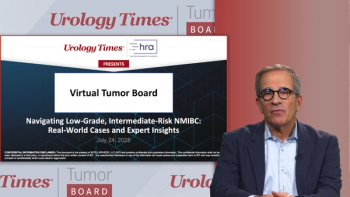
Panelists discuss how patients with recurrent low-grade bladder cancer, particularly women who may face additional anatomical challenges during transurethral resection of bladder tumor (TURBT) procedures, can benefit from UGN-102 as an alternative to repetitive surgical resections, addressing the TURBT treadmill phenomenon where patients undergo multiple procedures with diminishing returns.

Ultimately, Desai argues, increasing transparency in policies is not only about compliance but about fostering resident well-being and inclusivity.
Panelists discuss how patients currently on injectable androgen deprivation therapy can transition to oral options through an overlap period, and how stated drug interactions with androgen receptor pathway inhibitors have not been clinically significant in practice.
Joseph Song, MD, discusses his approach to patient selection for the SURE procedure, particularly in comparison to more invasive options such as PCNL.

Jennifer A. Robles, MD, MPH, highlights the impact of regional disparities in HoLEP access on patient care.

Timothy D. McClure, MD, outlines key findings from the PRESERVE trial, which evaluated IRE for prostate tissue ablation in patients with intermediate-risk prostate cancer.
Sandip M. Prasad, MD, MPhil, details key findings from the phase 3 ENVISION trial, which supported the approval of mitomycin intravesical solution in LG-IR-NMIBC.
An expert summarizes that although it is currently too early to determine optimal sequencing among bladder cancer therapies, emerging strategies involving combination treatments and immune system priming show promise for enhancing efficacy, particularly in high-risk patients, underscoring the need for further research to guide personalized treatment decisions.
An expert summarizes that Tara-002 offers a familiar, intravesical administration and manageable adverse effect profile similar to BCG, making it a safer and more easily adoptable option compared with systemic immunotherapies, especially important for preserving bladder function and quality of life in heavily treated BCG-unresponsive patients.

Suzanne B. Merrill, MD, FACS, unpacks key findings from the CREST trial and outlines data of interest from the POTOMAC and PATAPSCO trials, which are set to read out later this year.

Jack Andrews, MD; Alicia Morgans, MD, MPH; and Ashley Ross MD, PhD, discuss how trial design, inclusion criteria, and end points like radiographic progression-free survival vs overall survival impact clinical decision-making in prostate cancer treatment, emphasizing the importance of quality of life data and the shift from using ADT alone as standard care toward combination therapies in prostate cancer management.

Aleece Fosnight, MSPAS, PA-C, CSC-S, CSE, IF, MSCP, HAES, emphasizes a careful, individualized approach to managing bladder and bowel symptoms in women with a history of disordered eating.

Jennifer A. Robles, MD, MPH, outlines 3 key factors that may be preventing more widespread adoption of HoLEP across the US.
Panelists discuss how UGN-102, a reverse thermal hydrogel formulation of mitomycin, offers an FDA-approved ablative treatment option for patients with intermediate-risk non-muscle invasive bladder cancer (NMIBC), demonstrating 80% complete response rates in the ENVISION trial (NCT05243550) and allowing for the de-escalation of surveillance and reduced surgical burden.

Urologists from the University of North Carolina share insights into key advancements across the field of urologic oncology.

Timothy D. McClure outlines his approach to patient selection with focal therapy as well as how NanoKnife fits into that landscape.
Panelists discuss how shared decision-making allows patients to test-drive oral androgen deprivation therapy options, providing flexibility for those concerned about quality-of-life impact or performance status, enabling them to start or stop treatment as needed.
Panelists discuss how patient preference plays a significant role in androgen deprivation therapy selection, with most patients preferring oral agents that offer rapid onset and quick testosterone recovery when treatment is stopped.

Sandip M. Prasad, MD, MPhil, shares his thoughts on the impact of the FDA approval of mitomycin for intravesical solution for patients with LG-IR-NMIBC.
Jennifer A. Robles, MD, MPH, highlights potential factors contributing to the surge in HoLEP utilization across the US.

Suzanne B. Merrill, MD, FACS explains the challenges with BCG monotherapy and the emergence of novel regimens combining BCG with ICIs in high-risk NMIBC.