

Benjamin M. Brucker, MD, outlines considerations surrounding pre-procedure urinalysis, prophylactic periprocedural antibiotics, and optimal dosing regimens for onabotA administration.
Benjamin M. Brucker, MD, outlines considerations surrounding pre-procedure urinalysis, prophylactic periprocedural antibiotics, and optimal dosing regimens for onabotA administration.

According to Daniel D. Joyce, MD, MS, policy initiatives should focus on improving the value and efficiency of radiation.
Anne K. Schuckman, MD, discusses some of the current challenges in delivering optimal care for patients with non–muscle invasive bladder cancer.

A panelist discusses how patients having difficulty with traditional abiraterone fasting requirements can be switched to microsized abiraterone (taken with food) or off-label low-dose abiraterone with low-fat breakfast, though adherence to dietary restrictions remains challenging.
A panelist discusses how, for high-risk localized prostate cancer with questionable lymph node involvement, radiation therapy combined with systemic treatment may be preferable to radical prostatectomy due to the ability to treat a wider field of potential microscopic disease.

Justin M. Dubin, MD, outlines the current ways that artificial intelligence is being used in the male infertility space.

Bilal I. Chughtai, MD, walks through the design and potential implications of a pivotal trial of the Butterfly Prostatic Device.

Findings indicated that although trimodal therapy improved the quality of life for patients with muscle-invasive bladder cancer compared with cystectomy, its significantly higher cost made it not cost-effective.

Panelists discuss the evolving non–muscle-invasive bladder cancer (NMIBC) treatment landscape, emphasizing a shift away from BCG monotherapy for lower intermediate-risk patients toward combination and novel therapies for high-risk disease, while highlighting ongoing challenges related to toxicity, cost, BCG shortages, and the need for refined patient selection through biomarkers and precision medicine.
Panelists discuss novel intravesical drug delivery systems like TAR-200 and UGN-102 that enhance chemotherapy exposure and efficacy in non–muscle-invasive bladder cancer (NMIBC), while noting challenges in tolerability and administration, and highlighting their potential to improve patient outcomes and reduce invasive procedures.
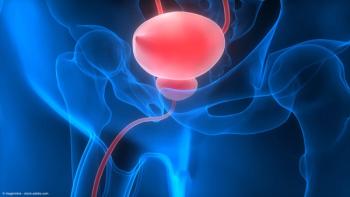
A notable finding was that 35% of these NMIBC patients exhibited ctDNA positivity.

In this video, part 5 in a 5-part series, panelists examine the economic and logistical realities of bringing mitomycin for intravesical solution (Zusduri; formerly UGN-102) into private practice.
In this video, part 4 in a 5-part series, Nick Liu, MD, outlines key scenarios where surgical resection remains preferred for treating LG-IR-NMIBC.
In this video, part 3 in a 5-part series, panelists discuss the long-term clinical impact and health care system implications of mitomycin for intravesical solution (Zusduri; formerly UGN-102).
In this video, part 2 in a 5-part series, Nick Liu, MD, breaks down the formulation behind mitomycin for intravesical solution (Zusduri; formerly UGN-102).
In this video, part 1 in a 5-part series, panelists discuss how mitomycin for intravesical solution (formerly UGN-102, now marketed as Zusduri) fits into the evolving management landscape for recurrent bladder tumors.

Vignesh T. Packiam, MD, outlines the mechanism of action for detalimogene voraplasmid as well as its potential benefits in terms of storage and dosing.

The most apparent risk factor is hours worked, as increased work hours directly correlate with heightened tiredness and stress.

McVary's expectation is that the results will be sustainable because the short-term outcomes for larger prostates appear superimposable on the longer-term outcomes for smaller, previously restricted prostate volumes

Justin Dubin, MD, touches on the current landscape of men’s health, with a specific focus on the advent of AI.

Panelists discuss how the logistical challenge of the new test requiring separate appointments (tracer injection followed by imaging 5 days later) is offset by scheduling flexibility because of the tracer’s 78-hour half-life and the technology essentially providing a “virtual biopsy” without invasive procedures.
A panelist discusses how genomic classifiers play a crucial role in determining whether treatment intensification with agents like abiraterone is beneficial for patients with high-risk localized prostate cancer.
Panelists discuss how molecular imaging could transform metastatic kidney cancer management by helping determine whether cytoreductive nephrectomy is necessary and assessing treatment response to guide therapy escalation or de-escalation.
A panelist discusses how a 62-year-old man with high-risk localized prostate cancer was treated with intensified therapy, including abiraterone plus radiation, but experienced tolerability issues with the traditional fasting formulation.
Laura E. Davis, MD, discusses the link between early onset prostate cancer and persistent poverty.

One prominent theory suggests that younger generations of graduating urologists face increased financial pressures due to higher student loan debt.

The ARASTEP trial is exploring the combination of darolutamide plus ADT vs ADT alone in patients with high-risk biochemical recurrence of prostate cancer.

The system is now cleared for use in prostates up to 150 cm3.
Panelists discuss the expanding clinical development of cretostimogene across multiple NMIBC populations and treatment strategies, highlighting ongoing trials exploring its use as monotherapy and in combination with agents like gemcitabine or pembrolizumab, with the goal of optimizing efficacy, safety, and bladder preservation across diverse risk groups.
Panelists discuss the final BOND-3 trial results, highlighting intravesical cretostimogene’s strong efficacy, durable responses, and excellent safety profile in BCG-unresponsive carcinoma in situ (CIS), reinforcing its potential as a well-tolerated, bladder-preserving treatment option in a population with limited therapeutic choices.