

Margaret A. Knoedler, MD, discusses her experience using the Reverse Deflection CVAC System.
Margaret A. Knoedler, MD, discusses her experience using the Reverse Deflection CVAC System.

Fosnight emphasizes that the cycle of shame, secrecy, and loneliness compounds the burden of urinary incontinence far beyond its physical effects.

Veda Giri, MD, highlights her recent review publication on the current state of germline testing in prostate cancer.
Jane T. Kurtzman, MD, underscores the collaborative role of urologists and trauma surgeons in addressing this issue.

John P. Sfakianos, MD, discusses the significance of urine-based biomarkers for intermediate-risk patients and outlines key findings from the STRATA study.
A. Lenore Ackerman, MD, PhD, discusses the renewed emphasis on symptom resolution over microbial eradication in the new AUA guideline for recurrent uUTI in women.

Manuj Agarwal, MD, discusses which patients may be best suited for prostate brachytherapy.

Among men without prostate cancer at baseline, healthier dietary patterns appeared somewhat protective.

Apolo emphasized the value of having robust monotherapy data before advancing into combination strategies.
William C. Huang, MD, discusses data on mitomycin for intravesical solution from the pivotal ENVISION trial and the OPTIMA II study.
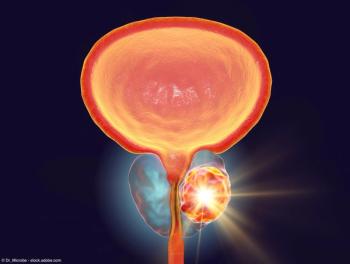
Both experts agreed that although the details shift by condition, the core structure of patient-centered decision-making remains constant.
Kevin Koo, MD, MPH, discusses the implications of a digital stone measurement tool for clinical care.

Miles-Thomas emphasized the importance of Northwestern’s thoughtful implementation strategy.
William C. Huang, MD, highlights data from a long-term extension study of the OPTIMA II trial.
Kurtzman stressed that it is difficult to disentangle whether the increased hypertension risk is primarily due to the intervention itself or to the patients’ initial clinical state.

Surprisingly, the Mediterranean diet—which has shown benefits in other areas of health—was not consistently linked to prostate cancer risk reduction.

Kevin Koo, MD, MPH, discusses a recent study on the utility of a digital stone measurement tool for ureteroscopy.

Rana R. McKay, MD, FASCO, outlines findings from a study looking at the somatic, germline, and immunologic landscapes of UTUC and UCB tumors.

35% of patients with renal trauma developed new-onset hypertension, compared with 21% of controls.
Hong Truong, MD, MS, highlights key findings on genetic counseling rates in patients with kidney cancer.

Both experts stress that the framework is not intended to overhaul physicians’ communication styles but rather to highlight overlooked areas.

Experts discuss the ways in which AI could transform patient care and improve physician workflows, particularly for benign prostatic hyperplasia.
Both urologists emphasized that Northwestern’s integrated structure and commitment to innovation allow any urologist within the network to contribute ideas and see them developed into practice.

Sandip M. Prasad, MD, MPhil, outlines 3 key takeaways from the ENVISION trial, which evaluated mitomycin for intravesical solution in patients with LG-IR-NMIBC.

Many clinicians do not explain how the consultation will unfold or clearly define the respective roles of physician and patient.
Rana R. McKay, MD, FASCO, details the key efficacy and safety findings from the phase 2 COMRADE trial.
Rian J. Dickstein, MD, provides an overview of detalimogene voraplasmid, currently being evaluated for the treatment of non–muscle invasive bladder cancer.
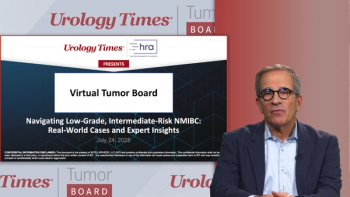
Panelists discuss how patients with early recurrent low-grade bladder cancer, especially those on an anticoagulant or with multiple risk factors, represent ideal candidates for ablative therapy with UGN-102 to break the cycle of repeated transurethral resection of bladder tumors and provide a paradigm shift from purely surgical management to shared decision-making between surgical and medical treatment options.

Timothy D. McClure, MD, offers his thoughts on how future advancements will inform the role for focal therapy in prostate cancer.

Jennifer A. Robles, MD, MPH, discusses the future for HoLEP in terms of innovation and wider integration into urologic practice.