

Veda N. Giri, MD, outlines alternative care delivery models that could help improve access to genetic testing for prostate cancer.
Veda N. Giri, MD, outlines alternative care delivery models that could help improve access to genetic testing for prostate cancer.

Panelists discuss how the SunRISe-1 trial demonstrated impressive efficacy with an 82% complete response rate and 26-month median duration of response in Bacillus Calmette-Guérin (BCG)-unresponsive patients, significantly outperforming other FDA-approved therapies while maintaining a favorable safety profile with mostly minor voiding symptoms and only 13% grade 3+ adverse events.

An expert discusses how the prostatic urethral lift procedural kit has transformed his practice economics from nearly having to stop offering the procedure due to low margins and Centers for Medicare & Medicaid Services (CMS) cuts to achieving the best margins seen in years. This has created what he calls a “rare triple win” that benefits urologists by maintaining procedure viability, patients by ensuring continued access to minimally invasive therapy with potentially more implants, and hospital systems through fewer re-treatments.
An expert discusses how his diagnostic treatment workflow for a new patient with benign prostatic hyperplasia (BPH) progresses from initial α-blocker therapy through noninvasive systematic testing with nurse practitioner review, followed by multichannel urodynamics, transrectal ultrasound, and cystoscopy if improvement is insufficient. He emphasizes that he pushes for a thorough evaluation even when symptoms seem mild because “the bladder is a notoriously unreliable witness,” and he wants to prevent emergency urinary retention by identifying underlying obstruction early.

Aleece Fosnight, MSPAS, PA-C, CSC-S, CSE, IF, MSCP, HAES, emphasized that many older patients eventually pursue care only after years of coping, when their quality of life has been significantly affected.

CAN-2409 plus valacyclovir significantly improved disease-free survival compared with placebo plus valacyclovir.

Findings showed that although most applicants emphasized work ethic and interpersonal skills, these attributes were not predictive of receiving an interview invitation.

A. Lenore Ackerman, MD, PhD, outlines the rationale for a guideline recommendation suggesting that D-mannose alone may not be effective for UTI prophylaxis.
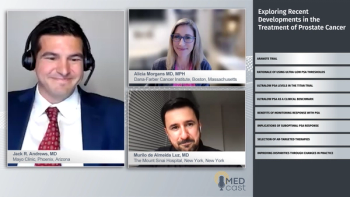
Jack R. Andrews, MD; Alicia Morgans, MD, MPH; and Murilo de Almeida Luz, MD, discuss how ultralow prostate-specific antigen thresholds (below 0.02) serve as important prognostic biomarkers in metastatic hormone-sensitive prostate cancer, with recent post hoc analyses from the ARANOTE trial showing that patients achieving these ultralow levels with combination androgen deprivation therapy plus darolutamide therapy have significantly better radiographic progression-free survival and time to castration-resistant disease compared with those who don't reach these thresholds.
Jack R. Andrews, MD; Alicia Morgans, MD, MPH; and Murilo de Almeida Luz, MD, discuss how ultralow prostate-specific antigen thresholds (below 0.02) serve as important prognostic biomarkers in metastatic hormone-sensitive prostate cancer, with recent post hoc analyses from the ARANOTE trial showing that patients achieving these ultralow levels with combination androgen deprivation therapy plus darolutamide therapy have significantly better radiographic progression-free survival and time to castration-resistant disease compared with those who don't reach these thresholds.

Veda N. Giri, MD, outlines some of the key barriers to genetic testing in prostate cancer.

Melvin L.K. Chua, FRCR, PhD, FASCO, highlights data validating the performance of the ArteraAI Prostate test in an Asian cohort of patients with prostate cancer.

Chad A. Reichard, MD, outlines key findings from the CREST trial, evaluating the combination of sasanlimab plus BCG in patients with high-risk BCG-naïve NMIBC.

Shreyas S. Joshi, MD, MPH, discusses some of the key considerations for new agents entering the treatment landscape for BCG-unresponsive NMIBC.
Panelists discuss how the FDA-approved gemcitabine intravesical system (Inlexzo/TAR-200) represents a breakthrough in Bacillus Calmette-Guérin (BCG)-unresponsive bladder cancer treatment through its unique continuous drug delivery mechanism that provides sustained release over 3 weeks, requiring only 10% of traditional gemcitabine dosing while improving patient convenience and potentially reducing adverse effects.
An expert discusses how decision-making for minimally invasive benign prostatic hyperplasia (BPH) therapies has evolved over the past decade to position these treatments earlier in the algorithm (sometimes before long-term medication), emphasizing shared decision-making that considers patient factors such as age, desire to preserve sexual function, medication adherence, and lifestyle preferences rather than following a rigid treatment sequence.
An expert discusses how the current benign prostatic hyperplasia (BPH) treatment landscape is dominated by traditional approaches such as watchful waiting and medical therapy (particularly α-blockers as first-line treatment). However, minimally invasive therapies such as prostatic urethral lift, water vapor therapy, and temporary stents have emerged over the past decade as office-based options that bridge the gap between lifelong medications and more invasive surgeries while preserving sexual function.
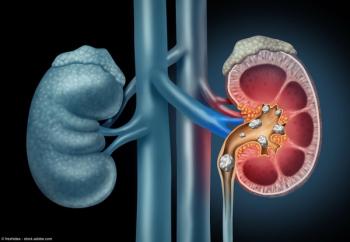
Krambeck pointed to the growing importance of medical management in stone disease prevention.

Veeru Kasivisvanathan, MBBS, BSc, FRCS, MSc, PGCert, PhD, highlighted how bpMRI aligns with evolving diagnostic strategies.

Mihir S. Shah, MD, outlines ongoing research on treatment intensification prior to radical prostatectomy in patients with localized prostate cancer.

Apolo also discusses the potential role of ctDNA in the bladder cancer space.

Fosnight described how stigma itself becomes a barrier to care, even though effective diagnostic and treatment options are available.

A. Lenore Ackerman, MD, PhD, outlines what the data suggest about non-antibiotic approaches for UTI prophylaxis, as well as how these options should be positioned when counseling patients.

Timothy Daskivich, MD, MSHPM, noted that guidelines are central to shaping physician behavior and strongly influence clinical practice

Veda Giri, MD, outlines points of consensus and areas of disagreement across national and international guideline recommendations for germline testing in prostate cancer.
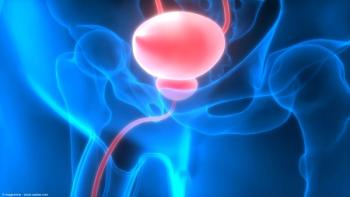
Several experts share their thoughts on the impact of the gemcitabine intravesical system for BCG-unresponsive NMIBC.

Ensuring consistent diagnostic quality remains critical.

Stephen J. Freedland, MD, placed dietary guidance within the broader context of survivorship care.
Sia Daneshmand, MD, discusses evolving care strategies after enfortumab vedotin plus pembrolizumab in bladder cancer.

A Lenore Ackerman, MD, discusses a recent guideline amendment that places a greater value on a negative urinalysis in ruling out UTI.