

"There are actually no data to support that 1 neuromodulation is better than another based on disease severity, and this is based on the systematic review done for the OAB guideline," says Anne Pelletier Cameron, MD, FRCSC, FPMRS.
"There are actually no data to support that 1 neuromodulation is better than another based on disease severity, and this is based on the systematic review done for the OAB guideline," says Anne Pelletier Cameron, MD, FRCSC, FPMRS.
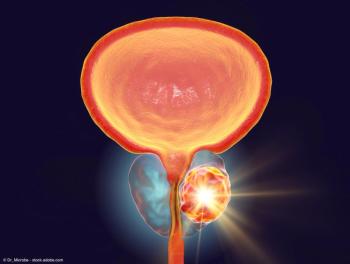
"Physician scored GU toxicity grade 2 or greater at 2 years was 51% with the CT-guided and 27% with the MRI-guided," says Amar U. Kishan, MD.

“It does seem clear that we need to get back to a smarter middle ground of screening—using screening more intelligently, finding the high-grade cancers and treating them—so that we can get that mortality curve back on a downward trajectory,” says Matthew R. Cooperberg, MD, MPH.

"It really remains to be seen whether we can expand this to care for other types of urological inpatients," says Timothy D. Lyon, MD.

"I would say the fact that we performed 754 HoLEP procedures in 2024 is a reflection of the efficiency and the high quality of care that you receive at Northwestern," says Amy E. Krambeck, MD.

"The idea here is to determine, from an epidemiologic perspective, whether freezing sperm for many men before their vasectomy is cost-effective compared to whether we should simply avoid this routine practice and allow men to proceed with their vasectomy and then restore their fertility in the future," says Scott D. Lundy, MD, PhD, HCLD.
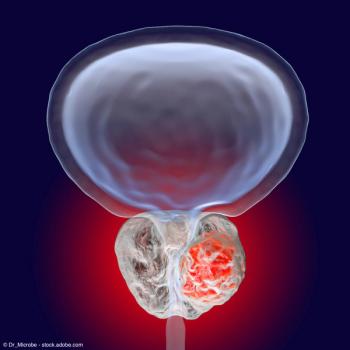
“The trial was specifically looking at whether that aggressive margin reduction from 4 mm to 2 mm would lead to a reduction in physician-reported urinary toxicity, specifically in the first 90 days after radiation,” says Amar U. Kishan, MD.

"I think we're learning slowly—I hope faster—how to use these agents as any other drug that a pharmaceutical company would study," says Channing J. Paller, MD.

Panelists discuss how BCG-unresponsive bladder cancer is defined by disease persistence/recurrence within 6 to 12 months of adequate BCG therapy. Treatment options include cystectomy, intravesical chemotherapy, immunotherapy, or clinical trials.

This video segment covers patient selection criteria for different versions of abiraterone, strategies for assessing treatment efficacy and safety, engaging caregivers to monitor compliance and side effects, and navigating insurance challenges to ensure patients receive the recommended version.
This video segment discusses patient selection criteria for choosing between the original brand, generic, and micronized versions of abiraterone.
Panelists discuss how low-risk non–muscle-invasive bladder cancer (NMIBC) requires transurethral resection of bladder tumor (TURBT) with surveillance. Intermediate-risk disease needs adjuvant intravesical chemotherapy. High-risk cases receive BCG induction/maintenance therapy after TURBT, with close monitoring.

Experts discuss the variability of non-muscle invasive bladder cancer (NMIBC) in terms of staging and risk stratification and how they navigate these diagnoses with their patients.
Experts provide an overview of non-muscle invasive bladder cancer (NMIBC) and common procedures for diagnosis.

"There are some very strict IC diets that have been published, and I've had a handful of patients who have really found them helpful," says J. Quentin Clemens, MD, MSCI.
"I use a multi-pronged approach. I focus on behavior modification, nutrition, hydration, and exercise," says Vanita Gaglani, RPT.

Max Kates, MD, discusses how the ability to deliver newer treatments in local urology clinics rather than specialized centers reduces patient travel burden and improves access to care, while suggesting that increased education about safety profiles and implementation protocols could encourage broader adoption among health care providers.
A panelist discusses how transitioning to quarterly treatment administration reduces clinic resource strain through decreased staff time and equipment usage, while therapies requiring minimal specialized handling further streamline operations and improve workflow efficiency.
"This study provides a comprehensive review of the role of natural products as complementary treatments for prostate cancer," says Channing J. Paller, MD.
“Then recently, of course, with the single-port device, that has truly allowed us to be less invasive with our robotic approaches,” says Adam Lorentz, MD, FACS.
"I know this year we're going to see even more companies producing more products, more results, and hopefully really help change and improve patient outcomes, especially when it comes to overactive bladder," says Raveen Syan, MD, FPMRS.

“They come out of the fellowship competent and competitive in the field to any urology position that they're interested in,” says Tania Solomon, PA-C, MSc.
This video segment explores how to choose between the original brand, generic, and micronized versions of abiraterone, considering factors like efficacy, cost, patient preference, and clinical context.

"If you can do this surgery well, patients actually go back to living a normal life, and they're immensely, immensely happy," says Jaspreet S. Sandhu, MD.

"The approach is often to identify what treatments the patients have tried already, so we don't try those again, and then have a discussion about the pros and cons," says J. Quentin Clemens, MD, MSCI.
"At Mayo Clinic, we think that delivering intravesical therapy for non-muscle invasive bladder cancer in patients' homes has the potential to reduce treatment burden, improve the patient experience, as well as increase access to care," says Timothy D. Lyon, MD.
Max Kates, MD, discusses how newer therapies for BCG-unresponsive NMIBC may have better long-term cost-effectiveness despite higher initial costs, emphasizing the importance of leveraging patient assistance programs, copay cards, and foundation support to ensure treatment access while using cost comparison tools to help patients make informed decisions.
A panelist discusses how treatment decisions involve balancing clinical efficacy with financial considerations, noting that patients often prefer treatments with fewer office visits and minimal lifestyle disruption when presented with multiple effective options.

According to Sanda, future advancements may involve gene and RNA sequencing, the use of AI in imaging, and multidisciplinary collaboration.
"There is new technology emerging for skin stimulation of the perineum that is just recently evolving to help control OAB symptoms," says Anne Pelletier Cameron, MD, FRCSC, FPMRS.