
“We really want to understand whether by using this beta emitter, together with the combination of cabazantinib and the nivolumab, we're getting better outcomes than we would expect with the doublet alone,” says Eric Jonasch, MD.
“We really want to understand whether by using this beta emitter, together with the combination of cabazantinib and the nivolumab, we're getting better outcomes than we would expect with the doublet alone,” says Eric Jonasch, MD.

Chad Ellimoottil, MD, MS, details specific concerns surrounding the future of telehealth as Congress weighs the decision to extend flexibilities.
“What we've been working on is a giant 30,000 patient database study using the National Cancer Database to see exactly what the rates are of upstaging and downstaging for these larger kidney tumors,” says Taylor Goodstein, MD.

Panelists discuss how the management of nonmetastatic castration-sensitive prostate cancer with biochemical recurrence involves careful monitoring and the potential use of novel therapies, such as androgen receptor inhibitors, to delay progression and improve patient outcomes.

Katie S. Murray, DO, emphasizes the importance of administering newer treatments for BCG-unresponsive non–muscle-invasive bladder cancer (NMIBC) locally by urologists, which helps reduce the overall burden on patients, minimizes systemic adverse effects, and eliminates the need for travel to specialized oncology centers, while also recommending strategies to encourage health care providers to adopt these treatments, including education on clinical trial data and real-world efficacy.
“Without the ability to do new patient telehealth, by definition, it's really hard to impact access to care,” says Juan J. Andino, MD, MBA.

"We found that patients whose care was impacted by shortages did not have statistically significantly worse recurrence outcomes compared to patients whose care was not impacted by shortages," says Madison M. Wahlen.

"We found that with a 5-year Kaplan-Meier survival analysis that patients with varicocele had worse outcomes than patients without varicocele," says Muhammed A. Moukhtar Hammad, MBBCh.

“It's very rare that a patient has to stay in the hospital overnight after a robotic surgery as long as they're getting a good quality operation,” says Ronney Abaza, MD, FACS.

"I think that there's been a lot of positive momentum to continue coverage for telehealth without geographic restrictions, to continue coverage for phone calls, but there's still some uncertainty as to whether or not that's going to be passed, even though there is a lot of optimism for it," says Chad Ellimoottil, MD, MS.

“It encompasses and contains the miTNM, PROMISE, PRIMARY, RECIP, PSMA-RADS, and E-PSMA concept and criteria all together,” says Jeremie Calais, MD, PhD.

"What's important here is that there's an increased public interest in this vaginal estrogen therapy," says Elia Abou Chawareb, MD.
“With the Expanded Access Program, it is an opportunity for patients to receive the drug in real-world practice,” says Sarah P. Psutka, MD, MSc.
"Overall, our trial shows promising early oncological efficacy with a favorable toxicity profile," says Gal Wald, MD.

“I think having the ability to monitor patients with imaging and using things like PSMA-PET is good, but yet we're we sometimes have pitfalls with PSMA-PET too,” says Michael Cookson, MD.
"I think the precision of Aquablation helps significantly with improving the results," says Mohamad Baker Berjaoui, MD.
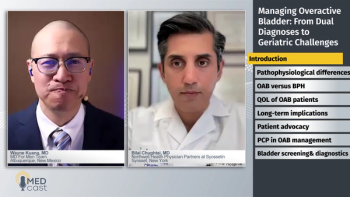
Experts discuss overactive bladder and the impacts on quality of life, distinguishing OAB from BPH, and how a delayed diagnosis can worsen symptoms.
ProstACT GLOBAL is assessing the safety and efficacy of 177Lu-TLX591 plus SOC vs SOC alone in patients with mCRPC.

"We wanted to see if medical recommendations for vaginal estrogen for postmenopausal women for symptom correction have a correlation with rising interest [among patients]," says Elia Abou Chawareb, MD.
Katie S. Murray, DO, discusses how the introduction of targeted gene therapies has shifted the approach to managing BCG-unresponsive non–muscle-invasive bladder cancer (NMIBC), offering more personalized treatment options, and explains how the ease of administration—without the need for specialized equipment like biosafety hoods—reduces logistical burdens on clinics.
Panelists discuss how the management of low-volume recurrent metastatic castration-sensitive prostate cancer (mCSPC) focuses on personalized treatment strategies, including the use of androgen deprivation therapy and targeted therapies, to achieve optimal outcomes while minimizing treatment-related toxicity.
“Physicians are spending, depending on how much they utilize it, 20% to 30% less time on nights and weekends,” says Ernest A. Morton, MD, MBA, MS.
“We can now see that we can find a proportion of those men that have an elevated STHLM3 tests that actually have a quite substantial risk of biochemical recurrence after the radical prostatectomy,” says Tobias Nordström, MD, PhD.
“Without Congressional action, all the progress that has been made—the new normal, so to speak—that patients, physicians, and providers alike have become used to, is at risk of potentially going back to pre-pandemic, 2019 levels,” says Juan J. Andino, MD, MBA.
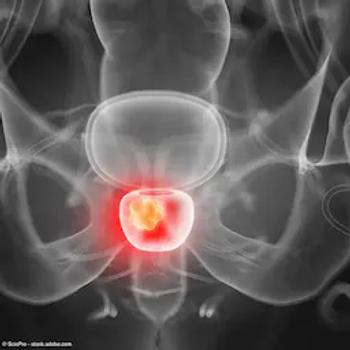
“It encompasses and contains the miTNM, PROMISE, PRIMARY, RECIP, PSMA-RADS, and E-PSMA concept and criteria all together,” says Jeremie Calais, MD, PhD.
"I think [for] the consistency, we can give [a lot of] credit to the fact that Aquablation gives a lot of precision in terms of treating BPH," says Mohamad Baker Berjaoui, MD.
“We did see that there was a certain percentage of individuals who had to have dose holding, and a smaller percentage of people had to have dose reduction, in general,” says Eric Jonasch, MD.
“Overall, the take-home message is that in patients with BCG-unresponsive non–muscle-invasive bladder cancer, you can consider nadofaragene as an option among those that are available for treating these patients,” says Vikram M. Narayan, MD.
"Most of the AEs were grade 1 and 2. These consisted of frequency, urgency, UTIs—again, things we're very used to with intravesical therapies," says Siamak Daneshmand, MD.
"I think the highlights are the functional outcomes after a salvage focal ablation are favorable, definitely, compared to salvage radical prostatectomy, but the studies are quite limited in terms of real salvage focal ablation," says Kara L. Watts, MD.