

“Interestingly, the patients that were more likely to follow-up were those patients that were seen and established within our urology clinic,” says Christina B. Ching, MD.
“Interestingly, the patients that were more likely to follow-up were those patients that were seen and established within our urology clinic,” says Christina B. Ching, MD.

"It is important for us to ask patients whether they want to intensify or not, and not make assumptions," says Alicia Morgans, MD, MPH.

"[The lack of] a battery makes it ultra small. That's really important," says Colin Goudelocke, MD.

"At 3 months, those patients had a 79% complete response rate, which was durable in 74% at 6 months and 60% at 9 months," says Jacob A. Moyer, BS.

"It was a really interesting paper to develop and write, because over the past decade, there's been such a paradigm shift in the treatment of prostate cancer," says Dr Louise Kostos.

"The primary end point was radiographic progression-free survival, which we reported in 2023, and we updated the radiographic progression-free survival data in 2025," says Neeraj Agarwal, MD, FASCO.
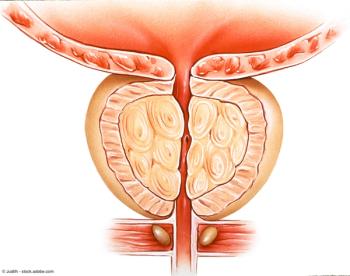
"[Urologists] really need to understand how big the prostate is and how big of a surgery that they're looking at," says Amy E. Krambeck, MD.

Panelists discuss how the combination of radium-223 and enzalutamide (RAD-ENZ) demonstrated a manageable safety profile in PEACE-3, with bone health monitoring and prophylactic bone-targeted therapy being crucial considerations, particularly given the potential impact on future treatment options.

Experts review different treatment delivery options available for the management of non–muscle-invasive bladder cancer (NMIBC), discuss the exciting developments in NMIBC with several delivery systems and agents under investigation, and provide information about TAR-200, a targeted release system utilizing continuous intravesical release of gemcitabine, including how TAR-200 is installed within the bladder.
Experts discuss the frequency of cystectomy use in patients with non–muscle-invasive bladder cancer (NMIBC) and how often patients are requesting bladder-sparing treatments.
Panelists discuss how the PEACE-3 trial demonstrated meaningful clinical benefits with the combination of radium-223 and enzalutamide compared with enzalutamide alone in patients with metastatic castration-resistant prostate cancer (mCRPC), showing both improved radiologic progression-free survival and a significant overall survival advantage of 7.3 months.
Wayne Kuang, MD; and Matt T. Rosenberg, MD, discuss how overactive bladder presents with distinct pathophysiological mechanisms between genders, requires different diagnostic approaches when distinguishing from benign prostatic hyperplasia in men, impacts quality of life in older adults, benefits from early primary care intervention, and necessitates improved patient advocacy and educational initiatives for optimal management outcomes.
"The preliminary results of that study, which is a phase 1/2 dose escalation and dose expansion trial, were presented by Professor Ben Tran last year at the ENA meeting1 and showed a very favorable toxicity profile compared to erdafitinib," says Gopa Iyer, MD.
“[We’re working on] being able to apply the same mechanism and testing and thought that we put into this into stool to give people a precision signature of how they're going to respond or experience toxicity from EV based on their stool microbiome,” says Laura Bukavina, MD, MPH.

"I think we're all going to be very eager to see what happens to these patients over time," says Colin Goudelocke, MD.

"I think that 1 of the main reasons physicians weren't necessarily acting is that they weren't getting a full picture of how aggressive the disease was," says Alicia Morgans, MD, MPH.

“We felt, not only for the study, but for providing good care, that it was important to try and have these patients follow-up and see if we could identify factors that might impact their follow-up,” says Christina Ching, MD.

“As we move through 2025, I think we're going to see more and more expansion of new ideas, new isotopes, and possibly improvement in PET imaging for the future,” says Jason M. Hafron, MD, CMO.
“What happens, mechanistically speaking, is that it stimulates the 2 arms of the immune system, both innate immunity as well as the adaptive immunity,” says Kate Chan, MD.

"At 6 months, 84% of patients respond, having at least a 50% reduction in their urgency incontinence episodes," says Colin Goudelocke, MD.
"Our findings highlight that completing 5 cycles or more of radium was associated with a 2- to 5-fold increase in overall survival," says Rana R. McKay, MD, FASCO.
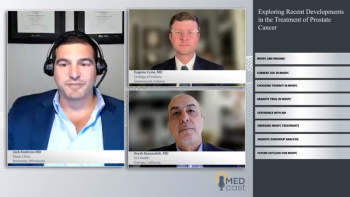
Jack Andrews MD; Eugene Cone, MD; and Arash Rezazadeh, MD, discuss how metastatic hormone-sensitive prostate cancer presents clinically, explore current treatment standards including combination therapies, evaluate emerging data from the ARANOTE trial on darolutamide efficacy, consider quality of life factors in treatment selection, and examine how novel therapeutic approaches may reshape future care pathways.

"The most critical next step is to focus on enhancing both the scientific rigor of our clinical trials and the personalization of our treatment," says Channing J. Paller, MD.
"I would say, talk to each other. Talk to other men about it. You are not the only one leaking," says Vanita Gaglani, RPT.

“The primary end point is progression-free survival, and the secondary end points are overall survival, objective response rates, duration of response, and safety.”

"I'm always trying new things. I feel like, once you decide that this is the way you have to do it and stick with that forever, that's when you immediately become irrelevant," says Amy E. Krambeck, MD.

Experts discuss the use of bacille Calmette-Guérin (BCG) as the standard treatment for high-risk non–muscle-invasive bladder cancer (NMIBC), when a patient is considered unresponsive to BCG, and how BCG shortages have impacted clinical practice and urologists in the community.
Experts discuss the standard of care and the use of intravesical chemotherapy in the treatment of non–muscle-invasive bladder cancer (NMIBC).
Panelists discuss how radiopharmaceuticals like lutetium-177 prostate-specific membrane antigen (PSMA) may be preferred over systemic therapy in patients with prostate cancer who have high PSMA expression, multiple bone metastases, and limited visceral disease, particularly after progression on standard therapies like androgen receptor pathway inhibitors and taxane-based chemotherapy.
Panelists discuss how the evolving treatment landscape for metastatic castration-resistant prostate cancer (mCRPC) encompasses multiple therapeutic options including novel hormonal agents, chemotherapy, and targeted therapies while highlighting persistent challenges in treatment sequencing, drug resistance, and the need for improved biomarker-driven approaches to optimize patient outcomes.