

"It was a daunting task, although I will say the original core was exceptional, so I had a wonderful framework from which to work," says Jeffrey A. Albaugh, PhD, APRN, CUCNS.
"It was a daunting task, although I will say the original core was exceptional, so I had a wonderful framework from which to work," says Jeffrey A. Albaugh, PhD, APRN, CUCNS.

"I think the first thing you need to identify is, do you have a following, or do you have a niche that you know that you're not currently able to fill with your current role?" says Gia Ching.
“One of the ways we make the most difference for our patients is we take care of the people who are taking care of them,” says Chad Ritenour, MD.
“As long as APPs are properly supported, they will take off and they will change your practice,” says Mark T. Edney, MD.
“Another aspect is how to make this more and more complex diagnostic chain for prostate cancer work in practice, because we now have so [many] more tools than we had a decade ago,” says Tobias Nordström, MD, PhD.

A panelist discusses how emerging investigational agents for NMIBC show promise through diverse mechanisms, including oncolytic viruses (CG0070), immune checkpoint inhibitors (durvalumab, sasanlimab), targeted drug delivery systems (TAR-200), mitomycin-containing gels (UGN-102/103), immunotherapies (TARA-002), gene therapies (EG-70), and FGFR inhibitors (erdafitinib), representing a robust pipeline of potential treatment options.

"Studying the microbiome overall is challenging because it's dirty science. You have to be incredibly careful with contamination," says Ilaha Isali, MD, MSc, and Laura Bukavina, MD, MPH, MSc.
"If we synergize our efforts and our energy, as the level of the sea rises, all ships on the sea will rise with it," says Wayne Kuang, MD.
“The key take home message of that study was that having assumptions about basic medical terminology that we think are simple may actually leave patients confused,” says Vikram M. Narayan, MD.
“If there's enough radiation, then the cells can't repair themselves and die because of the radiation,” says Scott T. Tagawa, MD, MS, FACP, FASCO.

“I think promoting women in leadership positions, promoting mentorship for women applicants and women already in this field, and working on policy changes are the top 3,” says Michelle S. Sheng, MD.
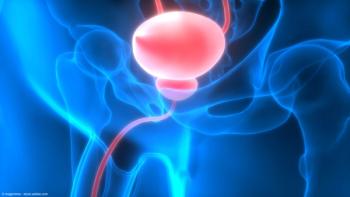
"The interplay between the microbiome and bladder cancer is very complex," says Ilaha Isali, MD, MSc.

A panelist discusses how intravesical chemotherapy offers localized treatment with minimal systemic effects but requires frequent administration, while PD-L1 inhibitors show promising response rates yet come with immune-related adverse events, highlighting how each current treatment option presents distinct trade-offs among efficacy, safety, and convenience.
Max Kates, MD, discusses how BCG-unresponsive non-muscle invasive bladder cancer patients historically faced limited treatment options beyond radical cystectomy, with significant unmet needs in preserving bladder function while effectively treating this aggressive disease.

“It's a good problem to have, because we're thinking about a previous era in which we didn't have many options besides more BCG vs cystectomy,” says Vikram M. Narayan, MD.

"You don't want to go into anything blind. You want to make sure that the numbers make sense," says Gia Ching.
"This idea that physicians and medical teams always feel that they need to be available at all hours of the day really starts to stress people." says Chad W. M. Ritenour, MD, FACS.

"We're very much looking forward to the new data that'll be presented, hopefully, within the next year, to see where this falls in the grand scheme of the all the new drugs coming into play here," says Shreyas S. Joshi, MD, MPH.
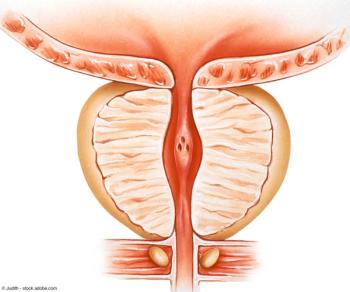
"We also need to understand and remember that drugs are temporizing measures," says Wayne Kuang, MD.
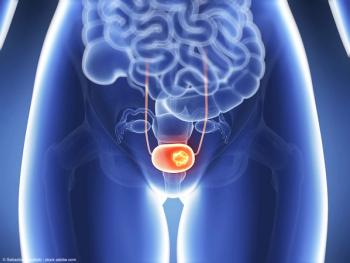
"We...tried to summarize all the findings that could potentially be helpful for future research in terms of bladder cancer," says Ilaha Isali, MD, MSc.
“It's the sustained release and constant exposure to the gemcitabine that's most likely responsible for the high efficacy rates of that we're seeing with the TAR-200 system,” says Siamak Daneshmand, MD.

"I think that it's so important right now to really, really stand as your own brand and really, really have a cultivated patient population that you're after," says Gia Ching.
A panelist discusses how recent advances in transurethral resection of bladder tumor (TURBT) include enhanced visualization techniques like fluorescence-guided surgery and narrow-band imaging to improve tumor detection and complete resection, while radical cystectomy remains a critical option for high-risk NMIBC patients who fail conservative therapies.

“There's state advocacy work groups and other public policy work groups where folks can remain involved and keep pushing to improve the delivery of health care,” says Juan J. Andino, MD, MBA.
“This is another therapeutic that adds to UroGen [profile] as a potential treatment that could be used to preserve kidneys while treating low grade upper tract urothelial carcinoma going forward,” says Sarah P. Psutka, MD, MSc.

"We are now in the golden era of BPH/BPO for both diagnostics and therapeutics," says Wayne Kuang, MD.

Katie S. Murray, DO, offers advice to urologists considering the adoption of newer treatment modalities for BCG-unresponsive non–muscle-invasive bladder cancer (NMIBC), encouraging them to integrate these therapies into practice in light of the positive clinical trial data while emphasizing the potential for improved patient outcomes and the importance of staying informed about evolving treatment options.

“Women not only tend to present with more aggressive disease, but they also have a higher probability of having what we call variant histology, so non-urothelial carcinoma,” says Ava Saidian, MD.

As the year comes to a close, we revisit some of this year’s top video content from Urology Times.
“These types of technologies can really make office urology much more efficient, which I think is very, very promising and one of the most promising areas in artificial intelligence,” says Chad Ellimoottil, MD, MS.